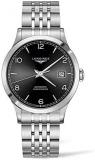
The Longines automatic watch collection brings together Swiss self-winding engineering and restrained aesthetic design, a combination the brand has refined across decades of mechanical watchmaking. For buyers weighing a first serious mechanical purchase, these timepieces represent a measured entry point into traditional horology without abandoning everyday practicality.
At the heart of every Longines automatic lies a self-winding movement that draws energy from the natural motion of the wearer's wrist. According to Longines, the majority of its automatic watches deliver an average power reserve of around 64 hours, meaning a watch removed on Friday evening will typically still be running come Monday morning without any manual intervention. That figure places these calibres comfortably within the expectations of modern mechanical ownership, where a weekend-proof reserve has become a genuine convenience rather than a luxury.
How a Longines Automatic Movement Actually Works
A mechanical automatic calibre converts kinetic energy into stored tension. An oscillating weight, often called a rotor, pivots with wrist movement and winds the mainspring through a series of gears. Longines notes that the number of crown turns needed for a full wind varies considerably by model, ranging from roughly 20 to 114 turns depending on the specific calibre. That variance reflects differences in mainspring length, gear ratios and barrel design rather than any inconsistency in quality.
Because the rotor handles winding during wear, the crown is primarily used to set the time and date, or to top up the reserve after a period of rest. This division of labour is what makes an automatic watch so livable day to day: the wearer simply puts it on, and the movement takes care of itself. Buyers exploring the Longines collection will find this self-winding principle applied consistently across dress, sports and heritage-inspired lines.
It is worth understanding what automatic ownership does not promise. Longines states that a standard mechanical automatic watch may deviate by as much as plus or minus 10 seconds per day, and that typical mechanical accuracy sits within a comparable band. That is a different performance envelope from quartz, and it is the trade-off accepted in exchange for a movement built from springs, jewels and gear trains rather than a battery and integrated circuit. Many owners find the slight daily variation part of the character rather than a flaw.
Power Reserve, Winding and Daily Practicality
The roughly 64-hour reserve quoted by Longines for most of its automatics is a meaningful figure in real use. It covers a full weekend off the wrist, survives a lazy Sunday, and reduces the need to reset the watch before Monday. For anyone rotating between several mechanical pieces, that buffer removes one of the small irritations of ownership.
Equally important is the wider automatic ecosystem. Longines divides its range between self-winding and manual-wind calibres, and the brand notes that manual-wind watches can sometimes offer a longer reserve because there is no rotor occupying space inside the case. The automatic versions trade a little of that capacity for the convenience of never needing to be wound by hand. Choosing between the two comes down to routine: an automatic suits someone who wears the same watch most days, while a manual calibre rewards a more deliberate, ritualistic relationship with the object.
Case size, dial layout and water resistance matter just as much as the movement when a watch is worn daily. Longines automatic models span slim dress cases through to sturdier sports references, so the practical question is less about the calibre itself and more about which silhouette fits the wearer's life. For readers comparing mechanical options more broadly, Frederique Constant is a frequent reference point, as automatic watches from both houses occupy a similar bracket of Swiss-made, self-winding design.
Design Language and the Swiss Heritage Context
Longines positions its automatic watches around elegance, innovation and what the brand describes as Swiss heritage, and the design vocabulary generally supports that framing. Cases are often on the slimmer side, with restrained bezels and dials that favour applied indices, slim hands and a measured use of colour. The result is a watch that reads well in an office, at a formal event or with a simple shirt and jeans.
Several references incorporate a transparent case back, allowing the owner to see the rotor move and the escapement tick. For anyone new to mechanical watches, this is one of the most persuasive features: the movement is not hidden away but presented as part of the design. It also makes the automatic mechanism legible in a way that photographs rarely capture.
Where Longines Sits Among Swiss Automatics
The competitive frame around Longines is well populated. Automatic chronographs and divers from other Swiss houses compete for the same wrist, each with its own interpretation of finish, movement architecture and case design. Watches in this segment are frequently considered alongside such as Tissot T-Sport, which occupies the more accessible end of the same broad mechanical category. Longines tends to compete on restraint and finishing rather than on extremes of specification, which is precisely what draws many buyers to the brand.
It is also worth approaching the category with realistic expectations. A mechanical automatic is not a precision instrument in the quartz sense, and it is not maintenance-free over decades. It benefits from periodic servicing, sensible handling around magnets, and an understanding that accuracy will drift slightly with position, temperature and wear patterns. Longines covers winding technique and care in its published user manuals, which are worth reading before the first wear.
Choosing and Owning a Longines Automatic
Prospective owners should start with the essentials: case diameter relative to wrist size, lug-to-lug measurement, dial legibility, and whether the reference includes a date or not. From there, the movement question is simpler than it often appears. A 64-hour reserve and self-winding operation cover the needs of most wearers, while a plus or minus 10 seconds per day tolerance is normal for mechanical automatics and should be factored into expectations rather than treated as a defect.
Aftercare is straightforward. A gentle wipe with a soft cloth removes skin oils from the case and crystal. Leather straps benefit from being kept away from prolonged moisture, while steel bracelets tolerate regular cleaning with mild soap and a soft brush. Winding a stopped automatic should be done slowly and without force, allowing the crown to move smoothly through each turn.
A Quiet Argument for Mechanical Ownership
There is a particular appeal in a watch that stores energy from the wearer's own movement, needs no battery, and continues running through a weekend on the strength of a 64-hour reserve. Longines automatic watches sit at a considered point on that spectrum: Swiss-made self-winding calibres, restrained design, and a price and positioning that make mechanical ownership approachable rather than intimidating.
Within the wider landscape of automatic Swiss watches, including names such as Frederique Constant, Longines holds its ground through consistency. The appeal is not a single dramatic feature but the accumulated effect of balanced proportions, honest engineering, and a self-winding movement that simply keeps pace with the person wearing it.
 Exciting, Best Luxury Watches for Sale!