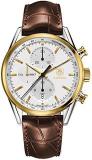
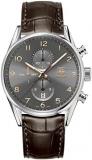
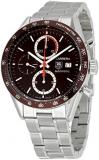
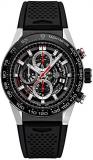
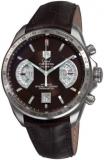
The TAG Heuer Carrera Calibre 1887 houses a column-wheel chronograph movement with a vertical clutch, a technical combination that separates it from many modular chronographs at its price point. Its 41 mm, 43 mm, and 45 mm case options give the watch a broad footprint across wrist sizes, while the tri-compax dial layout keeps elapsed hours, minutes, and running seconds legible at a glance. For anyone weighing a modern racing chronograph against vintage-inspired alternatives, this reference deserves a close look.
The watch is anchored by its stainless steel construction, a durable foundation suited to daily wear. The design language echoes the clean, legible dials that have defined the TAG Heuer Carrera collection for decades. Polished and brushed surfaces alternate across the case and bracelet, creating a visual profile that catches light without ostentation. This level of finish reflects the standards associated with the TAG Heuer brand's approach to form and function, where both are treated as equally important design constraints.
At the heart of the timepiece lies the Calibre 1887, a self-winding mechanical engine that marked a significant milestone in the company's movement strategy. Its integrated chronograph architecture differs fundamentally from modular designs often found at similar price points. The oscillation system and column-wheel control mechanism provide a tactile, responsive chronograph activation. This technical approach reflects the brand's investment in producing robust, reliable movements capable of withstanding active use.
The engineering behind the Calibre 1887 is a story of adaptation and precision. Derived from a design initially conceived elsewhere and subsequently industrialized by TAG Heuer, the movement features a semi-skeletonized rotor and a vertical clutch system. The vertical clutch allows the chronograph to start without the characteristic jump of the seconds hand, supporting accurate timing from the first fraction of a second. This detail matters for a watch built to measure short intervals, whether on the track or in daily life.
Design Evolution and Case Architecture
The visual identity of the Carrera Calibre 1887 is defined by its range of case sizes, accommodating different wrist sizes and preferences. A 41 mm model offers a classic, understated presence often favored for dressier occasions, while a 43 mm variant provides a bolder stance aligned with modern trends. A 45 mm iteration rounds out the lineup for those seeking a more imposing look. Each case is carefully constructed, often pairing stainless steel or lightweight titanium with a black PVD coating for a tactical aesthetic.
The dials are a study in legibility and balance. Typically featuring a tri-compax layout, the sub-dials are positioned to offer clear readouts of elapsed hours, minutes, and running seconds. Indices and hands are applied with precision, often treated with luminescent material for low-light visibility. The fixed bezel, whether in polished steel or with a tachymeter scale, frames the dial and reinforces the watch's connection to speed and measurement.
Water resistance is rated at 100 meters, a specification that enhances everyday practicality. This rating indicates the timepiece is engineered to withstand splashes, rain, and brief swimming, though it is primarily intended for land-based activities. Achieving this level of sealing demonstrates a holistic approach to design, where aesthetic components do not compromise the structural integrity of the case.
The Calibre 1887 Movement and Chronograph Function
The Calibre 1887 is a column-wheel chronograph movement that has earned a reputation for robustness and reliability. The column wheel is a traditional hallmark of quality chronographs, providing smooth and precise actuation of the pushers. Unlike simpler cam-actuated systems, the column wheel ensures that start, stop, and reset functions execute with a crispness that enthusiasts notice immediately.
The movement's vertical clutch engagement is another critical technical feature. This system allows the chronograph to run continuously without significantly impacting timekeeping accuracy or power reserve, unlike horizontal clutch systems that can introduce drag. The result is a chronograph that functions as a genuine tool rather than a decorative complication. A power reserve of approximately 50 hours ensures the watch can be set aside for a weekend and still run when picked up again.
- Movement: Calibre 1887 Automatic, Swiss-made
- Chronograph Mechanism: Column wheel and vertical clutch
- Case Sizes: Available in 41 mm, 43 mm, and 45 mm
- Water Resistance: 100 meters (10 bar)
- Power Reserve: Approximately 50 hours
The finishing of the movement is visible through a sapphire crystal case back, revealing the oscillating weight and intricate bridges. While the decoration leans more technical than purely aesthetic, it is consistent with the industrial elegance of the Carrera line. This transparency offers a satisfying view of the mechanical action at work, allowing the wearer to observe the rotor spinning with natural wrist movement.
Collecting and the Modern Racing Aesthetic
In the context of the brand's broader collections, the Carrera Calibre 1887 occupies a specific space. It sits alongside other iconic lines, including the Formula 1 series and the TAG Heuer Aquaracer, yet distinguishes itself through its focus on the classic racing chronograph format. While the Formula 1 line is often associated with entry-level motorsport timing and the Aquaracer with diving utility, the Carrera is the purebred race car for the wrist, dedicated to speed and precision.
Collectors often gravitate toward the Calibre 1887 for its transitional significance. It represents a period when the brand heavily invested in industrializing movement production, resulting in a chronograph that offered considerable value. The design ethos resonates with other sophisticated lines, such as the TAG Heuer Grand Carrera, which also prioritized technical complexity and refined aesthetics.
The wearing experience is defined by comfort and presence. Steel bracelets are often equipped with folding clasps and safety push-buttons for a secure fit. For variants with rubber or leather straps, the choice of material has been carefully considered to match the sporty nature of the watch while providing durability against perspiration and moisture.
The Carrera's Place in the Horological Landscape
Owning a Carrera Calibre 1887 is about more than possessing a timekeeping device; it is about engaging with a legacy of precision engineering. The watch is designed to be a reliable companion, capable of functioning perfectly in a boardroom meeting or during a weekend getaway. Its aesthetic is versatile enough to pair with a business suit, yet robust enough for casual wear. The combination of the column-wheel chronograph movement and the timeless Carrera design creates a piece that feels both contemporary and deeply rooted in history.
For those who appreciate the mechanical complexity of a Swiss chronograph but demand the legibility and style of a classic racing watch, this model provides a compelling answer. It exemplifies how a traditional watchmaker can evolve its product line while staying true to the core principles of its founding spirit. The TAG Heuer Carrera Calibre 1887 remains a significant reference point for enthusiasts seeking a blend of performance heritage and modern manufacturing quality.
 Exciting, Best Luxury Watches for Sale!