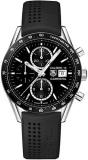
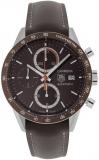
Few chronographs carry the clean, purposeful architecture of the TAG Heuer Carrera, a watch originally created in 1963 by Jack Heuer with a single goal: absolute readability at speed. The vintage Carrera was never about ornament. It was about a legible dial, a slim case, and a name borrowed from the Carrera Panamericana road race, evoking danger, endurance, and precision in equal measure. That founding clarity explains why early references remain a benchmark for collectors who value chronographs with genuine motorsport provenance rather than decorative flourish.
The earliest Carrera chronographs addressed a practical problem. Racing drivers needed to read elapsed time instantly while traveling at speed, so the dial was engineered for peripheral vision. References from the 1960s came with either two registers (45 or 30 minute capacity) or three registers (12 hour capacity), depending on the reference, with clean indices and minimal text clutter. That decision shaped the entire Carrera lineage and still separates it from busier chronographs of the same era.
What distinguishes the vintage Carrera is not merely its history but its mechanical honesty. A chronograph is only as good as its switching mechanism, and the Carrera's evolution from hand-wound movements through to the Calibre 16 era shows how Heuer balanced precision with production reality. The pushers on early pieces were firm and tactile, the case proportions sat close to the wrist, and the bezel stayed slim to keep the dial visually dominant. These are details that modern re-editions have studied closely.
Inside the Vintage Carrera Movement
Movement choice defines a vintage chronograph more than any dial variation. The Carrera lineage drew on hand-wound Valjoux and Lemania-based calibres for early generations, then moved into the modern era with the Calibre 16. Understanding which calibre sits inside a given reference is essential to judging value, serviceability, and how the watch feels in daily use.
Calibre 16 and the Modern Vintage Carrera
TAG Heuer states that vintage Carrera models were powered by the Calibre 16 movement, featuring three registers at 12, 9 and 6 o'clock and a date window at 3 o'clock. This layout became a template that shaped later collections, including dressier interpretations such as the TAG Heuer Carrera collection that favour slim proportions over racing intensity. The Calibre 16 arrangement gives instant chronograph readouts, supports a date function, and pairs well with the Carrera's slim case profile.
The 1996 Re-Edition and the Lemania 1873
The Carrera re-edition models introduced in 1996 used the manual-wind Lemania 1873 movement. According to TAG Heuer materials, the Lemania 1873 substitutes cams for the column wheel found in earlier chronograph architectures, a change made for manufacturing practicality. The result was a movement that preserved the tactile feel of a hand-wound chronograph while making the shape of a 1960s Carrera available to buyers who had only seen it in auctions or archive photographs.
What made the 1996 re-edition meaningful was its restraint. TAG Heuer notes that the re-edition reproduced the 1960s original with modern engineering and materials while keeping the visual result almost unchanged. From a collecting standpoint, that continuity is rare. It means the re-edition serves as a legitimate bridge between original vintage references and today's modern Carrera lineup.
Why the Re-Edition Changed the Carrera Story
Before the 1990s, the Carrera lived largely in the secondhand market. The 1996 re-edition changed that by giving collectors a factory-built nod to the original. It did not revise the dial proportions or redesign the case silhouette, and because it used a manual-wind movement rather than a quartz alternative, it preserved the tactile ritual of winding and resetting a mechanical chronograph. In the context of TAG Heuer's broader output, this approach aligns with the brand's respect for archive-era references across lines such as the TAG Heuer brand's motorsport-focused catalogue.
Dial Design, Case, and Materials
Vintage Carrera dials typically keep text small, indices thin, and sub-registers distinct, which helps the chronograph remain readable in bright daylight. Case size remained restrained compared with later chronographs, which today feels practical and easy to wear rather than aggressive. Stainless steel cases dominate the archive, with polished and brushed finishes applied to create visual depth without interrupting the dial's clarity.
- Two-register configurations: 45 or 30 minute capacity, prioritising straightforward elapsed tracking
- Three-register configurations: 12 hour capacity, supporting longer timing sessions
- Date placement at 3 o'clock on Calibre 16 references, balancing function with symmetry
- Slim bezels and clean indices to maximise legibility at speed
Because the original was engineered for racing use, vintage Carrera dials avoid layered textures and novelty detailing. The hands remain straightforward, the lume plots are modest, and the chronograph sub-registers echo the dial's layout rather than competing with it. That approach later informed modern lines like the TAG Heuer Grand Carrera collection, which carried the brand's interest in clean functional surfaces into a new generation of chronographs.
Another factor is the crystal and case finishing. Early Carreras relied on domed acrylic crystals that elevate slightly above the bezel and create a soft distortion at the edges of the dial. Re-editions adapted this geometry carefully so that the wrist presence remained period-correct rather than looking retrofitted to modern expectations.
Collecting the Vintage Carrera Today
Buying a vintage Carrera is less about speculation and more about understanding reference numbers, service history, and how each generation of the movement behaves over time. The dial layout and case finishing are usually the first signals of what is original, while the movement determines the practical cost of ownership. For buyers moving between brands, similar chronograph-focused references exist in other heritage collections, including the Breitling Superocean Heritage family, which approaches vintage re-interpretation from a diver's perspective rather than a racing one.
A useful framework for evaluating a vintage Carrera is to think in terms of three decision points:
- Reference and calibre: Identify the movement first. Calibre 16 models and Lemania 1873 re-editions behave differently in service and valuation.
- Dial integrity: Original hands, indices, and sub-register layouts signal an unaltered example. Redialed or mismatched examples are increasingly difficult to assess.
- Case condition: Over-polished cases erase the sharp edges that defined the original Carrera geometry, so unpolished examples command broader interest.
Collectors drawn to the design often find that the Carrera pairs well with other motorsport references. Pieces such as the Grand Carrera illustrate how TAG Heuer has continually reinterpreted the name, moving the design language forward while keeping the chronograph's essential function visible on the dial.
How the Vintage Carrera Reads on the Wrist
A well-preserved vintage Carrera feels smaller and lighter than its racing origins might suggest. Its slim case, moderate lug-to-lug distance, and simple dial allow it to sit comfortably under a cuff, while remaining distinctive enough to justify its presence in a collection. That pairing of practicality and identity explains why the model has stayed relevant for over six decades, and why buyers continue to treat original references as benchmarks rather than nostalgia.
For those assembling a broader selection of TAG Heuer models, dial colour and strap pairing significantly change the character of each Carrera reference. Steel cases and leather straps push the watch toward formal use, while steel bracelets shift it toward everyday wear. The formula is consistent: keep the dial clear, keep the case slim, and let the chronograph do the talking.
Looking ahead, the vintage Carrera occupies a rare position where heritage and engineering momentum point in the same direction. The reference points established in 1963, refined through the Calibre 16 era, and reintroduced via the Lemania-powered 1996 re-edition continue to guide modern design. A watch created for speed has become a watch for collectors seeking clarity and mechanical credibility, and that dual value is unlikely to fade.
 Exciting, Best Luxury Watches for Sale!