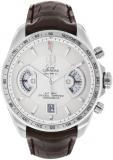
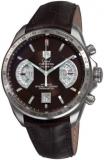
The TAG Heuer Calibre 17 is a self-winding chronograph movement built on the ETA 2894-2 base, pairing a compact automatic chassis with a stacked chronograph module. That modular layout keeps the overall height low, which is why Calibre 17 references such as the 41 mm Carrera CV5110.FC6310 wear closer to the wrist than many integrated chronographs of the same era. For anyone tracing the technical lineage of the Carrera line, this movement is a useful anchor point.
What sets the Calibre 17 apart is not raw complexity but deliberate packaging. By separating the chronograph mechanism from the base calibre, TAG Heuer could offer a slimmer case profile while retaining a proven winding system and a familiar servicing path. The result is a movement that sits at the intersection of racing aesthetics and everyday wearability, a balance that defines much of the TAG Heuer Carrera collection from this period.
Technical Foundations of the Calibre 17
The Calibre 17 beats at 28,800 vibrations per hour, or 4 Hz, giving the seconds hand the smooth sweep expected of a modern mechanical chronograph. A central rotor drives the automatic winding, and power reserve typically lands in the region of 42 hours depending on the specific reference and module configuration. The chronograph itself uses a cam-and-lever control system with horizontal coupling, a robust and well-understood architecture that gives the pushers a firm, mechanical engagement.
Horizontal coupling has a known characteristic: the chronograph seconds hand can show a slight jump when the function starts. Many wearers treat this as part of the movement's mechanical personality rather than a defect. The Calibre 17 also carries a date function, frequently placed at 4:30 on Carrera references so the calendar disc integrates into the chronograph layout without cutting through the dial's main axis.
COSC certification appears on selected references, including the CV5111.FC6335. That certification means the movement has been tested for rate accuracy across multiple positions and temperatures, adding a layer of quality control beyond standard production tolerances.
Design Language and Case Architecture
The Calibre 17 has been housed in several distinct case executions. Carrera references typically use a 41 mm steel case with a polished finish and a fixed steel bezel, producing a clean, automotive-inspired profile. The lugs are sharply defined, a Carrera signature that traces back to the dashboard timers behind the original 1963 design.
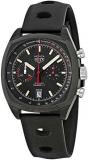
A different interpretation appears in the Heuer Heritage CR2080.FC6375, which wraps the same automatic movement in a 42 mm titanium case with a black PVD coating. The lighter titanium construction changes the wrist presence compared with steel Carreras, while the PVD layer adds scratch resistance and a stealthier look aimed at collectors drawn to heritage re-editions.
Water resistance across Calibre 17 references is generally rated at 100 metres, enough for swimming and daily exposure but not intended for serious diving. That rating fits the chronograph's positioning as a sports-elegant watch rather than a dedicated tool diver.
Movement Comparison: Calibre 17 Versus Calibre 16
Placing the Calibre 17 alongside the Calibre 16 clarifies its role in the TAG Heuer catalogue. The table below compares the decision factors that matter most to buyers weighing one automatic chronograph against the other.
| Feature |
Calibre 17 |
Calibre 16 |
| Movement Type |
Automatic chronograph, modular |
Automatic chronograph, integrated |
| Base Calibre |
ETA 2894-2 derivative |
ETA 7750 derivative |
| Case Thickness Impact |
Slimmer profile possible |
Taller case height typical |
| Chronograph Coupling |
Horizontal, cam-actuated |
Horizontal, cam-actuated |
| Power Reserve |
Approx. 42 hours |
Approx. 42 hours |
| Frequency |
28,800 vph (4 Hz) |
28,800 vph (4 Hz) |
| COSC Certification |
Available on select references |
Not typically offered |
| Sub-dial Layout |
Bi-compax or tri-compax by module |
Tri-compax standard |
| Date Function |
Yes, often at 4:30 |
Yes, at 3:00 |
| Typical Case Sizes |
39 mm to 42 mm |
41 mm to 45 mm |
| Servicing Complexity |
Modular, requires module separation |
Integrated, conventional chronograph service |
| Best Suited For |
Slimmer, dressier chronographs |
Robust, tool-oriented chronographs |
The comparison shows a clear trade-off. The Calibre 17 favours a more slender case profile and, on COSC-certified versions, chronometer-grade accuracy. The Calibre 16 follows the Valjoux 7750 lineage with an integrated construction that is taller but simpler to service in some contexts. Neither movement is objectively superior; the choice depends on whether the wearer values case elegance or a more conventional chronograph architecture.
Wearability and Everyday Use
A chronograph is only as good as its wearability, and this is where the Calibre 17 makes a strong case for itself. The compact dimensions of the movement allow for cases that sit close to the wrist, an important consideration for anyone who wears a watch under a shirt cuff. The 41 mm Carrera references strike a balance that suits most wrist sizes, while the 42 mm Heuer Heritage offers a slightly more substantial presence without crossing into oversized territory.
Legibility is another strength. The dial layouts used with the Calibre 17 typically feature applied indices, contrasting sub-dials, and hands with luminous treatment. The date at 4:30, while not to every purist's taste, keeps the main dial axis clean and unobstructed. For daily wear, the 100-metre water resistance and sapphire crystal on most references provide adequate protection against the rigours of normal use.
The automatic winding system means the watch stays powered with regular wear, and the chronograph function is there when needed for timing tasks, whether that is cooking, commuting, or simply enjoying the mechanical interaction of pushers and gears.
Collecting and Ownership Considerations
For collectors, the Calibre 17 holds a specific place in the TAG Heuer story. It powered a generation of Carrera chronographs that bridged the brand's racing heritage with modern production standards. References such as the CV5110.FC6310 and CV5111.FC6335 are identifiable by their movement, and the COSC certification on some versions adds a collectible distinction.
Ownership costs are another factor. Servicing a modular chronograph requires a watchmaker familiar with the architecture, and the module separation adds labour time compared with an integrated design. Prospective buyers should factor this into the total cost of ownership, particularly for vintage or discontinued references where parts availability may be more limited.
The strap and bracelet options also influence the ownership experience. Leather straps suit the dressier Carrera variants, while steel bracelets add versatility. The Heuer Heritage's PVD-coated titanium case introduces a different maintenance consideration: while titanium is light and corrosion-resistant, the PVD coating can show wear over time, and refinishing is not always straightforward.
How the Calibre 17 Fits the Broader TAG Heuer Lineup
The Calibre 17 sits within a broader ecosystem of TAG Heuer chronographs. Above it in complexity sit movements with additional functions or advanced materials, while below it are quartz and simpler automatic options. The Calibre 17's position is defined by its balance of mechanical sophistication and accessible wearability.
Buyers considering a Calibre 17 chronograph may also look at other series within the brand, including the TAG Heuer Formula 1 line, which offers a more sport-focused take on chronograph design with different movement options and case architectures. The Formula 1 line typically favours bolder colours and rubber straps, contrasting with the Carrera's more restrained elegance.
Similarly, the dive-oriented TAG Heuer Aquaracer range takes a different path, with higher water resistance and rotating bezels. While not directly comparable to a Calibre 17 Carrera, the Aquaracer demonstrates how the brand adapts different movement platforms to specific use cases.
For those drawn to the Calibre 17's combination of heritage and mechanical interest, the Carrera remains the most direct route. The movement's presence in the Heuer Heritage re-editions also offers a vintage-inspired alternative for collectors who prefer a more retro aesthetic.
Legacy and Ongoing Relevance
The Calibre 17 continues to be relevant for several reasons. It represents a period of thoughtful engineering in which TAG Heuer leveraged a proven base movement to create chronographs that were both technically credible and wearable. The movement's COSC certification on select references demonstrates a commitment to accuracy that extends beyond aesthetic considerations.
For the modern buyer, a Calibre 17 chronograph offers a tangible connection to mechanical watchmaking traditions. The modular architecture, the automatic winding, and the chronograph function all invite engagement with the watch as a mechanism rather than simply an accessory. Whether viewed as a gateway into mechanical chronographs or as a specific collecting focus, the Calibre 17 maintains a distinct identity within the TAG Heuer catalogue.
The watches powered by this movement, particularly the Carrera references, occupy a space where racing heritage meets everyday practicality. That combination is not easy to achieve, and it explains why the Calibre 17 remains a meaningful reference point for anyone exploring automatic chronographs from the brand.
 Exciting, Best Luxury Watches for Sale!