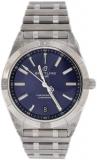
The Breitling Chronomat 1984 reintroduced a name first used in the 1940s and rebuilt it around one unmistakable element: the bullet-link Rouleaux bracelet. That bracelet gave the reference its classic and unique look, and it remains the clearest visual signature separating the 1984 revival from everything that came before it.
Understanding this particular Chronomat means looking past the current catalog and focusing on what the 1984 release actually changed. The original Chronomat was a chronograph made for Italian pilots, a blue-dialed steel watch whose dial carried the Frecce Tricolori emblem of three arrows. That aviation connection anchored the model in cockpit culture and set it apart from the dress-oriented chronographs of the period.
The Aviation Roots Behind the Chronomat Name
The Chronomat origin story is inseparable from the Italian aerial display team known as the Frecce Tricolori. The pilot-oriented brief explains several design choices that carried into the 1984 revival: a legible chronograph layout, robust steel construction, and a bracelet engineered to hold a heavy case securely during cockpit use. The three-arrow emblem recorded on early dials marks that military-adjacent lineage.
When Breitling returned to the Chronomat name in 1984, it did not simply reproduce an old military chronograph. It repositioned the concept as an all-purpose chronograph, one that could move from a flight briefing to a business meeting without looking out of place. The collection remains associated with the Rouleaux bracelet and a COSC-certified movement philosophy, details confirmed across the wider Chronomat family.
The Rouleaux Bracelet as a Design Landmark
Few bracelets in modern watchmaking are as immediately identifiable as the Rouleaux. Its bullet-shaped links create a segmented, almost mechanical rhythm around the wrist, and the design gave the 1984 Chronomat its classic and unique look. The bracelet is not merely decorative; the rounded link geometry distributes weight across the wrist and gives the watch a tactile presence that flat-link bracelets cannot match.
The wider Chronomat range confirms that this bracelet is central to the collection's identity rather than a one-off experiment. The signature Rouleaux bracelet appears across the family, and case sizes across the collection span from 32 mm to 44 mm, with 44 mm associated with the Super Chronomat. Collectors drawn to that design language have a clear entry point in the Chronomat collection, where the bracelet remains the defining visual thread.
How the Bracelet Affects Wearability
The Rouleaux segmented links flex in a way that hugs the wrist, and the polished and brushed finishing on individual links adds depth without becoming distracting. On a chronograph case with a substantial profile, this matters: the bracelet keeps the head of the watch balanced rather than top-heavy. It is a structural solution as much as an aesthetic one.
Proportions and Case Dimensions in Perspective
Published measurements for Chronomat references vary by size, and the family as a whole spans a wide range. For the 40 mm reference, the case thickness is recorded at 10.99 mm with a lug width of 18.05 mm; for the 36 mm reference, the figures are 9.68 mm thickness and 16.05 mm lug width. These numbers describe the modern Chronomat range rather than the 1984 original specifically, but they illustrate how the collection balances a chronograph presence against manageable daily-wear proportions.
The case sizing spread from 32 mm to 44 mm shows that Breitling deliberately treats the Chronomat as a platform rather than a single SKU. Case materials across the collection include stainless steel, blacksteel, and classic alloys, giving buyers options in both weight and appearance.
What a 1984 Revival Means for Buyers Today
The 1984 Chronomat is best understood as a turning point rather than a single catalog entry. It marked the moment Breitling moved a historically pilot-focused chronograph into a broader lifestyle context, retaining the aviation DNA while embracing the bracelet-led design that collectors now associate with the model. The sunburst copper dial variant noted on forum discussions around the 1984 release illustrates how finishing treatments on these watches continue to attract attention decades later.
For contemporary buyers, the practical takeaway is that the Chronomat line offers a rare combination: a genuine aviation heritage, a COSC certification standard, and one of the most distinctive bracelets in production. That mix of technical credibility and visual character is what continues to draw interest to references connected to the 1984 era.
Comparing the Chronomat with Sibling Breitling Families
The Chronomat does not exist in isolation within the Breitling catalog. Buyers evaluating it should consider how it differs from other flagship families, especially when the goal is a robust, aviation-inspired chronograph versus a dedicated dive watch or a classic navitimer-style navigation tool.
Three reference points help frame the decision:
- Breitling Navitimer: prioritizes a slide-rule bezel and navigational utility, giving the dial a denser, more instrument-like appearance than the Chronomat.
- Breitling Superocean: focuses on dive-oriented water resistance and a cleaner rotating bezel, suited to aquatic rather than cockpit contexts.
- Breitling Avenger: leans toward a more aggressive, rugged case profile, often favored by users seeking an overtly tactical aesthetic.
Against these, the Chronomat sits closer to a balanced sports-chronograph position. The Rouleaux bracelet and moderate case proportions make it the more dress-versatile choice among Breitling aviation-adjacent lines, while the chronograph functionality and aviation origin preserve the brand core identity. Readers weighing that trade-off can study the Navitimer collection as the most direct stylistic contrast, since both families trace back to the same mid-century instrument heritage yet express it very differently on the wrist.
For anyone prioritizing steel chronograph versatility over dedicated tool functionality, the Chronomat positioning between those extremes remains its strongest argument. The 1984 revival is the point at which that positioning took shape, and it continues to inform how the collection is perceived today. Buyers who want to see how the broader house frames its aviation instruments, including the Professional collection with its emergency and aerospace-oriented models, will find the Chronomat occupies a distinct middle ground built on bracelet design and everyday versatility.
 Exciting, Best Luxury Watches for Sale!