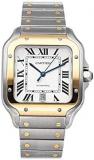
The Cartier Drive de Cartier Moon Phases presents one of horology's most romantic complications within a cushion-shaped case that measures approximately 41 mm across. Its silver flinqué dial, engraved with a radiating guilloché pattern, hosts a moon disc that tracks the lunar cycle with quiet precision. This is a watch designed for those who appreciate astronomy translated into mechanical art rather than digital convenience.
The moonphase complication itself has deep roots in watchmaking history, appearing in pocket watches as early as the eighteenth century. Cartier's interpretation places this astronomical function at the six o'clock position, where a curved aperture reveals a golden moon against a deep blue lacquered sky. The display advances once per lunar month, completing a full cycle roughly every 29.5 days, consistent with the synodic month that governs the real lunar calendar.
The Drive Collection and Cartier's Design Language
Cartier introduced the Drive de Cartier line as a distinctly masculine silhouette, drawing inspiration from the curved forms of vintage automobiles. The cushion case, with its softly rounded corners and convex flanks, references the grilles and hoods of classic French cars. This automotive connection gives the Drive collection a character that separates it from the round cases dominating the broader Cartier brand's output, which includes iconic shapes such as the Tank and the Santos.
The Moon Phases variant adds a layer of celestial poetry to this automotive-inspired architecture. The case is available in rose gold and stainless steel, with the rose gold reference measuring 47.1 mm from lug to lug and 41.2 mm across the case. Water resistance is rated at 3 bar, approximately 30 metres, which positions the watch firmly as a dress piece rather than a sports companion. A blue sapphire cabochon crowns the winding mechanism, echoing the blue of the moon display and adding a signature Cartier touch.
Dial Craftsmanship and the Flinqué Technique
The silver flinqué dial deserves particular attention. Flinqué is a decorative technique in which a guilloché pattern is engraved into the metal and then coated with translucent enamel, producing a shimmering depth that shifts with the light. On the Drive Moon Phases, the radiating pattern draws the eye toward the centre while framing the moon aperture below. Roman numerals, blued steel sword hands and a railway-style minute track complete a layout that balances classical proportion with contemporary clarity.
Case Proportions and Wearing Experience
At roughly 41 mm in diameter and about 12 mm thick, the Drive Moon Phases sits comfortably on medium to large wrists. The cushion shape distributes weight evenly, and the short, curved lugs allow the case to hug the wrist rather than overhang it. This attention to ergonomics matters for a dress watch intended to slide beneath a shirt cuff. The stainless steel reference, with its silver-toned case and matching dial, offers a more understated alternative for daily wear, while the rose gold version leans toward formal occasions.
Mechanical Heart: Calibre 1904-LU MC
Inside the Drive Moon Phases beats the Cartier Calibre 1904-LU MC, a self-winding mechanical movement developed in-house. The movement carries 25 jewels and drives the hours, minutes and moonphase display, with no date or chronograph functions to complicate the dial. This restraint is deliberate. The calibre operates at a frequency of 28,800 vibrations per hour and delivers a power reserve of approximately 48 hours, figures consistent with the specifications reported for the reference WSNM0008.
The moonphase mechanism within this calibre uses a dedicated gear train that advances the moon disc by one increment per day. Because the true lunar cycle is approximately 29.53 days, a precisely engineered moonphase will deviate by only one day every 122 years. This long-term accuracy is one reason the complication remains respected among collectors, even in an era of digital displays. The exhibition case back, where fitted, reveals the movement's finish, including bridges with Geneva stripes and a rotor that carries the Cartier hallmark.
- Movement: Cartier Calibre 1904-LU MC, self-winding mechanical
- Jewels: 25
- Functions: Hours, minutes, moonphase
- Case: Cushion-shaped, rose gold or stainless steel
- Dimensions: Approximately 41 mm diameter, 47.1 mm lug to lug
- Water resistance: 3 bar (about 30 metres)
- Crown: Blue sapphire cabochon
The Moonphase Complication in Context
Moonphase watches occupy a particular niche in the market. They are not tools for navigation or diving; they are expressions of a philosophical interest in time beyond the hour hand. Cartier's approach differs from the astronomical complications found in more technical chronograph references, where the emphasis falls on elapsed-time performance rather than celestial display. The Drive Moon Phases instead prioritises the poetry of the night sky, rendered in gold and blue lacquer.
This positioning aligns with Cartier's broader identity as a jeweller-watchmaker. The brand's historical portfolio includes mystery clocks, panther motifs and the Tank, all of which treat watchmaking as a form of decorative art. The moonphase fits naturally into this lineage: it is a function that serves beauty as much as utility. For collectors building a rounded collection, a moonphase such as this provides a contemplative counterpoint to sports chronographs and dive watches.
Comparing Moonphase Approaches
Not all moonphase watches are created equal in execution. Some manufacturers place the aperture behind a simple printed disc; others, like Cartier, use a lacquered sky with applied gold stars and a sculpted moon. The difference is visible under a loupe, where the depth of the lacquer and the sharpness of the moon's edge reveal the level of finishing. Cartier's execution sits firmly in the refined category, consistent with the standards applied to other complications in the brand's catalogue.
The drive toward precision in moonphase gearing also varies. A standard 59-tooth moon wheel produces an error of roughly one day every two and a half years, while a more precisely calculated train extends that to over a century. Cartier's specification, as documented for this reference, reflects the more accurate approach, which appeals to collectors who value mechanical integrity alongside aesthetics.
Wearing the Drive Moon Phases
On the wrist, the Drive Moon Phases reads as a dress watch first and a complication piece second. The cushion case catches light along its convex flanks, and the flinqué dial shifts from silver to near-white depending on the angle. This visual dynamism means the watch pairs well with both charcoal suits and open-collar shirts. The alligator leather strap, fitted with a pin buckle, tapers neatly to the wrist and reinforces the formal character.
Setting the moonphase is straightforward but requires care. The correct approach involves consulting a lunar calendar, determining the current phase, and advancing the display using the pusher or crown position provided. Cartier's instructions advise against adjusting the moonphase during the hours when the date mechanism is engaged, typically late evening to early morning, to avoid stressing the gear train. This is standard practice across mechanical calendar watches and applies here as well.
Collecting and Ownership Considerations
For collectors considering the Drive Moon Phases, several factors merit attention. First, the two case materials serve different purposes: stainless steel offers versatility and a lower entry point, while rose gold delivers warmth and formality. Second, the watch is a dress piece with 3 bar water resistance, so it should be kept away from swimming and heavy moisture. Third, servicing a moonphase movement requires a watchmaker familiar with calendar mechanisms, which affects long-term ownership planning.
The reference numbering helps distinguish variants. The rose gold model carries the CRWGNM0018 designation, while the stainless steel version is catalogued as WSNM0008. Recognising these codes is useful when comparing listings or verifying authenticity, particularly since moonphase watches are occasionally subject to aftermarket modification. Original dials, correct moon discs and matching case numbers are all points to verify.
Value retention in the pre-owned market tends to favour well-documented examples with full sets, including original boxes and papers. The Drive collection has a dedicated following, and the moonphase variant sits at the upper end of the line in terms of complication and desirability. Buyers seeking a first serious complication watch could do worse than consider a Cartier moonphase, given the brand's service network and the model's classical proportions.
The Enduring Appeal of Lunar Complications
The moonphase persists because it connects the wearer to a rhythm older than the clock. Long before mechanical timekeeping, lunar cycles governed agriculture, navigation and ritual. A watch that displays the moon's phase carries a fragment of that ancient awareness on the wrist. Cartier's Drive Moon Phases honours this heritage without nostalgia, presenting the complication through a lens of French refinement and automotive-inspired form.
For anyone drawn to watches that tell more than the time, the moonphase offers a daily reminder of the sky above. The Drive de Cartier Moon Phases, with its flinqué dial, sapphire cabochon and in-house calibre, stands as a considered expression of that idea. It rewards close looking, invites conversation, and demonstrates that a complication can be both technically sound and aesthetically luminous.
 Exciting, Best Luxury Watches for Sale!