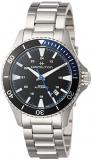
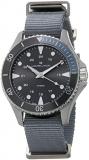
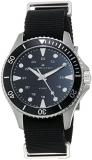
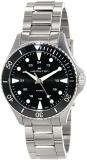
The Hamilton Khaki Navy Scuba collection occupies a distinctive position in the accessible Swiss diver segment, translating wartime precision into a contemporary tool watch for aquatic environments. Hamilton’s heritage, rooted in supplying reliable timepieces to the US military, finds its natural evolution in this series, which binds utilitarian DNA with approachable Hamilton pricing. For enthusiasts seeking the rugged aesthetic of a professional dive watch or those who simply appreciate a robust daily sports companion, the Navy Scuba line consistently earns a second look before considering pricier options.
Within the current lineup, the Khaki Navy Scuba Auto (H82335131) stands as a core reference with a black dial and 10 bar (100m) resistance, designed to transition from office attire to coastal excursions with ease. The collection offers something unusual in this price bracket: genuine horological substance, historical credibility, and a design language that clearly communicates purpose without shouting for attention.
Design Language and Case Construction
The Khaki Navy Scuba line distinguishes itself through a purposeful aesthetic influenced by Hamilton’s archives. A brushed-finished stainless steel case measuring 40mm (H82415331) provides a balanced presence on the wrist, while the 43mm GMT iteration (H82555130) extends proportions for those preferring a more commanding stance. The thickness, hovering around 13mm depending on variant, reflects proper dive-watch DNA rather than over-engineered proportions.
Screw-down crowns secure water ingress pathways, with the standard automatic lineup rated to a respectable 100 meters, adequate for swimming, snorkeling, and most water sports. The GMT automatic derivative escalates this figure to an impressive 300 meters, placing it on par with references demanding deeper underwater capability. A unidirectional 60-minute bezel equips the standard models, providing the critical timing function required for decompression stops or monitoring elapsed immersion time.
Dial Legibility and Aquatic Presence
Dial design follows the Hamilton field-watch lineage, establishing a clean, unobstructed appearance grounded in function. The deep black backdrop (H82335131 and H82415331) frames applied hour markers coated with luminous material, ensuring visibility in murky depths or under dimmed ambient light conditions. A date window positioned at three o’clock operates via a magnified cyclops on some versions, a characteristic linking Hamilton’s contemporary designs with recognized watchmaking conventions across the breadth of the 20th-century canon.
For the 43mm automatic GMT references (H82535140 specifically), the dial gains a fourth hand tracing a 24-hour scale, aiding pilots, frequent travelers, and expedition-minded wearers tracking dual time zones. These GMT models continue the matte surface treatment that mitigates glare, a thoughtful consideration during surface water navigation or cockpit operations.
Movement Architecture: The Automatic Workhorse
Powering the standard models lies the Calibre H-10, an automatic movement derived from the ETA C07 architecture. Hamilton intelligently scaled the base specifications, extending power reserve to a robust 80 hours, meaning the timepiece carries through a weekend off the wrist without requiring resetting on Monday morning. This extended autonomy surpasses numerous competing movements at equivalent price points, firmly placing performance above cosmetic layers while addressing contemporary usability expectations.
The Hamilton H-10 Calibre operates using a 25-jewel configuration, completing approximately 21,600 vibrations per hour for stable rate behavior. The transparent case back of the standard automatic versions transforms obligation into spectacle, exposing the oscillating weight decorated under a dark-chrome finish. For reference, this movement’s 80-hour autonomy is corroborated by the official Hamilton Watch website, which notes these timepieces retain accuracy across extended inactive periods, a direct advantage over shorter-reserve diesels from certain Swiss competitors.
The GMT version integrates the Calibre H-14, which repurposes the base architecture to drive an additional time-zone indication simultaneously with an independently adjustable local time function. That movement also maintains a strong power reserve, aligning with a lifestyle that interchanges professional meetings, cross-border tracks, and rural weekend trail tracking without winding anxiety.
Comparative Dive Classification Insights
Seventy-two hours plus autonomy in maritime instruments sees a competitive field. Divers’ timepieces from renowned Swiss houses, such as those found in the Hamilton brand catalog, often exceed the 100-meter threshold, yet they arrive with substantively elevated cost structures for additions such as precious-metal formats or exotic movement types. The Hamilton series remains attractively relatable through its pure instrumental personality, limiting unnecessary ornamental distractions to sustain its classic pricing position.
Rather than borrowing dive segments that strain legacy (though the 300-meter GMT score does remind of a seriously oriented tool), the Navy Scuba respects its true nature: a Swiss production associated with authentic water sports plus correct daily wear flexibility at a direct multiple below costlier options in the market timeline.
Strap Configurations and Wearing Versatility
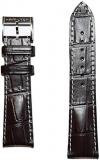
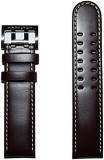
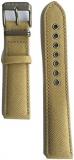
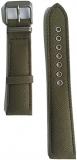
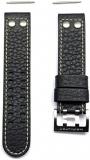
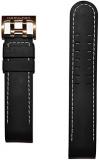
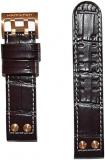
To serve distinct stylistic signals, Hamilton parcels the Navy Scuba across formal steel bracelets, textured rubber straps, or woven NATO tape. The tapered bracelet pattern incorporates three links with tapered midsections, integrating brushed and polished finishes that echo maritime light movement as the wearer peers outside. At 40mm (H82425140), the steel variant adapts under a crisp shirt cuff, ignoring genre constraints tied to clunky dive tanks via its reduced package profile.
Owners wandering outdoor circuits value the replacement rubber strap on GMT models for immediate rinsing and chlorinated environs. The buckle system receives Hamilton’s end-link integration care, removing typical toggle discomfort commonly found in similar-depth ecosystems. Adapting to wearing habits that layer underwater equipment with downtown modernity raises the Khaki Navy Scuba from a single function to three-row sports companion, text elements balancing pilot-brand vigor with honest aquatic intention.
Such trait variance provides obvious crossover conditions appreciated by brands guiding watches differentiated along DNA, comparing naturally with the sporty demeanor found in catalog representatives such as the Breitling Superocean series while sustaining an independent reading attributed solely toward the American wartime line now located in Swiss soil.
On the Wrist: From Harness to Harbor
The 40mm version provides neat wrist access for the average to more contained radius (plus use allied with smaller profiles, despite severe proportions often linked to the category). Its transverse compass works direct, with wrist pull tension naturally accented by steel weight where diving straps stiffen the friction; the line deliberately keeps under-the-cuff maximum reliability by keeping lugs to 42-plus format avoiding floating elbow patches.
Conversely, the 43mm GMT models (H82535140 and richer) command a modern stance, strong enough in case-to-bezel maturity yet resilient on initial attachment due to evenly distributed lug curvature. Field orientation designed into the crown face shield supports underwater correction without visual catch, a property enhancing their appropriate orientation among dials wider than mechanical strictness states.
The Khaki Navy Scuba Value Proposition
Crucially comparative analysis rates the Hamilton Khaki Navy Scuba positioned superbly in a scuba-offering catalog where early pros and weekend aquanauts request presence anchored on verified resistance rates, automatic caliber grade, and the iconic Swiss neutrality stamped on dials. The deliberate styling restricts trend abrasion, sustaining longevity for social segments where instruments escape formal dress code yet demand mature underline, examples include resort-side excursions, translucent sea kayak line, or extended cross-border city chains bringing unavoidable timetable interpretations.
Regarding material exclusivity, Hamilton consciously holds Khaki Navy Scuba as a gateway into mechanics, a rational bridge before appreciating secondary haute complications from long-standing institutions or luxurious interpretations of digital analogs. Compared with separate brand catalogs (including analogous values displayed in alternative instruments referencing separate DNA, e.g., the Rolex Explorer II series), the series deliberately retains historic roots connected with mission dials while living independently aside collectors logic focused on rare auction metrics.
For first-time modern mechanical audience members analyzing extended water usage accompanied by systematic city sophistication, the Navy Scuba communicates with an effective standard: honest materials, exact profiles, high-reserve powered operatives, feat based mostly on testing H-10/H-14 energy autonomy in personalized context rather than competing on face dial ornament. Proprietors highlight these as quiet achievers defying status stratification: from the clean bicolor black diver for the urban explorer, the state-managed gold-tinted metal perimeter (often mistaken by intermediate lovers), toward that bright-exhaust air-sea crossing engineered by the 300m GMT.
A slow-walking glance on the boat dock while adjusting a suit strap now receives solid feedback from several angles of impact: their steel edge micro-brushed above the water line retains luxury identification, yet the winding casing secure maintains outdoor integration often only found within production niches benefiting from literal industrial workshops, attributes strengthening owner connection to its Hamilton combat ancestry.
Above direct competition, the line proves exact to the root requirement: positioned through the American spirit, accuracy oriented, undercooled visuals, approachable Swiss mechanical execution, becoming the rational choice in reaching for top-tier behavior without the symbolic cost magnitude reserved for historical offshore industry icons. Hamilton thus explicitly satisfies water, urban wear, fundamental convenience, and recognizability scenarios, underwriting another precise chapter of watchmaking established on military base principles connecting every remote dive deeper toward own memory.