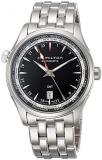
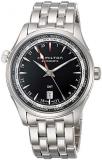
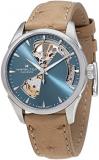
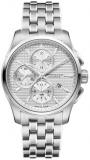
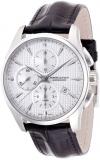
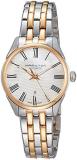
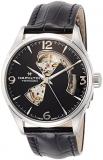
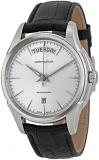
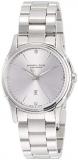
The Hamilton Jazzmaster GMT represents a compelling blend of Swiss watchmaking tradition and practical functionality for the modern traveler. This 42mm timepiece, powered by the automatic Caliber 2893-2, delivers a reliable GMT complication that allows wearers to track two time zones simultaneously. For those exploring options for a travel companion, the Hamilton brand offers a range of models where this line sits as a particularly accessible yet capable choice, providing the utility of a high-end tool watch without the associated premium typically attached to the complication.
The appeal of a GMT watch lies in its ability to bridge distances. The Jazzmaster GMT achieves this with a clear, legible dial and a fourth hand that circles the face once every 24 hours. Whether checking in with a home office across the Atlantic or coordinating a layover in Asia, the information is presented with immediate clarity. The 42mm stainless steel case provides a robust presence on the wrist, while the 11.5mm thickness ensures it slides comfortably under a shirt cuff, making a smooth transition from a business meeting to a casual evening out. The sapphire crystal protecting the dial offers excellent scratch resistance for daily wear.
Hamilton has a storied history in aviation and military timekeeping, a heritage that subtly informs the design language of its contemporary models. The Jazzmaster collection, however, leans toward a more refined, urban aesthetic. The GMT variant takes this a step further, creating a tool watch with a cosmopolitan character. This positions it differently from other iconic models one might consider, such as the Rolex GMT-Master II collection, which carries a heavier tool-watch legacy and a significantly different price point. The Hamilton offers a substantial portion of the functionality in a more understated package.
Technical Architecture and Movement
At the heart of the Hamilton Jazzmaster GMT is the Caliber 2893-2, an automatic movement renowned for its robustness and accuracy. This Swiss-made caliber is a workhorse in the industry, yet its integration into the Jazzmaster line elevates the collection’s technical standing. The movement operates at a frequency of 28,800 vibrations per hour, which contributes to the smooth sweeping motion of the seconds hand, a tactile detail appreciated by enthusiasts. Furthermore, the 50-hour power reserve is a considerable asset, allowing the watch to be set aside over a weekend and picked up on Monday morning without needing a full wind.
The movement’s functionality extends beyond simple timekeeping. The date window, positioned at 3 o’clock, offers a convenient addition to the daily utility of the watch, ensuring practicality for everyday wear. The GMT function is manipulated via a dedicated hand, which is adjusted independently to track a second time zone relative to the local time indicated by the central hour hand. This mechanical simplicity makes setting the watch straightforward, a quality valued by those who regularly switch between time zones and require a hassle-free experience.
Case Design and Wearability
The 42mm case size is a deliberate choice by Hamilton designers, aiming for a presence that is noticeable yet not overwhelming. The silhouette is classic, with subtly curved lugs that ensure the watch conforms to a variety of wrist sizes. The integrated crown aids in water resistance up to 50 meters, protecting the movement from splashes and brief immersion, though it is not designed for professional diving. The construction feels solid and substantial, ensuring confidence in its durability during travel.
The defining characteristic of the Jazzmaster GMT is its communication of time across zones. The selection of dial colors, from a stark black to a convincing silver or grey, offers varying levels of legibility and style. The hands and hour markers are treated with Super-LumiNova, ensuring that time remains readable in diminished light conditions, a critical feature for those arriving in new cities after nightfall. The date and GMT hand are discrete, adding to the watch’s functional personality without cluttering the face.
Longines offers a selection of its own travel watches, yet the Jazzmaster GMT typically positions itself as a stylish value proposition, focusing on delivering core mechanical features effectively.
Aesthetics and On-the-Wrist Impression
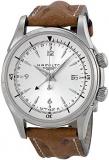
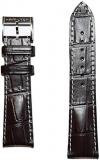
The visual language of the Hamilton Jazzmaster GMT is one of considered versatility. The option of a metal bracelet or a more formal leather strap changes the watch’s character entirely. The bracelet version leans more casual and sporty, capable of withstanding the rigors of a busy itinerary. Conversely, a leather strap, in black or brown, provides a dressier appearance, aligning the watch with smart-casual or business attire. This chameleon-like quality makes it a strong single-watch option for trips that combine different types of engagements.
The dial interpretation is where design choices take center stage. It respects the fundamental principles of a classic pilot’s watch. The indices are clear and uncomplicated. In models with a silver dial, the contrast with the black printed text and white hour markers creates a refined, elegant aesthetic. In the black dial versions, particularly the Full Black Limited Edition, the watch adopts a more modern, stealthy approach, losing some of the traditional dress watch character in favor of contemporary style.
The Traveler Advantage
For the intended audience of travelers, the Jazzmaster GMT’s real value is revealed during transcontinental flights. The ability to adjust the local hour hand in one-hour increments without stopping the seconds hand ensures the watch remains accurate to the second upon arrival. This is a micro-detail, yet it is a hallmark of well-designed travel watches. It eliminates the mental math involved in adjusting the time or the need to reset the watch at the destination, preserving the integrity of the movement’s ongoing calibration.
Comparing this mechanism to the functionality found in other timepieces reinforces its efficacy. While the Rolex Cosmograph Daytona is celebrated for its chronograph operations, the Jazzmaster GMT focuses singularly on the dual-time display, a specialist function required for crossing time zones. Similarly, diving-centric models like the Rolex YACHT-MASTER II offer a timing bezel for a different purpose. The Hamilton prioritizes travel coordination, delivering a focused solution for the jet-set lifestyle.
The decision to choose a Hamilton Jazzmaster GMT often comes down to the desire for functionality without brand ostentation. The watch appeals to those who appreciate horological engineering and design integrity. It operates as a bridge between a casual tool-watch aesthetic and a refined daily dress piece. The inclusion of specific models within this series, as highlighted in the technical specifications, allows potential owners to select a variant that matches their personal stylistic preferences, whether that is the classic elegance of the case design or a particular strap option.
Furthermore, exploring Hamilton’s heritage reveals the company’s foundational role in American watchmaking before its integration into the Swiss Swatch Group. This history provides substantial credibility into the reliability of their mechanical movements, offering a sense of legacy to a contemporary purchase. This heritage reassures prospective users that they are not merely acquiring a fashionable accessory but a piece of functional history, engineered to perform. For discoveries on similar timepieces with a strong heritage, exploring the Raymond Weil selection could also prove interesting.
Ultimately, the Hamilton Jazzmaster GMT stands as a testament to practical design and mechanical excellence. It responds to the need for durable, readable, and versatile wristwear, focusing entirely on the experience of the wearer. Traveling with such a watch means measuring time not just in hours but in moments and memories across different worlds. This model offers a way to naturally connect those moments, serving as a loyal companion wherever the horizon leads.