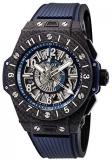
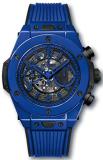
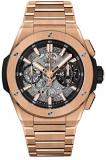
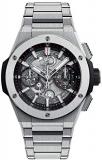
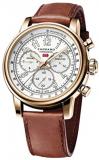
The Hublot Big Bang Unico represents a defining chapter in modern luxury watchmaking, where the audacity of contemporary design meets the precision of a fully integrated manufacture movement. Since its introduction, this collection has served as a platform for Hublot’s “Art of Fusion” philosophy, combining unexpected materials with technical prowess. The model currently anchors the brand’s offerings in a 42 mm or 43 mm case format, with each iteration demonstrating how a chronograph can feel both robust and visually striking on the wrist. For enthusiasts exploring the intersection of high-end materials and mechanical sophistication, this timepiece consistently stands out as a bold statement within the broader Hublot catalogue.
Hublot has long positioned the Big Bang Unico as its in-house chronograph flagship, a claim clearly supported by the column-wheel mechanism visible through the sapphire case back. Collectors who value both technical depth and expressive aesthetics frequently compare it with other luxury chronographs, yet the Unico holds a particular identity rooted in its distinctive module architecture. This is not merely a decorated off-the-shelf movement; it is a purpose-built calibre designed to support the quick-swap strap system and the bold geometric layering that define the model’s character. Given these credentials, this collection has earned a respected place among contemporary haute horlogerie offerings known for pushing visual boundaries.
Anatomy of the Unico Manufacture Movement
At the heart of the Hublot Big Bang Unico lies an integrated chronograph calibre that sets it apart from many competitors using modular constructions. The movement was developed entirely in-house, with its construction beginning at Hublot’s facilities in Switzerland during the late 2000s. Public records confirm the movement’s architecture includes a column wheel and a dual coupling system, which are classic components found in prestigious chronographs. The visible oscillating weight, shaped like a roulette wheel motif with the brand’s signature, is a display element that owners frequently admire through the transparent case back. This approach allowed Hublot to promote the Unico as a genuine manufacture movement, distinct from the outsourced or modified calibres seen in less specialised models.
A notable innovation in the Unico calibre is the highly efficient indexing system that permits accurate synchronisation when resetting the chronograph. The movement’s components are finished with a combination of circular graining, C么tes de Gen猫ve, and anglage, offering aesthetic pleasure without compromising technical density. Since the movement supports a flyback function with a horizontal coupling clutch, time recording can be swiftly repeated in rapid succession. For those who operate the chronograph frequently, the pushers offer a satisfyingly crisp actuation, a direct result of the column wheel’s precision manufacturing. This functionality enables the Big Bang Unico to transition effortlessly from timing a brief interval to logging longer events, all while maintaining a clean and legible dial layout.
Technical Specifications and Notable Features
Specific measurements of the original and current Unico models have been consistently documented in brand materials, confirming a case diameter typically between 42 mm and 43 mm, with a thickness often noted near 13.2 mm. The screw-down crown and the iconic bezel secured by six H-shaped titanium screws are signatures of the design language, the latter maintaining a structural connection to the original Big Bang launched in 2005. When examining broader technical data across variants, the following collection-wide traits are frequently highlighted in official press materials:
- Case and Bezel Contruction: Multi-component architecture allowing for mixed materials; often using sapphire crystals on both the dial and case back, paired with applied indexes and a date window at the three o’clock position
- Materials Palette: Evolved from Titanium and Ceramic to King Gold, Carbon Fiber, and even transparent sapphire crystal in specialised versions like the Big Bang Unico Sapphire
- Water Resistance: Standardised at 100 meters, offering a degree of resilience suitable for everyday sports use
- Comfort Features: The “One Click” interchangeability system allowing the strap or bracelet to be swapped quickly without specialised tools
The comparative modesty of the 100-meter water resistance rating reflects a balance between exhibition case backs and complex chronograph pushers. Thus, while it may not be a dedicated deep-sea instrument, the Unico comfortably handles the swimming pool or rain showers without concern. The dial layouts often place the date window at the 3 o’clock position, while a small seconds subdial and a 60-minute totaliser require precise legibility from the applied markers and baton hands. Consequently, the tachymeter scale gracing many references blends technical utility with the layered depth that immediately identifies a Big Bang’s multi-tiered geometry at a glance.
Sustainable Construction and Composite Innovation
The Big Bang Unico series continues Hublot’s pioneering use of composite materials with unusual structural properties. When discussing the choice of modern ceramics like the vibrant blue that graces limited editions, it becomes crucial to highlight how these materials offer more than mere aesthetic novelty. In watchmaking, ceramics are prized for producing surfaces with extraordinary hardness, presenting fatigue resistance several times that of steel while maintaining a feather-light profile during daily wear. Hublot’s own case production machinery has mastered the precision molding of ceramic mixtures before the intense heat treatment and diamond-polishing stages, resulting in finishes of brilliant satin and polish.
This design philosophy extends into the realm of carbon fibre, including the Texalium material used on certain collected pieces. Such specialised materials often rely on thread-woven or forged carbon composites to deliver distinct visual textures that emerge though complex layering. Recent variations have embraced aluminium micro-bead blasting to create weight reductions and distinct industrial finishes, such as in the Big Bang Unico Summer references. The internal case structure not only protects the movement with efficient shock resistance but also contributes to a highly constructive weight or lightweight wearability across the wider Big Bang collection.
The Design Language
Design continuity within this generation remains largely consistent. Case size, with its dramatic skeletal dial openings, reveals the regulating organ performing its balletic beat below the sapphire, crafting a sense of mechanical theatre through the screwed-in H-shaped bezel screws that disrupt the polished outer surface yet satisfyingly echo its engineering roots. Hublot’s designers never boxed the Unico into a single static mould, allowing versions like the white ceramic Summer editions to offer a distinctly sportier configuration for individuals interested in streetwear and current luxury trends.
The very character of the Unico belongs to a specific realm often described as skeletal industrial architecture. Its aesthetic often leads to immediate recognition among groups of sports watch users. When approaching this collection from a design standpoint, the watch expression suggests particular confidence, urban edge, and contemporary feel, rejecting classical elegance for a geometric language of exposed wheels dramatically contrasted against opulent tones of forged carbon or solid gold. This model remains particularly well-suited for individuals who admire modern automotive or architectural design, as the visual segmentation between bezel, case, and lugs creates dimensional layers that shift brilliantly under varied light environments. Through these intricate processes of fashioning their materials, Hublot displays how crafted finishes can turn functional objective frameworks into pieces of tactile indulgence.
A Glance at Historical Development and Modern Versions
Exploration into this emblem鈥檚 expansion at the start of the 2020s led to new editions solidifying its standing in current times. An evolved Original Unico generation featured a case slimmed down to be more wearable while remaining true to typical size norms with several added stylish dial configurations. These predecessors to daily wear gained first-hand traction among players in professional sports environments throughout global markets by merging numerous slim cutting-edge aesthetics into a restrained casing that adapts beautifully in scale. New limited versions punctuate the release schedule each year. From the vivid blue years following its initial re-design to transient sculpted models referencing cultural figures or landmarks such as official pilot partnerships, the Unico has never embraced the ordinary.
Durable references in multi-coloured King Gold on integrated rubber bracelets convey an unmistakable luxury trajectory linking production back to its 1980鈥檚 foundational roots as a niche specialist in gold-cased fusion chronographs. Thus, the model provides immediate standing through opulence with absolute durability. Comparable to products with full ceramic construction from more classically focused brands in some positions, the Big Bang approaches different demographics, mainly because of material science knowledge that these features connote presence rather than simple ornament. Within the sphere of open-worked clockwork and composite structures, the Unico acts as tangible proof to art founded on technical knowledge, resulting in mechanically artful parts moving for owners who appreciate rare interactions between material, engineering, and aesthetic presence on this scale. For watch lovers wanting extreme depth, there can be Hublot’s extensive catalogue, where the ensemble proposes rich technical attainment. In this vibrant territory of exclusivity, the Big Bang Unico rightly holds the line between exceptional complication and sculptural luxury across every modern format.