The Hamilton Khaki Field Mechanical 38mm pairs a matt stainless steel case with a dark dial and luminescent numerals, a combination shaped by decades of military-issue watchmaking rather than by passing fashion cycles. Few watch families carry a functional brief so cleanly into civilian life, and the Khaki Field line remains the reference point for anyone who wants a hand-wound tool watch with genuine historical grounding. This guide examines the collection model by model, separating the references that suit a first mechanical purchase from those that reward collectors with something more specific in mind.
A Military Brief Translated into Civilian Watchmaking
Hamilton’s own published history records that its military watches were fitted with the grade 649 movement, a caliber that included a hacking, or stop-second, device so that watches could be synchronised accurately across a unit. That single detail explains much of the Khaki Field’s character. Synchronisation mattered because field watches were navigation instruments as much as timekeepers, and the hacking seconds hand remains one of the clearest links between today’s references and their service origins. Legibility followed the same logic: large white numerals on a dark ground, a 24-hour inner scale on many references, and hands sized for instant reading rather than decorative balance.
The collection has since expanded into automatic movements, sapphire crystal, and a wider spread of case sizes, but the design language has stayed disciplined. There is no bezel clutter, no unnecessary sub-dial on the three-hand models, and no attempt to disguise the field watch as something it is not.
Inside the Khaki Field Mechanical and Auto
The most direct expression of the original brief is the hand-wound mechanical model. The Khaki Field Mechanical 38mm uses a 38mm matt stainless steel case, a three-hand display, a dark dial with light luminescent numerals and indexes, and a durable NATO strap. Hand-winding is not a compromise here; it removes the rotor bulk and keeps the case slim, and the daily ritual of winding suits a watch designed to be checked, set, and carried as a piece of equipment.
For those who prefer set-and-forget ownership, the Khaki Field Auto 38mm runs on the H-10 automatic caliber with 80 hours of typical power reserve. That figure matters more than it first appears. A movement that keeps running through a weekend on the desk removes the need to reset the time and date every Monday morning, which is precisely the kind of practical consideration that separates a daily wearer from a drawer watch. The Murph 38mm applies the same H-10 platform in a reference tied to its own design story, giving buyers an alternative dial treatment within the same technical envelope.
Case Sizes, Straps, and the Practical Details
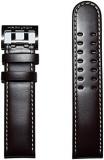
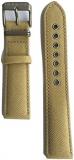
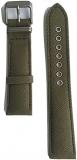
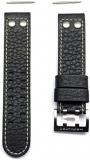
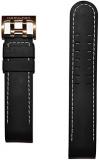
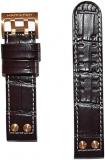
38mm has become the anchor size for the line, and for good reason. It sits comfortably within the wrist on most wearers, slips under a shirt cuff, and stays true to the proportions of mid-century military issue. Larger and smaller references exist across the family, so the deciding factor is usually wrist measurement and how the watch will be worn rather than a single correct answer. The strap system deserves equal attention. NATO straps distribute weight evenly, dry quickly, and can be swapped in seconds, while leather options push the same case toward a more urban register.
- Case: matt stainless steel, typically 38mm across the Khaki Field Mechanical and Auto references
- Crystal: sapphire on current automatic references, mineral or sapphire depending on the specific model
- Strap: NATO textile, leather, or steel bracelet depending on the reference
- Dial: dark ground with light luminescent numerals and hour and minute indexes
- Display: three-hand with date on selected automatic models
Water resistance across field references is modest by dive-watch standards, which is appropriate. These are watches built for rain, washing hands, and outdoor work rather than for swimming laps, and buyers who need genuine water performance should look at a different category of case design.
How the Khaki Field Sits Against Other Tool and Sport Watches
Field watches occupy a narrow band in the market: legible, light, mechanically interesting, and unobtrusive. That places the Khaki Field in explicit contrast with dive and racing chronographs. A chronograph-built Breitling Avenger brings a rotating bezel and much heavier case construction to the wrist, while the Khaki Field answers the same need for durability with almost no visual noise. Neither approach is superior; they serve different habits of wear.
Buyers comparing heritage-driven designs often find the field format easier to live with day to day than a formal sports watch. The Khaki Field lacks the bezel scale that dominates many dive references, so the dial reads instantly at a glance, and the slim case disappears under a cuff in a way that a 42mm chronograph rarely does. For someone building a first serious mechanical collection, that lower friction is a real advantage, and the wider field of hand-wound tool watches, including the Hamilton Khaki Field Mechanical, rewards that same logic of simplicity over spectacle.
Buying Advice by Wearer Profile
The choice within the line usually comes down to three questions. First, hand-wound or automatic? The mechanical rewards attention and keeps the case thin; the auto rewards convenience and offers the 80-hour reserve. Second, which dial treatment? The standard field dial is the most historically faithful, while the Murph reference appeals to buyers who want a more specific visual identity. Third, which strap? A NATO is the natural pairing, but leather broadens the watch’s range considerably without changing the case.
For a first mechanical watch, the 38mm hand-wound reference is the cleanest entry point: it teaches winding, it is light enough to forget, and its specification matches its purpose without excess. For a single watch that covers office and weekend, the automatic with 80 hours of reserve is the more pragmatic purchase. Collectors with several tool watches often add the mechanical precisely because it is redundant in the best sense: it does one job, with no complications competing for attention.
The Hamilton Khaki Field endures because it never tried to be a luxury object first. Its design decisions, from the luminescent numerals to the hacking movement lineage, trace back to a brief written for soldiers who needed to know the time to the second. That inheritance is still visible on the wrist, and it is the reason the collection remains one of the most coherent entry points into mechanical watch ownership.