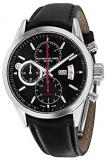
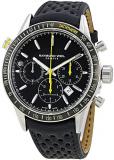
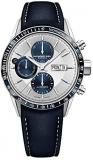
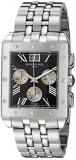
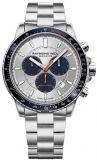
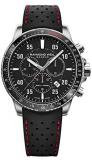
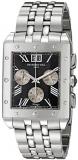
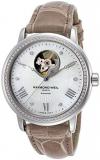
The Raymond Weil Maestro Chronograph represents a compelling chapter in the storied history of Swiss watchmaking, a collection that has consistently balanced accessible luxury with genuine mechanical substance. While the Maestro line began as a tribute to classical music and the brand’s founder, the chronograph iterations have elevated the family into a territory where form and function perform in perfect harmony. For those exploring the broader landscape of haute horlogerie, the Maestro Chronograph offers an entry point that does not compromise on craftsmanship, and it sits naturally alongside the distinguished offerings found within the curated Raymond Weil selection at GlitzStorm.
The chronograph complication is one of the most beloved and historically significant functions in watchmaking, and the Maestro Chronograph handles this heritage with a distinctly elegant touch. Rather than adopting the aggressive, tool-like aesthetics of a racing chronograph, Raymond Weil has dressed the complication in formal attire. The result is a timepiece that feels at home in a boardroom or at a classical concert, yet still offers the practical utility of a stopwatch function. This duality is a hallmark of the Maestro line, which has long been celebrated for its ability to fuse artistic inspiration with mechanical reliability.
Design Philosophy and Visual Aesthetics
The visual identity of the Raymond Weil Maestro Chronograph is defined by a commitment to balance and legibility. The dial layout typically employs a tri-compax arrangement, with subsidiary registers positioned at 3, 6, and 9 o’clock, a configuration that is both symmetrical and information-rich. The placement of these counters is not merely functional; it contributes to a dial that resembles a carefully composed piece of sheet music, where each element has its place and purpose. The use of applied indices, often in rose gold plating or classic silver, adds depth and a perpetual sense of refinement.
The case proportions have evolved across the collection to meet contemporary preferences for presence on the wrist. Early Maestro models were celebrated for their slender profiles, with diameters around 40mm and thicknesses under 10mm, establishing a dress-watch standard. Later chronograph versions have adopted slightly larger dimensions, generally in the 41mm to 41.5mm range, allowing for improved readability of the sub-dials without sacrificing the collection’s inherent elegance. The case, crafted from high-grade stainless steel, is finished with alternating brushed and polished surfaces, a detail that catches light dynamically and reveals the hand-finishing that distinguishes the collection.
The inclusion of a date aperture, typically framed at 3 o’clock, is handled with discretion, ensuring that the practical function does not disrupt the visual harmony of the dial. The crown, often signed with the brand’s “RW” monogram, is fluted for easy grip, a subtle yet crucial touch for an operationally smooth experience.
Dial Variations and Material Choices
Raymond Weil has offered the Maestro Chronograph across a spectrum of dial finishes, catering to diverse tastes. The classic silver sunray dial remains the most iconic, its brushed texture radiating light from the center and providing a luminous backdrop for applied hour markers. More contemporary iterations have introduced deep blue, graphite grey, and even copper or anthracite variations, which add a modern edge to the traditional design. The hands, typically in a dauphine or baton style, are carefully shaped to complement the markers and ensure effortless time reading at a glance.
Material choices extend beyond the dial to the case and bracelet. While stainless steel is the foundation, two-tone versions that blend steel with rose gold plating have been introduced, echoing the opulence of the 18-karat rose gold models offered elsewhere in the Maestro lineup. These two-tone executions enhance the watch’s prestige, making it a versatile companion for formal occasions. The integrated bracelet is meticulously constructed, featuring a taper that conforms comfortably to the wrist, while a leather strap option, often in classic alligator or calfskin, introduces a softer, more vintage-inspired character.
Movement and Technical Specifications
The heartbeat of the Raymond Weil Maestro Chronograph is an automatic chronograph movement, a caliber that reflects the brand’s partnership with established Swiss movement manufacturers. These movements offer a power reserve of approximately 48 to 56 hours, depending on the specific caliber housed within. The use of a column wheel or cam-switching mechanism varies by generation, but both provide the smooth start and stop action expected from a quality chronograph. The oscillating weight, visible through a sapphire case back, is often decorated with Geneva stripes and the brand logo, providing a glimpse into the mechanical artistry within.
The performance specifications of the Maestro Chronograph provide confidence for daily use. The case offers water resistance that protects against splashes and brief immersion, making it practical for incidental contact with water, even if it is not designed for diving. The sapphire crystal, treated with an anti-reflective coating, ensures exceptional clarity and scratch resistance, protecting the beautiful dial beneath. The combination of a robust movement, durable case, and sapphire glass positions the Maestro Chronograph as a “go-anywhere, do-anything” dress watch that can handle the rigors of daily life.
Chronograph Operation and User Experience
Operating the Maestro Chronograph is a tactile pleasure. The pushers, integrated smoothly into the case design, offer a positive and crisp actuation with minimal resistance. The startup of the chronograph seconds hand is instantaneous, and the return-to-zero function is precise, with the hand snapping back to its resting position without any wobble. The 30-minute and 12-hour totalizers operate seamlessly, providing a comprehensive tool for measuring elapsed time, whether for culinary timing, sporting events, or simply a personal fascination with mechanical timing.
On the wrist, the Maestro Chronograph wears with remarkable confidence. The case dimensions, while present, are well-distributed, and the mid-case is sculpted to allow the watch to sit close to the wrist. Weighing in at a substantial but balanced level, it gives the wearer assurance of quality without feeling burdensome. The bracelet’s folding clasp is equipped with safety releases, preventing accidental opening. The finishing throughout is of a very high standard, reinforcing the perception of a watch that exceeds its price point.
The Maestro Legacy and Market Positioning
The Maestro collection occupies a distinctive place in Raymond Weil’s lineup, bridging the gap between the brand’s avant-garde pieces and its more classic offerings. Since its introduction, it has been conceived as a tribute to the world of music, and the chronograph variants continue this legacy with a design that is harmoniously arranged. The collection has evolved over the years, but the core ethos has remained unchanged: a commitment to providing an accessible, high-quality Swiss timepiece with an independent family-run spirit. This independence allows Raymond Weil to weave emotional narratives, such as the connection to music and the arts, into their designs without the constraints of a larger luxury conglomerate.
For a collector or enthusiast, the Maestro Chronograph represents one of the most compelling value propositions in the Swiss watch industry. It offers a mechanical chronograph with sophisticated styling, exceptional build quality, and genuine brand heritage at a price point that undercuts many competitors. Compared to offerings from more prominent brands in the same category, the Maestro Chronograph provides a similar level of technical sophistication, yet it carries a sense of understated exclusivity. As the wider industry shifts toward oversized, sports-oriented designs, the Maestro Chronograph stands as a refined alternative, offering a glimpse into the more civilized, elegant side of horology. For those acquiring their first serious chronograph, the model serves as a delightful entry point into the intricate world of Swiss mechanical timing.