The Hamilton Khaki Day Date stands as a testament to the brand’s rich military heritage, blending utilitarian design with the practical necessity of a full day-date complication. For decades, Hamilton has equipped armed forces with robust timepieces, and this collection carries that DNA forward. Each model within this family offers a date window and a day aperture, presenting information with the clarity and legibility one expects from purpose-built tools.
Collectors and enthusiasts often compare the day-date display to iconic references like the Rolex Day-Date, yet Hamilton provides its own interpretation at a more accessible price point. The 42mm stainless steel cases make a confident statement on the wrist, while the H-30 or H-40 calibers deliver modern performance with an effective 80-hour power reserve. These watches reflect a philosophy that values substance alongside style, a trait that has defined the brand since 1892. The complete catalog of Hamilton watches for everyday wear showcases this same commitment to accessible mechanical quality.
The Legacy Behind the Design
Hamilton’s journey into timekeeping began in Lancaster, Pennsylvania, and the brand quickly became a name trusted by railroad engineers and military personnel alike. The Khaki name originates from the Hindi word for “dust,” referring to the military uniforms worn during colonial campaigns. By adopting this term, Hamilton paid homage to its battlefield contributions, producing reliable watches that could withstand the harshest environments.
The day-date function is not merely an accessory for luxury buyers; in the field, knowing both the date and specific day carries operational significance. Hamilton’s engineering over the years has refined these movements, balancing robustness with accuracy. The transition from pocket watches to wrist instruments ensured the company stayed at the forefront of horological innovation, and the Khaki Day Date lineage demonstrates this steady evolution.
The Aviation and Field Branches of the Khaki Family
Within the Khaki Day Date series, two primary design paths emerge, each tailored to a distinct set of environments. The Khaki Aviation Pilot Day Date honors the cockpit, while the Khaki Field Day Date speaks to the hiker on rough terrain. Each collection preserves the core attributes of legibility, utility, and a heritage-inspired aesthetic, yet their personality differs in dial treatment and case finishing.
Khaki Aviation Pilot Day Date: Briefing for the Skies
The Aviation variant, epitomized by references like the H64615135, introduces the H-40 movement alongside an 80-hour autonomy. The 42mm case measures 11.85mm thick, a proportion that fits neatly under a flight jacket cuff. Anti-reflective sapphire crystal protects the black dial, which features bold Arabic numerals and a date display positioned perfectly for an aviator’s quick glance. Water resistance reaches up to 10 bar or 100 meters, a figure that exceeds the needs of any cockpit yet provides peace of mind in unexpected rain.
The dial layout prioritizes situational awareness; luminous hands and hour markers ensure readability in low-light conditions. A subtle day window at 12 o’clock and a date aperture at 3 o’clock offer comprehensive calendar information without cluttering the face. The aviation branch of the family presents a world of reference numbers, each varying in finish and strap options, allowing wearers to choose between steel bracelets or leather straps depending on their preference.
Khaki Field Day Date Auto: The Outdoor Companion
On the field side, the H70695735 and H70535531 references adopt the rugged khaki aesthetics associated with military campaigns. These models use the H-30 movement, another 80-hour powerhouse within the Swatch Group’s technical arsenal. The case sizes remain consistently 42mm across both aviation and field lines, ensuring a unified presence across the collection.
The black dial on the Field auto features a distinct texture and legible numerals set within a lightweight steel body that endures the bumps of survival gear. Hamilton specifies 10 bar pressure resistance for these references, making them suitable for swimming and general wear in humid conditions. The day-date window appears prominently at 12 o’clock, with the date itself typically shown within a trapezoidal or rectangular frame, preserving the utilitarian character of the original military watches.
Movement Architecture and Technical Prowess
Contemporary Hamilton watches derive much of their internal reliability from the proprietary H-30 and H-40 calibers. These engines, developed to provide three-day autonomy, represent a modern reinterpretation of the ETA 2824 architecture, with an increased barrel size for extended energy storage. The movements operate at 21,600 vibrations per hour and contain 25 jewels, which minimize friction and ensure the smooth progression of the hands and complications.
An open case back on several models allows a glimpse of the sandblasted bridge surfaces and custom Hamilton rotor. While many brands treat the oscillating weight as an aesthetic canvas, Hamilton focuses on pragmatic finishing, giving the wearer a straightforward view of the system’s ordering principles. The day-date mechanism switches instantly at midnight, and the crown has quick-set positions for both functions, allowing the user to adjust the day and date without endless winding of the mainspring.
Additionally, the anti-magnetic properties inherent in modern case construction raise the reliability of these pieces in everyday electromagnetic environments, from laptops to airport security scanners. The effective power reserve of 80 hours means that a watch left idle on a Friday evening will still provide precise readings on Monday morning, removing the need for manual rewinding during a weekend break.
Materials and Purpose-Driven Construction
Stainless steel dominates the Hamilton Khaki Day Date family, chosen for its balance of lightness, strength, and corrosion resistance. The Aviation Pilot models typically feature a polished and brushed finish that catches light reflections in a restrained manner, whereas the Field iterations emphasize a more satin-look texture to reduce glare during outdoor tasks. Each case measures 42mm wide and approximately 11.6mm to 11.85mm thick, measurements that fit comfortably on medium to large wrists with no excessive bulk.
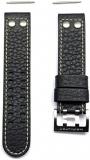
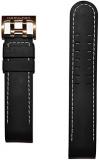
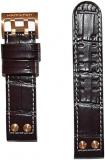
The choice of strap or bracelet is conditional on the user’s intent. Textured leather straps offer immediate comfort and age nicely with wear, while high-grade steel bracelets provide a more durable and uniform look. Some references also appear on a fabric strap reminiscent of the original military issue khaki material, featuring a two-tone weave that lines the wrist with felt-like pliability. Sapphire crystals, treated with an anti-reflective coating on both sides where indicated, present a high level of scratch resistance that ensures the dial retains its crispness after years of service.
A comparison with a legendary option like the Rolex Day-Date reveals that while traditional dresspieces prioritize cyclops magnification over water resistance, the Hamilton family achieves a convincing compromise; its 100-meter depth rating offers a level of utility absent from many precious-metal alternatives. Since the mass market looks for improved safety when traveling and undertaking sport activities, the water resistance alone manufactures a strong argument for selecting the Khaki Day Date line.
Design Language and Daily Legibility
The design language and daily legibility of the Hamilton Khaki Day Date foster a direct emotional association with professional instruments. The white-glowing Super-LumiNova applied to numerals and hands ensures use in low-light scenarios, without losing a daylight silhouette that marks time clearly. Each dial layout presents a centralized hierarchy: hours are read instantly from the main display, the date appears at the three o’clock or dedicated aperture, and the full day name sits in an arc at twelve.
For fans of alternative style, the dial choice of gradient grey or sunburst hues appears on specific models, although monochrome black remains standard for the core range. Some Aviation variants also include two counters or a discreet seconds subdial merging harmoniously with the hour track, boosting the visual texture of the instrument. From a fashion perspective, the restrained color palette grants the watch the versatility to complement all-metal wardrobes or mixed-neutral compositions.
Positioning the Khaki Day Date in Today’s Market
Present market conditions place the Hamilton Khaki Day Date in a sweet spot for consumers seeking affordable mechanical craft amid a boom in vintage-inspired releases. Swatch Group expertise guarantees relatively low service cost and a clean supply chain movement replacement, which supports a positive ownership experience. Hamilton markets these examples as flanking its premium lines, confirming durability without sacrificing accuracy in day-to-day performance.
The use of day and date in mechanical compilations continues to reassert itself, recalling iconic references of business-era wristwatches despite the ultra-thin high-tech gadgets producers release annually. By seeking an old-style expression like the Khaki family, enthusiasts usually aim for authenticity more than sparse invention, assessing proven asset values in stainless steel and automatic movement. The role that Hamilton once assumed during military contracts carries over to this design-no exaggerated flanks, no intricate precious settings, just persistent precision on a plain surface ready for any command. As consumers continue seeking a single mechanical piece that translates from boardroom to campground, the Hamilton Khaki Day Date persists as a rational, stylish ally readied for the decades ahead.