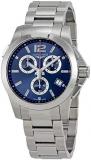
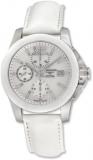
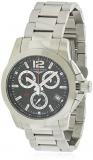
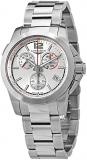
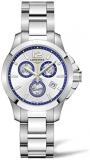
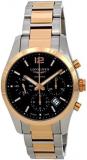
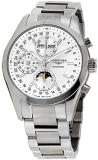
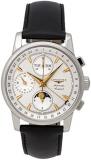
The Longines Heritage Pulsometer stands as a compelling bridge between the brand’s rich archival past and its contemporary watchmaking capabilities. This model draws direct inspiration from pulse-rate chronographs produced in the early 20th century, when physicians relied on such instruments to measure a patient’s heartbeat with remarkable efficiency. By reviving that specific tool, Longines offers more than a simple vintage-styled timepiece; the watch delivers a tangible connection to a bygone era of medical practice and precision engineering.
What immediately distinguishes this release within the broader landscape of heritage-inspired watches is its dial layout. The pulsometer scale, printed along the outer edge of the dial, allows the wearer to measure heart rate without any complex calculation. This functionality, while rooted in medical history, translates into a design feature that gives the watch an unmistakable character. The balance between clinical utility and aesthetic refinement makes the Longines Heritage Pulsometer a genuinely unique offering in its segment.
A Design Language Rooted in Historical Authenticity
Longines has demonstrated consistent expertise in reinterpreting archival designs, and the Heritage Pulsometer follows that tradition with confidence. The case proportions echo mid-century chronograph conventions, avoiding the oversized dimensions that dominate much of the modern market. Instead, the watch sits comfortably on the wrist with a measured presence that prioritizes wearability and historical accuracy.
The dial itself is where the design narrative truly unfolds. Clean typography, slender hour markers, and a subtle tachymeter or telemeter scale alongside the primary pulsometer function create a layered yet uncluttered visual experience. The choice of color palette typically includes a cream or silver-toned dial with contrasting sub-registers, further enhancing the vintage feel. Each element serves a purpose, and nothing appears superfluous, which speaks to the thoughtful curation behind the entire composition.
For collectors who appreciate authentic design lineage, the Longines brand has long been recognized for preserving such legacies. The Heritage Pulsometer sits naturally alongside other historically informed pieces, and it invites comparison with similarly inspired creations from other Swiss manufacturers, though the Longines model occupies its own distinct niche with its medical instrument roots.
Chronograph Functionality and Mechanical Precision
At the heart of this timepiece lies a column-wheel chronograph movement, a caliber choice that reflects Longines’ commitment to traditional high-end watchmaking. The column-wheel mechanism is favored by enthusiasts for its smooth action and precise start-stop-reset performance, qualities that distinguish it from more common cam-operated chronographs. This technical decision elevates the watch above mere stylistic homage and gives it genuine horological credibility.
The chronograph function operates with a satisfying tactile response through the pushers, and the central seconds hand sweeps with a controlled, steady motion. Activation of the pulsometer scale follows a straightforward sequence: the wearer starts the chronograph at the first detected pulse beat, counts a specified number of beats, and then reads the corresponding heart rate on the scale. This process, once taught to every medical student, becomes an engaging interaction between the user and the instrument.
The oscillating weight winds the movement efficiently, and the power reserve comfortably covers a full day of use. Anti-reflective coating on the sapphire crystal ensures legibility under various lighting conditions, whether in a dimly lit consultation room or under direct outdoor sunlight. These modern enhancements do not compromise the vintage character; rather, they reinforce the practicality of wearing a historically inspired piece as a daily companion.
The Aesthetic Appeal of a Rare Dial Configuration
One of the most attractive aspects of the Longines Heritage Pulsometer is how rarely such a dial configuration appears in contemporary production. While many brands produce chronographs with tachymeter scales, and some offer telemeter variations, the pulsometer scale remains a relatively uncommon feature. This scarcity appeals to collectors seeking differentiation within their acquisitions.
The visual rhythm of the dial encourages prolonged appreciation. The outer scale, densely printed yet perfectly legible, frames the central time display with a sense of purposeful continuity. The sub-dials remain subdued, ensuring that the pulsometer graduation receives the attention it deserves. This hierarchy of information is handled with the subtlety expected from a maison with Longines’ design maturity.
Strap options typically include either a traditional leather band with contrast stitching, reinforcing the vintage identity, or a steel bracelet for those who prefer a more robust presence. Both choices complement the case finish, which balances brushed surfaces with polished chamfers. The overall wearable result is a watch that transitions convincingly from a business meeting to a casual weekend setting without losing its distinctive identity.
Positioning Within Modern Heritage Collections
The resurgence of heritage models across the industry has brought renewed attention to historically accurate reissues. Within this movement, the Longines Heritage Pulsometer holds a particular appeal because it draws from a functional origin rather than a purely aesthetic one. The watch tells a story about how timekeeping instruments served professions beyond navigation and sport, expanding the narrative of what a chronograph can represent.
This contextual depth adds significant value for those who appreciate the broader history of Swiss watchmaking. Compared to other professional tools of the era, such as the original pulse watches from mid-century collections or even specialized pilot chronographs, the pulsometer stands out for its association with the medical field. The resulting character of the modern revival feels intellectually engaging, offering conversation value that extends beyond superficial appreciation of craftsmanship.
Connoisseurs who find resonance in such historically layered designs may also appreciate the engineering approach found in the Tissot Heritage line, which similarly bridges archival inspiration with accessible luxury. Both brands share the Swatch Group heritage of value-oriented mechanical watchmaking, yet they maintain clearly differentiated identities within that structure. The Longines piece, however, leans more heavily into the specificity of its pulsometer function, making it the more singular proposal of the two.
Why the Heritage Pulsometer Appeals to Contemporary Collectors
Modern collectors often seek more than just accuracy and brand recognition; they look for stories, scarcity, and emotional connection. The Longines Heritage Pulsometer delivers on all three fronts. Its limited association with the medical profession provides an unusual narrative hook, while its relatively niche status ensures that owners rarely encounter the same watch on another wrist.
Comfort also plays a crucial role in the watch’s appeal. With a case size that respects traditional proportions, the watch wears true to its design period rather than feeling like a scaled-up adaptation of a vintage model. That authenticity of proportion matters greatly to collectors who have experienced the disappointment of an otherwise beautiful reissue marred by unnecessary magnification. Longines restrained approach demonstrates an understanding of what makes vintage timepieces genuinely charismatic.
In terms of lifestyle compatibility, the watch integrates seamlessly into a rotation that might include other classic references from the broader Swiss landscape, such as the Rolex Datejust II for formal settings or the TAG Heuer Grand Carrera for those who prefer a sportier chronograph alternative. The Heritage Pulsometer, however, offers a quieter, more contemplative presence that sets it apart from these more commonly encountered models.
The experience of wearing the watch extends beyond telling time or measuring a pulse. It serves as a reminder of a period when specialized instruments were designed with a single purpose and executed with absolute focus. In an era of multifunctional digital devices, that simplicity and clarity of intent feel increasingly valuable.
Longines has ensured that servicing remains straightforward, thanks to the brand’s robust after-sales network and the use of calibers with accessible spare parts. This practical consideration reassures buyers who intend to keep the watch for decades, a meaningful factor when evaluating long-term ownership satisfaction. Enthusiasts examining similar offerings within the same commercial segment should also give time to the Breitling Chronomat or the Omega Seamaster family for their respective technical merits, though those watches pursue entirely different aesthetic goals.
The Longines Heritage Pulsometer acknowledges the past without being imprisoned by it. The manufacture retains modern shock protection, improved mainspring alloys, and upgraded hairspring materials within a movement architecture that respects classical construction. This synergy between old and new extends to the finishing as well, with perlage and Geneva stripes visible through the transparent case back, inviting constant inspection.
The dial decoration continues the theme of purposeful elegance. Applied indices with careful anglage, a subtle rail-track minute graduation, and the brand logo rendered in period-appropriate typography all combine to create an authentic early-century atmosphere. The careful art direction executes with restraint, avoiding the heavy-handed “fauxtina” that often detracts from otherwise credible vintage homages.
Owning such a timepiece ultimately means engaging with a specific fragment of cultural history. The pulsometer chronograph speaks to an age when physicians carried specialized watches as part of their daily equipment, much as pilots carried navigation chronographs or divers carried depth-rated tools. That association brings with it a certain seriousness and dignity that elevates the watch beyond a mere fashion statement.
Longines markets this release as part of its ongoing effort to celebrate milestones from its extensive archive, a strategy that consistently produces among the most historically accurate revival pieces in the industry. Collectors who value such fidelity recognize that Tissot Heritage revived classics and Breitling Superocean Heritage limited editions also address similar desires for meaningful design continuity in respected contemporary interpretations.
Within the collection, the Heritage Pulsometer also functions as an entry point for younger enthusiasts who may have first encountered Longines through its more technologically advanced offerings. It offers them a gateway into appreciating mechanical chronographs as historical and cultural objects, rather than purely functional devices. This educational dimension of the watch further broadens its appeal and secures its position as more than a transient market trend.
The manufacture’s dedication to preserving its historical identity shines through in the execution of this piece. Every detail, from the crown engraving to the caseback lettering, contributes to the overall narrative of authenticity and care. This meticulousness is precisely the kind of deliberate design process that reaches beyond the ordinary expectation of limited series production.
Ultimately, the Longines Heritage Pulsometer offers an opportunity to own a functional artifact rooted in a fascinating and specific medical tradition, updated with responsible modern execution. For enthusiasts already versed in the broader panorama of Swiss chronographs and collectors seeking their next distinctive acquisition, this timepiece presents itself as equally legitimate as adding a Rolex Explorer II and comparable icons to a growing private assembly focused on historically resonant daily wear.