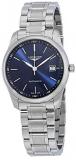
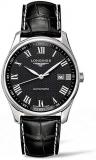
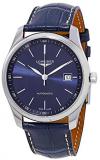
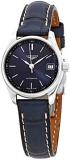
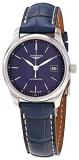
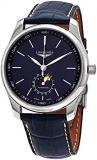
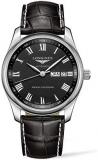
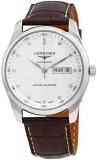
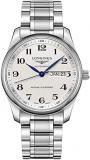
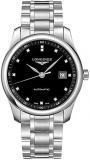
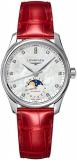
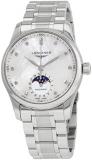
The Longines Master Collection represents one of the most recognizable families within the brand’s modern catalog, combining traditional Swiss watchmaking with accessible sophistication. Launched as a tribute to Longines’ technical heritage, the collection offers a wide spectrum of models, ranging from understated three-hand automatic watches to intricate chronograph moonphase complications. What makes this series particularly appealing is its ability to maintain visual restraint while packing considerable horological substance under the dial.
For collectors and first-time buyers alike, the Longines Master Collection deserves attention for its consistent design language and dependable self-winding movements. Many references within the line feature silicon balance-springs, a material choice that improves anti-magnetism and long-term accuracy. The interplay between technical innovation and timeless aesthetics positions these watches as versatile pieces suited for office environments, formal gatherings, and casual weekends alike.
The Architecture of the Longines Master Collection
Examining the specifications across several key references reveals a thoughtful approach to sizing and movement construction. The collection primarily employs stainless steel cases with diameters around 40.00 mm, a dimension that balances presence with wearability across different wrist sizes. Automatic movements beat at frequencies of 25,200 or 28,800 vibrations per hour, depending on the specific calibre, and offer power reserves ranging from 66 to 72 hours in modern iterations.
- Case material: Stainless steel throughout most references
- Diameter: Typically 40.00 mm for optimal proportion
- Movement: Self-winding mechanical, featuring silicon balance-spring on newer calibres
- Vibration frequency: 25,200 or 28,800 vibrations per hour depending on reference
- Power reserve: Up to 72 hours on select automatic models
- Water resistance: 3 bar, suitable for everyday splash exposure
These figures place the Longines Master Collection in a competitive segment where buyers expect both performance and elegance without paying luxury conglomerate premiums. The use of silicon technology, once reserved for high-end independent brands, signals a genuine commitment to movement durability. Compared to the Omega Seamaster collection, which emphasizes dive-oriented robustness, the Longines Master line stays closer to dress-inspired proportions while still employing advanced materials.
Chronograph Moonphase References
Among the most visually complex pieces in the Longines Master Collection are the chronograph moonphase models, such as the reference L2.673.4.78.3 and its sibling L2.673.4.78.6. These watches present a dense array of information without feeling cluttered on the wrist. The 40.00 mm stainless steel case frames a dial that hosts a 30-minute chronograph counter, running seconds, date via a pointer mechanism, and a moonphase display at six o’clock.
The moonphase complication holds particular appeal for those who appreciate celestial mechanics. In the Longines Master autochronograph, the depiction of the moon against a blue or silver disk adds poetic dimension to an otherwise functional instrument. Collectors often find themselves rotating the crown to watch the moon advance, a simple pleasure that mechanical watches continue to offer in a digital age.
The 28,800 vibrations per hour frequency enables smooth chronograph operation and precise 1/5-second readings. Power reserve extends to 66 hours, which comfortably covers a weekend of inactivity. Water resistance at 3 bar meets the expectation for a dress chronograph; this is not a model intended for diving, but rather for environments ranging from boardroom presentations to evening social calendar commitments.
Date-Only Automatic Versions
For purists seeking a cleaner face, the collection also offers date-only references like the L2.793.4.79.6. This version strips away subdials and extra register functions, returning the focus to the essentials: hour, minute and central seconds hands, complemented by an aperture at three o’clock displaying the date digitally.
This model houses a self-winding mechanical movement oscillating at 25,200 vibrations per hour, a slightly slower rhythm than the chronograph calibres, yet delivering an extended power reserve of up to 72 hours. The date window features an instantaneous jump mechanism, ensuring the numeral changes crisply at midnight rather than creeping slowly over several minutes. For individuals who rotate between multiple watches, the three-day reserve proves genuinely useful: even after a long weekend, the movement will be good to go once the crown receives twenty or so turns.
Silicon Balance-Springs and Long-Term Performance
One of the defining contemporary contributions from Longines involves integrating silicon balance-springs across multiple Master Collection calibres. Engineering materials have vast consequences for user satisfaction. Because silicon is inherently anti-magnetic, the oscillator performs with more stability in proximity to everyday electronics, including laptops and tablets. The material also demonstrates longevity; oil degradation and wear occur at lower rates compared to traditional metallic springs.
Anti-magnetism matters in an era of relentless electromagnetic exposure. Activities that once challenged mechanical movements, like carrying a smartphone against the wrist or placing a watch besides laptop speakers, no longer threaten rate stability. This advantage extends service intervals by reducing the frequency of demagnetization visits; owners occasionally forget that a watch stoppage or time drift stemmed from an inexpensive yet annoying magnetization.
Longines positions the Master Collection as accessible luxury that follows industrial trends rather than mere aesthetic exercises. By installing silicon components in a series sold at attainable price points, the brand outperforms stablemates priced considerably higher. The output from their research division demonstrates how flagship heritage filters down into collections designed for daily rotation.
Comparing the Longines Master Collection with Other Heritage Lines
The watch landscape includes many retrospective-inspired ranges, but few align price-to-performance values consistently. Consider the approach identifiable within the broader Swiss industry. The Rolex GMT-Master II collection, for instance, concentrates on functional diving capabilities combined with traveler dual-time displays, pushing its aesthetic language toward robustness. On the other end of the spectrum, the Omega Speedmaster collection orbits around one of the most storied chronographs in history, concentrating immediately on name recognition.
Unlike models addressing sport-defined market segments, the Longines Master line restricts visual noise, creating a platform where complications remain the focus rather than brand hype. The dial appears written for logophiles who enjoy reading movement microprint legends. Exhibition casebacks provide an unobstructed view of oscillating weights and blued screws on certain models, aligning with current tastes for visible mechanical complexity.
Between specifications and pricing, transparent comparisons present sensible conclusions. Enthusiasts thinking about serious chronograph investments generally investigate Omega Speedmaster watches thanks to their moon association, while casual buyers fixated on reliability offered by resistant tool styles may belong in front of a Rolex Yacht-Master collection page analysis, realizing those luxury levels complicate conversational budgets.
Bridging this acquisition journey through simpler, but equally equipped timepieces: The Longines Master Collection convincingly calls attention to complication quality. Standard leather strap models adopt quick-release systems on some references, respecting consumer changes without involving trips to jewelers. Sales representatives frequently describe this series as one containing multiple entrances for newcomers, given options ranging from affordable entry points to high-specifications involving GMT or dual-time displays found elsewhere in retailer showcases.
Dial Finishing and Visual Details
While internal mechanics generate technical curiosity, first impressions emerge through dial execution, applied indexes, case profile and packaging curve. The Master Collection uses silvered, black or sunray blue surfaces. Their treatments catch natural light with graduated warmth, guaranteeing wrist changes in daily lighting contexts. Classic railroad minute tracks encircle interior chapter rings onto which slim baton markers or Roman numerals focus reading convenience.
Applied metal surrounds give dimensional presence to index endings, though no Lume saturation issue emerges: dressing-oriented layouts stay visible indoors, but honest outside darkness demands continued checking beneath direct light. This is traditional protocol rather than functionality oversight. The model making Moonphase lovers happy remains the most dominating, particularly while the disk transitions below a polished arch below twelve o’clock subdial.
Bracelet design and fitting consideration: stainless steel five-link constructions associated with longines legacy comfortably wrap average wrists using tightened adjustment holes. They sit stiff when fresh, then settle personably with body heat after several afternoons. Folding clasps keep engraved brand signs centered; different small features avoid scratching desks and automobile door exteriors.
For luxury ownership expectations in domestic tolerances, many preselect deployant conversions to extend genuine leather lifespan. Those watchmakers similarly exchange these into patterned black alligator straps. Exploring available relevant Rolex YACHT-MASTER II options underlines this distinct personality style separate from tool saturation, sporting bright colors not present in conventional dress drafting.
Wearing Experience Across Daily Contexts
A Master Collection automatic transitions respectably among shirt cuffs without thickness pushing suit jackets awkwardly. Between white dial attributes under incandescent function lighting and dark sunburst variants after sunset meetings, visual language remains friendly for speech presence. A fundamental motivation drives configuration possibilities: contemporary consistency anchored by traditional codes that avoid being outdated statement pieces.
Usually frictionless operations occur after removing and wearing glasses under table lights; barrel bridges engage secure sensations through threading. No disappointments happen viewing fine seconds sweeping whose 25,200 vibration increments read gently against date numerals. Minor visible purists may notice hair-spring flatness performing favorably in vertical placements found above wardrobe drawers while nights pass. Four hands and moonphase transition loadless position bring pleasure independent from how others judge luxury indicators on formal waist coasts.
Accessible diversification makes these Longines propositions comparable to looking over Rolex Yacht-Master variants, but collection standards respond to emotional personality without ocean demands digging geological research. Persistently evolving future timepiece families integrate measurement at medium scale where silicon tweaks outbalance old cobalt manufacturing.
Selecting the Right Master Collection Reference For Your Style
When narrowing down selection across its formidable catalog, ask which assignment corresponds closest to wrist complexity comfort level, since Master covers multiple simultaneous tracks of buyer evolution. If purchasing a first mechanical representative for annual milestone achievements or personal ceremonial inclusion, begin reviewing three-hand date autos possessing complete functionality despite matching aesthetic surroundings. Their performance measures adequately verify craft advancement transferable to proper weekend rotations.
If the call is for mechanical theatre carried under translucent sapphire displaying a lunar age stages with heavy visual interest, rise levels hold significant presentation utility: additionally guaranteeing worth for years against alternative chronographs at retail level, underlining timing integration possibilities during medium cooking or street photography missions.
Also weighing contemporary rivals beside market endurance, carefully retrace emotional proportions against utilitarian requirement calendars. Avoid purchasing additional technical range under peer bias; rely instead upon design satisfaction reflections taken over several test wearings, which honest local authorized partners encourage by enabling mirror portraits beside clasp checks.
The diverse design consistency of this Longines family ensures own tolerance growth remains possible, adding silo versatility between urban architecture exhibitions and quiet countryside wanderings. The purchase can then mature into permanent component of steady watch development rotations rather than mere transaction consumption actions.