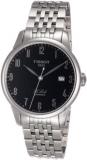
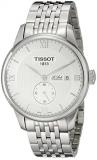
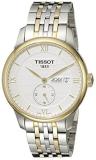
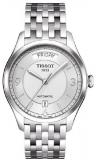
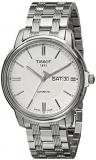
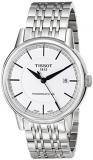
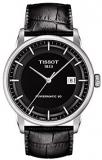
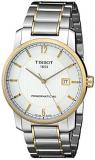
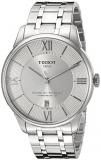
The inscription “1853” on a dial carries more weight than a simple founding date; it signals a direct connection to Tissot’s origins in Le Locle, Switzerland. The Tissot 1853 Automatic uses this reference point to frame a straightforward promise: reliable Swiss watchmaking adapted for contemporary lifestyles. Rather than chasing fleeting trends, this model focuses on legibility, robust construction, and the self-sustaining convenience of mechanical movement, making it a compelling entry point for those transitioning from quartz to automatic watches.
Understanding what this timepiece represents requires looking beyond its vintage-inspired label. The 1853 designation places the watch within a broader narrative of accessible luxury, where Swiss precision meets practical daily wear. For buyers weighing their first mechanical watch purchase, or collectors seeking an uncomplicated addition, the Tissot 1853 Automatic positions itself as a bridge between storied tradition and functional modernity.
Examining the Powermatic 80 Engine Inside the Tissot 1853
The defining characteristic of the Tissot brand’s modern automatic lineup is the Powermatic 80 movement, and the 1853 iteration benefits directly from this engineering milestone. According to Tissot’s official specifications, the Powermatic 80 delivers an 80-hour power reserve, meaning the watch continues tracking time accurately for three full days when removed from the wrist. This extended reserve stems from a redesigned gear train and a mainspring optimized for efficiency, a significant upgrade over the 38 to 42 hours typical of many conventional ETA movements.
The movement’s frequency runs at 21,600 vibrations per hour, a deliberate choice that reduces wear on components while maintaining reliable timekeeping. A Nivachron balance spring protects the mechanism against magnetic fields and temperature variations, enhancing its suitability for daily wear in environments filled with smartphones, laptops, and other electronic devices. For someone unfamiliar with mechanical horology, this translates to a simple benefit: the Tissot 1853 Automatic keeps running reliably even after a weekend off the wrist.
Design Language: Dial Details, Case Proportions, and Wearability
Tissot approaches the 1853’s aesthetics with restraint, avoiding the overly decorative elements found in some dress pieces. The dial typically features clean applied index markers, a date window positioned at three o’clock, and a slim central seconds hand. This layout prioritizes immediate readability while retaining enough visual character to feel distinctive on the wrist.
Case Construction and Finishing Choices
The case construction follows Tissot’s established standards for entry-level Swiss watches. Crafted from 316L stainless steel, the case resists corrosion and maintains its polish over extended use. The surface finishing combines brushed sides with a polished bezel, creating subtle light play that keeps the watch appropriate for office environments without appearing overly formal. The exhibition case back, secured with a sapphire crystal, offers a view of the Powermatic 80’s oscillating weight, adding an element of mechanical engagement for the wearer.
Typical Case Dimensions for Modern Comfort
Case diameters for the 1853 Automatic generally fall within the 39mm to 41mm range, proportions that suit a wide variety of wrist sizes. This middle-ground sizing avoids the oversized presence of dive watches while maintaining enough visual presence to feel substantial. The lug-to-lug distance remains contained, allowing the watch to sit flat against the wrist without overhanging, and the lug width, often around 20mm or 21mm depending on the specific reference, supports easy strap changes for added versatility.
Water resistance is typically rated at 5 bar (50 metres), which handles hand washing, rain exposure, and accidental splashes without concern. Swimming or showering is not advised, but this rating reflects the watch’s intended positioning as a daily companion rather than a dedicated sports instrument.
The 1853 Within Tissot’s Broader Watch Categories
Placing the 1853 within Tissot’s current catalog reveals interesting connections and distinctions. The PRX series, for instance, draws heavily on 1970s integrated bracelet design, while the Gentleman line offers a more contemporary aesthetic with sharper case edges. The 1853 model, by contrast, leans into classic round-case proportions that echo heritage references, aiming for timelessness rather than retro novelty.
This positions the Swiss Automatic entry against other notable options in the wider collection. Those drawn to period-specific detailing often find themselves exploring the archival reissues within the Tissot Heritage collection, whereas the 1853 functions more as a contemporary interpretation of classical cues. Buyers should therefore assess whether their preference lies with strict historical accuracy, which the Heritage line provides, or with a modernized take on tradition, which the 1853 delivers through its movement technology and updated case construction.
The T-Sport family, by comparison, gravitates toward chronographs and athletic timing tools. The 1853 makes no attempt to compete in that arena, instead occupying the space typically reserved for versatile everyday autos. For those looking to understand the breadth of the Tissot catalog, examining the durable, sports-oriented T-Sport models alongside the 1853 helps clarify how the brand segments its offerings and where this dress-leaning automatic fits into a balanced collection.
For a complete view of the brand’s mechanical offerings, the Tissot collection spans everything from the 1853’s classic dress styling to rugged sports chronographs, giving buyers a full spectrum of Swiss automatic choices under one heritage roof.
Styling Approaches for the Tissot 1853 Automatic
Dial color options vary across references, with silver, black, and blue being the most frequently encountered. These choices significantly affect the watch’s character. The silver dial maximizes contrast against dark hands and markers, offering strong daylight legibility. The blue variant adds a touch of contemporary flair while keeping the overall aesthetic conservative enough for professional settings. Considering how the dial color interacts with strap material is practical guidance for making the right selection.
- Milanese mesh bracelet: Elevates the watch for dressier occasions, pairing well with suit cuffs and formal business attire.
- Leather strap: Keeps the watch light and comfortable, with brown options imparting warmth and black options contributing formality.
- Steel bracelet: Maximizes durability and provides a cohesive all-metal look that transitions smoothly between weekend wear and office duties.
This natural adaptability extends beyond aesthetics. The 80-hour power reserve means the watch can rotate out of active duty for a few days and resume immediately without winding or resetting, an advantage for owners with multiple watches who alternate their daily choices. In that scenario, the Tissot 1853 Automatic functions practically like a grab-and-go option, always ready when called into service.
Beyond Tissot: Considering Swiss Alternatives at Similar Price Points
The market segment for entry-level Swiss automatics remains competitive, and informed decisions benefit from considering adjacent brands. When assessing the range where the 1853 usually sits, the primary pressure comes from brands offering comparable movements at aggressive pricing.
Among the more compelling alternatives, one finds a distinct value proposition built around mechanical craftsmanship and independent manufacturing in the accessible automatic models offered by Oris. The Frederique Constant brand’s manufacturing approach offers in-house movements in certain models, appealing to collectors who value manufacture status over resale math. And Hamilton, Tissot’s sister Swatch Group brand, delivers rugged Americana styling with the same Powermatic 80 foundation, appealing to those who favor a more tool-watch aesthetic.
None of these options render the Tissot 1853 obsolete. Instead, this ecosystem presents a choice of priorities: direct Swiss provenance with wide service networks, versus manufacture-status movements from smaller maisons. Tissot solves the equation through serviceability, relying on the Swatch Group’s global infrastructure, which provides peace of mind for first-time mechanical watch buyers more than it delivers a resale investment case.
Ultimately, selecting a Tissot 1853 Automatic allows buyers to anchor their choice in the decades of heritage that started laying its foundations in 1853. That heritage, combined with the advanced Powermatic 80 engine from the current era, transforms the meaning of accessible mechanical luxury in the present day. The Tissot 1853 Automatic remains not merely a codified look back at a founding year, but also a continuous and unbroken technical thread linking watchmakers from Le Locle to wrists across the globe in the current century.