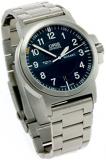
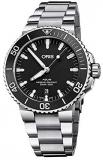
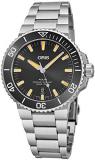
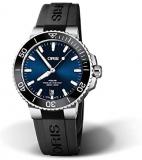
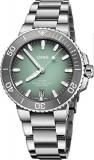
Oris has built its reputation on producing mechanical watches that prioritize real-world utility over ornamentation, and its titanium models illustrate that philosophy clearly. Titanium weighs roughly 45 percent less than stainless steel while offering comparable tensile strength, which explains why the material has become a recurring choice across the brand’s aviation, dive, and everyday collections.
For anyone who wants to understand why titanium matters in modern watchmaking, the Oris brand’s range offers some of the most accessible and technically interesting examples on the market. This guide examines how the material is used, what it delivers in daily wear, and which models best represent the approach.
Why Titanium Became Central to Oris Design
Titanium’s appeal in horology rests on a straightforward material property: it is significantly lighter than steel while maintaining high strength. A titanium case measuring 39mm or 44mm sits comfortably on the wrist for extended periods, which matters for pilots, divers, and anyone wearing a watch through a full working day.
Beyond weight, titanium develops a natural oxide layer that resists corrosion from saltwater, sweat, and humidity. This makes the material particularly relevant for the ProPilot X family, where a titanium case pairs with sapphire crystal on both sides and a screwed titanium caseback with a see-through sapphire window. The result is a watch that stays optically clean while exposing the movement beneath.
Finishing titanium requires different techniques than steel. The metal is more abrasive on tooling and tends to show a cooler, slightly grey tone. Many Oris titanium references adopt brushed surfaces rather than high polish, which suits the technical character of a tool watch and reduces the appearance of everyday scuffs.
The Calibre 400 and Calibre 115 Platforms
Inside several titanium ProPilot X references sits the Calibre 400, an automatic movement built around a five-day power reserve and elevated anti-magnetic resistance. The architecture represents Oris’s shift toward longer service intervals and greater everyday practicality, reducing the need for constant winding or frequent regulation.
The Calibre 115 takes a different path as a hand-wound movement with an extended power reserve and an exposed mainspring barrel visible through the dial side. When housed in a multi-piece titanium case, the watch becomes a study in mechanical transparency: the wearer can observe the energy storage system directly rather than inferring it through a caseback.
A Comparative Look at Titanium Characteristics
| Property | Titanium | Stainless Steel |
|---|---|---|
| Weight | Approximately 45\% lighter | Standard density |
| Corrosion Resistance | High, natural oxide layer | Good, requires alloy |
| Surface Finish | Cooler grey tone | Brighter, warmer |
| Hypoallergenic | High | Moderate |
| Scratch Visibility | Lower on brushed finishes | Higher on polished finishes |
The table highlights why titanium cases have become a signature element in the ProPilot X line. Less weight on the wrist, fewer visible scratches over time, and better tolerance for moisture all influence long-term satisfaction.
Design Language Across Titanium References
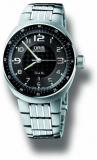
The ProPilot X Calibre 400 reference pairs a 39mm titanium case with a matching bracelet, creating a compact and highly wearable profile suitable for smaller wrists. The design language leans toward clean instrument aesthetics: straight lugs, a flat sapphire crystal with anti-reflective coating, and a dial layout focused on legibility.
The larger Calibre 115 reference moves to 44mm, housed in a multi-piece titanium case with a screwed caseback and sapphire on both sides. The additional diameter gives the exposed movement more room to breathe visually, turning the case into a frame rather than a container.
Textures and Surface Treatments
Titanium finishes in the Oris lineup tend toward satin brushing rather than mirror polish. This choice serves two purposes. First, it aligns with the anti-glare, function-first character established by the sapphire crystal with double-sided anti-reflective coating. Second, brushed titanium disguises hairline scratches more effectively than polished surfaces, which matters for a watch worn in cockpits, on trails, or at sea.
The colour itself is another factor. Titanium’s darker, slightly grey appearance reads as technical rather than luxurious, distinguishing these references from top TAG Heuer Carrera watches that lean on brighter steel and dial-side detail. It is a deliberate aesthetic separation, not a limitation.
Aviation and Dive Heritage in Titanium
Oris has historically produced professional instruments for aviation and diving, two fields where weight and corrosion resistance both matter. Titanium addresses both concerns simultaneously. In a cockpit, a lighter watch reduces fatigue during long flights. Underwater, the material’s resistance to saltwater and its non-magnetic properties support reliable performance.
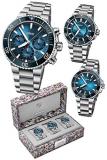
References such as the Divers Titan models and the TT1 1000m Titanium demonstrate how far Oris has taken the material in dive contexts. These watches use titanium alongside ceramic bezel inserts to create a uniform colour palette and a robust exterior. The bracelet design also adapts: titanium links keep the total weight down, which becomes noticeable when the watch is worn over a wetsuit or for hours on end.
Wearability and Long-Term Ownership
A titanium watch changes how the wearer experiences a mechanical timepiece. A 44mm steel watch can feel heavy after several hours; the same dimensions in titanium stay comfortable well into the evening. This matters for anyone who wears a single watch continuously.
Titanium also holds up better against perspiration, which contains salts and acids that gradually attack lesser alloys. A brushed titanium bracelet develops a soft patina over months and years, retaining its technical character without the periodic polishing many steel bracelets require.
How Titanium Fits Within the Broader Oris Lineup
Titanium references sit alongside steel models in the Oris catalogue, and the choice between them is largely about priorities. Steel offers a brighter, more traditional appearance that pairs easily with formal attire, similar in spirit to models within the Omega De Ville collection. Titanium shifts the emphasis toward lightness, corrosion resistance, and a subdued grey finish.
For the ProPilot X specifically, titanium is not a cosmetic option. It is part of the design thesis: a mechanical watch with a five-day movement, sapphire on both faces, and a case that disappears on the wrist so the owner notices the mechanism rather than the heft.
That balance between technical material science and wearable daily engineering is what gives Oris titanium watches their distinct position. The material serves the movement, the movement serves the wearer, and the result is a mechanical instrument built around the realities of how watches are actually worn.