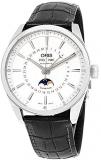
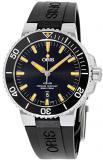
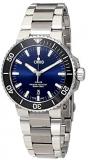
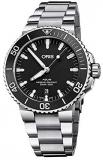
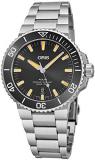
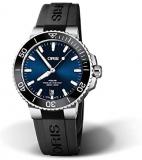
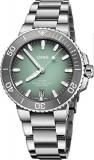
The Oris Aquis Regulateur Der Meistertaucher stands apart in the brand’s dive watch collection through its unconventional regulator-style display, a layout that prioritizes legibility in a way few divers attempt. Recognizing this distinctive approach helps enthusiasts understand its position within the broader Oris lineup. For anyone evaluating a professional dive watch with horological character, this article offers a complete technical breakdown, practical insights, and historical background to support an informed purchase decision.
The reference 01 749 7734 7154-Set represents a deliberate fusion of Oris’s diving expertise with a traditional regulator layout, a configuration historically used by regulators and pilots for unambiguous time reading. By placing the minute hand on the central axis while displaying hours on a separate sub-dial, the watch shifts the wearer’s visual priority toward minutes. This mechanical parlor trick, rooted in practical horology, gives the watch a bold, asymmetric dial that instantly signals purpose-built intelligence.
The “Der Meistertaucher” nickname, translating to “The Master Diver,” earned through genuine technical substance rather than marketing flourish. At its core beats the Oris Calibre 749, an automatic movement based on the reliable Sellita SW 220 architecture. Watching the movement work provides a rewarding mechanical experience; however, the closed titanium caseback means that appreciation comes from winding and setting rather than visual inspection. The movement operates at a frequency of 28,800 vibrations per hour, producing the smooth 4 Hz sweep that enthusiasts expect from a modern automatic.
Titanium Construction: Lightness Meets Resilience
The case itself marks a significant engineering choice. Rather than conventional stainless steel, Oris constructed the 43.5mm case from lightweight titanium. This material selection reduces the overall weight considerably, with the watch tipping the scales at approximately 130 grams on a seven-inch wrist. For a dive watch of that presence, this figure represents a meaningful advantage during extended wear, especially when compared to steel counterparts of similar size. The titanium also offers excellent corrosion resistance, a practical benefit for saltwater exposure. Case dimensions measure 43.5mm in diameter, 12.8mm to 13.5mm in thickness depending on measurement points, and a lug-to-lug span around 50mm, ensuring a substantial yet wearable profile.
The slate-gray appearance of the titanium case pairs naturally with the black dial, creating a monochromatic aesthetic that prioritizes function over ornamentation. The unidirectional rotating bezel, a critical component for any serious dive watch, features clear minute markings and offers a confident, clicky action. Water resistance stands at a robust 300 meters (30 ATM), comfortably exceeding the ISO 6425 requirements for professional diving instruments. A screw-down crown and caseback ensure the internal mechanisms remain protected from the elements.
Dial Layout and Regulator Functionality
The regulator dial arrangement remains the watch’s defining visual identity. The hours appear on a discreet sub-dial positioned at 12 o’clock, while the large, arrow-tipped minute hand sweeps along the main dial circumference. This separation reduces dial crowding, potentially improving accuracy for those who time dives since the minute hand takes precedence. The black dial surface contrasts sharply with white applied markers and the luminescent material coating both hands and indices. The luminous compound, while not named in official sources, delivers the reliable glow typical of modern Oris dive watches, ensuring readability in dark underwater environments. A date window sits at 6 o’clock, which creates a minor break from tradition. Purists generally acknowledge that the placement remains unobtrusive within the overall composition.
Beyond dial symmetry, the regulator layout historically served specialized professions. Divers long understood that underwater, seconds and minutes matter more than exact hours. The immediate grip into minutes reduces cognitive load, a thoughtful consideration for safety-oriented users. Those transitioning from standard dive watches will notice an adjustment period, adapting to reading time differently. However, seasoned watch wearers frequently report this adaptation becomes second nature quickly.
Heritage and Evolution of the Regulateur
The 2017 release of “Der Meistertaucher” represented Oris’s revival of the automatic regulator concept within a dive watch context. Earlier Oris regulator models, predominantly from the 1990s, focused on pilot and aviation themes. This modern iteration recontextualizes the concept for maritime use, expanding the catalogue categories into a more extreme niche. The comparison with past series highlights how Oris adapted traditional marine-inspired elements.
Interestingly, the actual production and release aligns with the broader trend of unconventional dial layouts in the late 2010s, as several Swiss manufacturers experimented with asymmetric displays and sector-style arrangements. The dive tool watch’s market position, intriguingly, also competed with and complemented pieces in the same catalog. Price and positioning within the wider portfolio justifies comparison with offerings like Omega Seamaster models during the same era, though each brand’s interpretation of the dive watch standard differs. While Omega’s approach continues to emphasize detailed engineering and widespread chronometer certification, the Oris takes a different functional route.
According to official Oris product pages, the reference “01 749 7734 7154-Set” comes on a titanium bracelet, accompanied by a red rubber strap with a folding buckle, a water-resistant case, and additional tools for easy strap changes. Accessories elevate practicality, allowing the wearer to transition from a rugged metal bracelet during dives to a flexible rubber strap for more comfortable everyday wear or athletic activities. The interchangeable system demonstrates thoughtful design for daily use, reflecting the deliberate construction found in other Swiss tool watches of that era.
Notably, when compared to the dark dive styling, titanium bracelet aesthetics present attractive alternatives in the luxury sport watch category. Just as Rolex GMT-Master II watches utilize robust metals to support functional complexities, this Oris leverages titanium’s inherent properties to serve its diving purpose.
Wearing the Master Diver: Build and Comfort
Despite the ostensibly intimidating 43.5mm diameter, the titanium construction makes the watch remarkably easy to wear. The weight savings over steel stainless cases are immediately noticeable. The generously sized crown, signed with the Oris branding, offers a satisfying grip for setting the time or engaging the screw-down function.
The watch wears lower than expected, particularly with dimensions in mind; the curvature of the case and the integrated lugs conform effectively to the wrist. On the included titanium bracelet, the clasp provides secure adjustment. The supplied red rubber strap stands out visually and contributes to the dive aesthetic, embodying the more practical function. A smooth, supple texture enhances its practical appeal.
Critically, the watch maintains water tightness robustly. Modern Oris dive watches undergo rigorous pressure testing, meeting the established professional diving standards. The integrity of the screw-down elements builds confidence for actual underwater use, not just desk diving appearances. Alongside other professional-oriented dive instruments, a diver-oriented watch requires a sense of durability that this achieves. For enthusiasts exploring the broader Oris collection, the brand’s commitment to functional robustness remains consistent across its lineup.
Movement Performance and Technical Specifications
Beneath the dial, the Oris Calibre 749 automatic movement propels timekeeping. Its reliable architecture provides a power reserve of approximately 38 hours, typical for the base Sellita SW 220-1 that it modifies. The setting mechanism offers quick date correction in both directions, easing weekday updates. While an extended power reserve, akin to newer Oris models featuring the Calibre 400 series, could enhance convenience, the 38-hour figure generally suffices for continuous rotation between wears. A quick date correction for changes across short gaps becomes essential when swapping the timepiece.
- Case Diameter: 43.5mm
- Case Thickness: Approximately 12.8mm
- Water Resistance: 300 meters (30 ATM)
- Movement: Oris Calibre 749 (Base Sellita SW 220-1)
- Power Reserve: Approximately 38 hours
- Case Material: Titanium
- Dial: Black regulator with hour sub-dial, central minute hand
- Strap/Bracelet: Titanium bracelet plus additional red rubber strap
- Functions: Hours, minutes, sweep seconds, date
Performance wise, the 28,800 vph frequency translates to a steadiness of seconds movement, typical of this movement tier. Precision will meet the brand’s standards, but formal chronometer certification is not a feature at this price point. The date complication accompanies style of dial execution seamlessly align with different colors, markings and materials, especially against detailed watches from heritage competitors.
Additionally, the historical layout provides a future classic sensibility, offering something uncommon in dive watches, justifying consideration for serious collectors who appreciate niche functionality. For options regarding this unusual niche, watches like the TAG Heuer Carrera, with tailored presentations, provide alternatives.
Market Positioning and Final Reflections
At its original launch, the Oris Aquis Regulateur Der Meistertaucher retailed for approximately EUR 2,900. Sources indicate that from 2017 the price represented notable value given the inclusion of the titanium bracelet, an extra strap, and the strap-changing toolkit. In the secondary market today, examples can occasionally be found, making this compelling for specialty buyers. Since production seems to have ceased, availability remains in select boutiques and resale.
The design trajectory continued to influence Oris sport watches, but the Regulateur remains a confirmed fan-favorite subject; in many ways it predicated a thriving niche of so-called “regulator divers.” Within the catalogue of alternative layouts, including the Rolex Lady-Datejust’s more conventional approach, this model stands out for its willingness to break from tradition.
More importantly, this watch demonstrates Oris’s engineering mindset: building greater utility out of classic watch configurations, rather than altering existing design to mere spec. For the wearer, the authenticity showcases independence through structured routines, yet divers will appreciate how straightforward a logical face is to use. For collectors set on Oris catalogs, this remains the deviation collected for uniqueness. For those wanting a distinctive professional dive watch with a story and mechanical oddity identity that continues to stand out in an ocean of equal black dials.
Ultimately, the Oris Aquis Regulateur Der Meistertaucher remains memorable proof that dial symmetry toward time differentiation informs identity as meaningfully as wearing them. Its timeless performance values remain a key consideration within explored watch categories, in decisions among enthusiast communities exploring the brand’s dive-ready regulator lineup across the broader collection. Enthusiasts experiencing the depth of regulated dive watches will discover its complexity rewarding, promising enjoyment in its details for years.