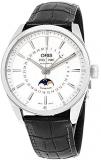
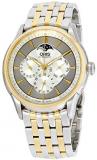
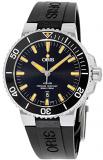
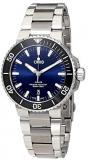
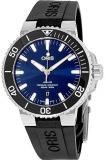
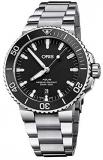
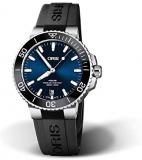
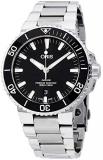
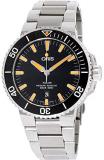
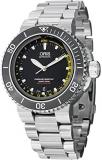
Oris was founded in Holstein, Switzerland, in 1904, and the independent brand has spent more than a century building mechanical watches that prioritize function over ornamentation. That philosophy reaches its clearest expression in the vintage-inspired side of the catalog, where mid-century proportions, domed crystals, and legible dials meet contemporary manufacturing standards. For collectors who value restraint and mechanical integrity, this corner of the catalog stands among the more honest propositions in Swiss watchmaking today.
Why Oris Vintage Design Endures
Most watch brands treat their archives as a marketing library, cherry-picking famous references and reissuing them at premium prices. Oris has taken a different route. The brand’s historical output was never dominated by a single trophy watch, so its vintage revival work focuses on the visual language of an era rather than the replica of one model. That distinction matters when evaluating what these pieces actually offer.
The defining traits are consistent across the line: compact case diameters, warm dial tones, applied indices, and acrylic or box-domed sapphire crystals that give the glass a soft, period-correct distortion at the edges. A recent example is the Oris Star Edition, a revival of a mid-twentieth-century model, which Monochrome Watches reports carries a 35mm stainless steel case, an 11mm thickness, a 41.5mm lug-to-lug span, and 50m of water resistance. Those numbers describe a watch designed for a wrist rather than a spec sheet, and they explain why the format keeps returning.
Proportions That Suit Real Wrists
The modern watch industry spent two decades inflating case sizes, and the correction has been slow. Vintage-inspired Oris models sidestep that entire cycle. A 35mm or 38mm diameter paired with a short lug-to-lug measurement sits comfortably on wrists that a 42mm sports watch would overwhelm, and the reduced mass makes the watch easier to wear through a full working day.
- Case diameter: commonly 35mm to 38mm across vintage-oriented references
- Lug-to-lug: frequently under 45mm, keeping the watch centered on the wrist
- Thickness: typically 10mm to 11mm, allowing the case to slide under a cuff
- Crystal: domed sapphire or mineral, echoing mid-century glass profiles
This is not nostalgia for its own sake. Smaller cases distribute weight more evenly, reduce the chance of crown-dig into the back of the hand, and read as deliberate rather than trendy. The same proportional logic runs through the Oris brand’s own back catalog, where mid-century references were built around the same compact footprint that defines the current revival pieces.
Mechanical Movements And Everyday Reliability
Oris builds mechanical watches, and it has said so plainly for years. The brand does not produce quartz-driven vintage homages, which means every piece in this category runs on an automatic or hand-wound caliber with a serviceable architecture. Automatic winding removes the battery ritual, and the resulting power reserve typically covers a weekend off the wrist without requiring a reset on Monday morning.
What buyers should understand is the trade-off implicit in this choice. A mechanical movement demands periodic servicing, generally every five to seven years depending on wear, and it will never match quartz for raw accuracy. In exchange, the owner gets a movement with visible finishing, a signed rotor, and a serviceable mechanism that a watchmaker can regulate and repair rather than replace. For collectors, that longevity is the entire point.
Materials And Finishing
Vintage revival watches live or die on surface treatment. Oris generally works in stainless steel for these references, applying a mix of brushed and polished finishing that catches light along the case flanks without turning the watch into a mirror. Dials lean toward silver, cream, and sunburst finishes, with printed or applied markers that stay readable in low light without the oversized lume plots found on dive models.
The restraint extends to straps. Leather, often in brown or black, is the default pairing, and it reinforces the dress-casual positioning these watches occupy. A vintage-styled Oris works with a suit, but it does not look out of place with a sweater and jeans, which is precisely the versatility that makes it a daily wearer rather than a safe-queen collectible.
How Oris Vintage Fits The Broader Landscape
Buyers shopping this category are usually weighing several heritage-minded options at once. Brands across the price spectrum have invested in archival reissues, and the differences between them come down to movement type, case finishing, and how faithfully the original design intent is preserved. A useful point of comparison is the Breitling Chronomat, which occupies a different stylistic register entirely: bolder, more overtly sporty, and built around chronograph functionality rather than quiet dial design. That contrast helps clarify what the Oris approach actually is. Where some heritage lines chase complexity, Oris chases clarity.
What To Check Before Buying
Anyone considering a vintage-inspired mechanical watch should verify a short list of practical details before committing. These are the factors that determine whether a piece becomes a frequent wearer or a drawer resident.
- Case size on your own wrist: measure your wrist and compare against the stated lug-to-lug, not just the diameter
- Water resistance rating: a vintage-styled watch rarely exceeds 50m, so confirm it matches your daily exposure
- Movement type and service interval: automatic calibers need periodic maintenance, and that cost belongs in the total ownership calculation
- Strap compatibility: standard lug widths make aftermarket strap changes straightforward and inexpensive
- Dial legibility: check contrast between hands and dial in person or in clear photography, since vintage colorways can reduce readability
The final consideration is philosophical. A vintage-inspired Oris is not trying to imitate a specific auction-house reference, and it is not competing on complications. It offers mechanical watchmaking in proportions that suit most wrists, at a price point that keeps entry into Swiss horology within reach. The brand has stated that it builds mechanical watches as a matter of principle, and that consistency shows in these references.
For collectors who want a watch they can wear without worry, service without difficulty, and pass on without embarrassment, the vintage side of the Oris catalog delivers exactly that. It is a quiet argument for the idea that good design does not need to shout, and that the most enduring watches are often the ones that simply get the fundamentals right.