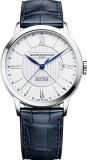
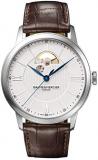
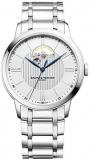
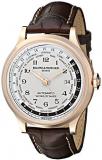
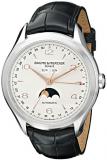
The perpetual calendar complication represents a pinnacle of mechanical watchmaking, a self-contained program of gears and levers that tracks the irregular rhythms of the Gregorian calendar. Among the maisons that have interpreted this complex mechanism with both technical rigor and aesthetic grace, Baume Mercier offers a compelling expression of haute horlogerie that prioritizes daily usability alongside horological sophistication. This achievement reflects a philosophy where intricate engineering serves the practical needs of the wearer without sacrificing visual harmony.
The dial architecture of a Baume Mercier perpetual calendar is carefully orchestrated to present multiple streams of calendar information in a legible, balanced composition. Sub-dials for the day, date, month, and leap-year cycle are arranged to avoid visual clutter, while a moon-phase aperture often adds a poetic counterpoint to the structured calendar display. This thoughtful layout transforms what could be a chaotic information overload into an elegant tableau that rewards repeated observation.
Mechanical Logic Encoded in Metal
Inside the case, a sophisticated movement executes a perpetual calendar program that automatically compensates for months of varying lengths, including the quadrennial leap-year adjustment. Programmed to remain accurate until the year 2100, this mechanism removes the need for manual date corrections while the watch is running. The programming wheel, typically featuring 48 notches, governs the irregular month sequence, while a fourth wheel tracks the leap-year cycle, converting rotational energy into precisely timed calendar information.
Observing these components through a sapphire case back reveals the ingenuity required to compress such a complex mechanical program into the confines of a wristwatch. Baume Mercier refines these movements with decorative finishing techniques, including Cotes de Geneve, perlage, and blued screws, reinforcing the connection between internal mechanical sophistication and external elegance. The automatic winding mechanism supplies the energy needed to maintain all calendar functions over extended periods of regular wear.
Design Language and Visual Coherence
The dial of a Baume Mercier perpetual calendar is characterized by purposeful complexity. Applied indices, dauphine-style hands, and carefully selected typefaces contribute to a coherent visual identity that respects classical watchmaking traditions. The choice of materials, from polished stainless steel to warm rose gold cases, influences the overall character of the timepiece. Silvered or sunburst dials enhance light play, while contrasting sub-dials in darker tones create a sophisticated layered appearance that adds depth to the composition.
This design deliberation extends to the bracelet or strap selection, where alligator leather or metal bracelets complete the ensemble. The cases are proportioned to suit both formal and more relaxed occasions, with lugs that curve to fit the wrist comfortably and crowns that integrate smoothly into the case profile. Water resistance adequate for daily life adds peace of mind, while the sapphire crystal resists scratches that would otherwise obscure the intricate dial.
Practical Considerations for Daily Wear
Operating a perpetual calendar requires understanding the crown positions and setting sequences. Powering the movement fully before adjusting the calendar functions ensures the date-change mechanism works correctly, especially near the sensitive midnight window. The traditional approach recommends setting the watch using time and date correction pushers rather than quick-set functions when available, preserving the integrity of the calendar program.
For collectors who rotate watches, a watch winder keeps the perpetual calendar active without manual resetting, a practical solution for preserving the complex mechanical memory locked within the gear train. The weight and balance of the watch on the wrist contribute significantly to the wearing experience, with metal bracelets distributing mass evenly and leather straps offering a lighter, more traditional feel. Quick-release spring bars on certain models allow for effortless strap changes, enabling the wearer to adapt the watch’s appearance to different settings.
Heritage and Contemporary Significance
The development of the perpetual calendar in wristwatches traces back to the mid-twentieth century, when watchmakers began miniaturizing pocket-watch complications for smaller cases. Baume Mercier’s entry into this arena builds upon this rich heritage, offering complications that respect tradition while remaining attainable for a broader audience. In an era of smartwatches and digital timekeeping, the purely mechanical perpetual calendar serves as a reminder that human ingenuity can encode time’s irregular rhythms into metal and springs.
The enduring appeal of the perpetual calendar lies in its fusion of logic and beauty. Each glance at the wrist reveals not just the date, but an appreciation for the craftsmanship that makes such automatic correction possible. Baume Mercier perpetual calendar models embody this spirit, inviting wearers to engage with time on a deeper level, not merely as a measurement, but as a canvas for mechanical artistry and refined design that continues to resonate in the contemporary horological landscape.