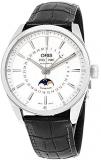
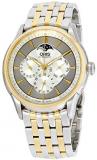
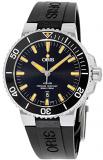
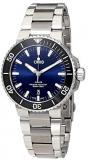
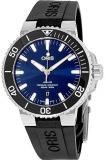
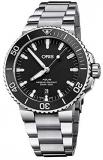
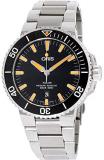
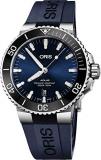
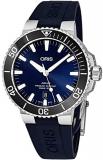
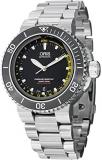
The Oris ProPilot family traces its design language to cockpit instrumentation, where legibility under stress matters more than ornamentation. The current ProPilot Date pairs a 41.00 mm stainless steel case with a fluted bezel and a dial layout that prioritizes instant reading, a philosophy that has guided the line since it first emerged as the Big Crown ProPilot. According to Oris, the collection spans references from the 41.00 mm ProPilot Date to the ProPilot Altimeter and the limited Oris X BWD edition, all sharing that functional aviation DNA.
For buyers weighing this watch against other tool-oriented pieces, the ProPilot sits in a distinctive spot: Swiss Made mechanical construction, a legible dial, and a price point that reflects Oris’s position as an independent maker. The sections below examine the case architecture, the automatic calibre, the dial design, and how the ProPilot fits into a broader collecting context alongside other references from the Oris brand’s aviation-focused lineup.
Case Architecture and Wearability
The ProPilot Date uses a 41.00 mm steel case measuring roughly 11.7 mm thick, with a fluted bezel that echoes the ridges found on vintage pilot controls. That mix of dimensions keeps the watch balanced on the wrist, broad enough for a confident presence and thin enough to slide under a shirt cuff. A screwed steel case back with a see-through mineral glass window offers a view of the movement, connecting the wearer to the mechanical heart of the piece.
- Case size: 41.00 mm (ProPilot Date reference family)
- Case height: Approximately 11.7 mm
- Case material: Stainless steel with fluted bezel
- Case back: Screwed, see-through mineral glass
- Strap options: Leather strap or metal bracelet configurations
That strap flexibility matters for a pilot-style watch because the same case has to work in a flight briefing room and at a weekend airfield. A leather strap softens the instrument-panel aesthetic, while the bracelet version leans into the more industrial reading of the design. Either way, the case proportions remain coherent, with no oversized crown guards and no unnecessary bulk above the lugs.
The Automatic Movement Inside
The ProPilot Date runs on an Oris automatic calibre, a self-winding mechanical movement that removes the need for battery changes. Automatic winding suits a pilot watch well: the rotor keeps the mainspring charged through the natural motion of the wrist, so the watch is ready whenever it is picked up after a day or two on the nightstand. The visible movement through the case back gives the ownership experience a tactile quality that quartz alternatives cannot replicate.
At the top of the ProPilot range sits the ProPilot X Calibre 115, a very different proposition. Oris equips it with the Calibre 115, a hand-wound movement with a skeletonised architecture. Its dimensions read 34.00 mm in diameter with 15 lignes, running at 21,600 vibrations per hour (3 Hz), and construction details include polished bridges and an open mainplate. This is the ProPilot line interpreted as a showcase of Oris watchmaking ambition rather than a pure cockpit tool, and it commands a different price tier from the standard date models.
Automatic vs Hand-Wound ProPilot References
Buyers deciding between the two paths should consider how they wear a watch. The automatic ProPilot Date is a grab-and-go piece: wear it daily and it stays wound; set it down for a weekend and it will still be running Monday morning. The Calibre 115 reference asks for involvement, rewarding a winding ritual and displaying its mechanics openly. One is a daily companion, the other a weekend enthusiast’s object.
Dial Legibility and the Aviation Tradition
Oris builds the ProPilot dial around contrast. The company describes a crisp, legible dial on the ProPilot Date, and that phrasing points to the line’s core brief: numerals and hands that read at a glance, not after a second of squinting. Pilot watches historically favored large Arabic numerals, high-contrast hands, and minimal clutter, and the modern ProPilot respects that inheritance without copying vintage references literally.
The date function adds everyday practicality without disrupting the dial hierarchy. On a 41.00 mm face there is enough room for the aperture to sit quietly at the edge of the layout. For anyone cross-shopping other instrument-style pieces, the design conversation here runs parallel to what can be found in a Breitling Colt, though Oris approaches the brief with a fluted bezel and a more restrained case profile.
ProPilot Altimeter and the Mechanical Instrument Lineage
Beyond the date model, Oris extends the ProPilot concept into genuine mechanical instrumentation. The ProPilot Altimeter uses a barometric mechanism to display altitude, offered in both metric and feet-scale versions, with the Oris X BWD limited edition representing the collaboration-driven end of the family. According to Oris, the Altimeter references sit at the 47.00 mm mark, a substantially larger case size aimed at wearers who want the complication to dominate the design.
This is where the ProPilot line separates itself from most pilot-styled watches, which borrow aviation cues visually but add no actual flight-relevant function. A mechanical altimeter inside a wristwatch is a niche engineering exercise, genuinely difficult to execute and historically the domain of a small number of Swiss makers. The Altimeter references position Oris alongside that tradition.
| Attribute | ProPilot Date | ProPilot X Calibre 115 |
|---|---|---|
| Case Size | 41.00 mm | Not specified in source |
| Case Height | ~11.7 mm | Not specified in source |
| Winding | Automatic | Hand-wound |
| Movement Calibre | Oris automatic (ref. family) | Calibre 115 |
| Movement Diameter | Not specified in source | 34.00 mm (15 lignes) |
| Frequency | Not specified in source | 21,600 A/h (3 Hz) |
| Dial Approach | Crisp, legible layout | Skeletonised |
| Bezel | Fluted | Not specified in source |
| Case Back | Screwed, see-through mineral glass | Not specified in source |
| Primary Use Case | Daily wear, office-to-airfield | Enthusiast display piece |
| Strap Options | Leather or metal bracelet | Not specified in source |
| Key Selling Point | Everyday Swiss automatic value | Open-worked mechanical artistry |
How the ProPilot Compares in Real-World Ownership
Ownership of a ProPilot centres on a few practical questions: how often the watch is worn, what the wrist can comfortably carry, and whether the owner wants a complication or a clean three-hander. The 41.00 mm date model answers those questions with the least friction. It is a size that flatters most wrists, the automatic movement keeps service intervals reasonable, and the dial reads instantly in almost any light.
The Altimeter and Calibre 115 references ask the owner to accept trade-offs. The Altimeter’s 47.00 mm case is a statement size that will not suit every wrist. The Calibre 115 sacrifices the grab-and-go convenience of an automatic for the visible mechanics of a hand-wound skeleton. Neither is a compromise; they are deliberate choices for a specific type of wearer.
Dress Code and Daily Versatility
Pilot watches occupy an unusual place in a collection. They pair naturally with casual clothing but can hold their own in an office environment when the case is restrained. The 41.00 mm ProPilot Date leans to the versatile side of that equation, particularly in the metal bracelet configuration. For a more overtly water-sports-leaning alternative in the same Swiss tool-watch territory, an Omega Seamaster covers diving rather than aviation, and the two can sit in a collection without competing for the same wrist time.
Swiss Watch Context and Collector Positioning
Oris has built its reputation on mechanical watches with sensible pricing relative to output, and the ProPilot line reflects that ethos. It does not claim to be a luxury showpiece in the vein of high-horology independent brands; it claims to be a well-made, Swiss-made mechanical watch with a clear design brief and honest materials. That positioning has both advantages and limitations: the ProPilot will not impress a collector chasing grand complications, but it will not disappoint someone hunting for a mechanical watch to wear hard.
Within a broader collection, the ProPilot works alongside a range of references. A traditional field-oriented piece, such as a Rolex Explorer II, occupies similar functional territory but with very different brand positioning and finish levels. The ProPilot’s case for a buying decision does not rest on being cheaper than its competitors; it rests on delivering a specific set of Swiss mechanical attributes, including automatic movement, legible dial, and pilot heritage, at a scale that Oris as an independent brand can sustain.
Why the ProPilot Line Matters Today
Pilot watches as a category have drifted, over the years, toward fashion. Many models labelled aviation carry quartz movements, oversized cases, and dials designed to look complicated rather than read cleanly. The Oris ProPilot line diverges from that drift. It keeps the movement mechanical, the case focused, and the dial legible, the three elements a genuine instrument watch actually requires.
For buyers deciding where a ProPilot fits, the answer depends on which reference is in view. The ProPilot Date is the everyday entry into the family, a Swiss automatic with a fluted bezel, a clean dial, and a realistic price. The Altimeter references extend that heritage into genuine instrumentation, and the Calibre 115 takes the family into open-worked mechanical territory. All three share the same underlying intent: to make a watch that reads clearly, runs mechanically, and tells a story rooted in aviation rather than nostalgia. That combination is rare enough in today’s market to warrant serious attention from anyone assembling a modern, functional collection.