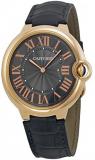
The house of Cartier built its reputation on precision objects designed to mark time, yet its fragrance division applies a comparable discipline to the chemistry of scent. Where a watch movement regulates seconds through gears and springs, a Cartier perfume regulates an impression through layered accords that unfold across hours of wear. Déclaration, one of the maison’s most enduring compositions, illustrates this approach: cardamom meets fresh woody notes in a structure that the brand describes as an unprecedented combination.
Understanding a Cartier fragrance means looking past the bottle and into the architecture of the scent itself. This guide examines how the maison constructs its olfactory signatures, why certain compositions have outlasted trends, and which practical criteria should guide a purchase.
The Cartier Approach to Fragrance Composition
Cartier’s fragrance catalogue spans more than a hundred compositions, with the earliest dating to 1981 and new releases continuing into 2024, according to the Fragrantica fragrance database. That range reflects a house that treats scent as a design discipline rather than a seasonal accessory. Each release begins with a defined olfactory idea, then builds supporting notes around it so the fragrance reads clearly from the opening spray through the dry-down.
This method shows most plainly in the Cartier fragrance collection, where compositions are grouped by character rather than by marketing cycle: fresh signatures, floral portraits, and woody-spiced statements each occupy their own territory. The grouping matters for buyers because it clarifies what a fragrance is designed to do before they commit to a full bottle.
Déclaration: The Spiced Woody Benchmark
The Cartier Déclaration fragrance remains the clearest expression of the maison’s signature style. Its structure opens with cardamom, a note that carries both warmth and a faint sharpness, then settles into fresh woody accords that keep the composition from turning heavy. Cartier lists the scent in 50 ml (1.6 fl. oz.) and 100 ml (3.3 fl. oz.) formats, covering both trial and full-wardrobe needs.
Independent reviews of Déclaration Parfum describe the concentration as rich, woody, and spicy, which distinguishes it from the lighter original eau de toilette. The difference matters at the point of purchase: the Parfum delivers denser projection and longer wear, while the eau de toilette suits warmer conditions and daytime use. Neither is objectively superior; they serve different wearing habits.
From La Panthère to Baiser Volé: Range and Character
Cartier’s fragrance range is not a single aesthetic repeated in different bottles. La Panthère and Baiser Volé present distinctly different personalities, and the maison’s own materials describe the collection as delivering a bold elegance across its signatures. That phrasing points to a deliberate strategy: rather than chasing one dominant trend, Cartier maintains several parallel identities within the same house.
For buyers, this breadth is useful but requires method. Testing on skin rather than paper, comparing two or three candidates side by side in a single session, and allowing at least thirty minutes for the dry-down are standard practices that reveal how a composition behaves once the top notes fade. A fragrance that impresses in the first minute may settle into something entirely different by the second hour.
Practical Criteria for Choosing a Cartier Scent
The decision between Cartier compositions comes down to a small set of verifiable factors rather than vague impressions. The list below covers the criteria that most reliably separate one purchase from another.
- Concentration: eau de toilette for lighter daily wear, parfum for stronger projection and longer duration
- Dominant accord: identify whether the composition leads with citrus, floral, spice, or wood
- Bottle size: 50 ml and 100 ml formats are widely available across the range
- Season fit: fresh and citrus-led scents suit heat; woody and spiced scents perform in cooler conditions
- Wearing occasion: office, evening, or everyday use should determine intensity
- Skin chemistry: the same fragrance can read differently across individuals, which makes in-person testing essential
These factors are straightforward, but they resolve most of the uncertainty that surrounds fragrance buying. Once concentration and dominant accord are settled, the remaining variables are minor.
How Cartier Fragrance Fits a Broader Style
Scent functions as part of a complete presentation, much like the objects a person chooses to wear on the wrist. A spiced woody signature such as Déclaration pairs naturally with restrained, classic design language, which is the same principle behind the maison’s approach to objects across its catalogue. Fragrance and accessory choices tend to reinforce each other, and that consistency is often what reads as consideration rather than decoration.
Longevity, Storage, and Care
A fragrance’s lifespan depends heavily on how it is stored. Heat, direct light, and humidity accelerate the breakdown of top notes, which is why bottles last longer when kept in a cool, dark cabinet rather than on a sunlit shelf. Purchasing a larger 100 ml bottle only makes sense if the fragrance will be stored properly and used within a reasonable timeframe; otherwise, the 50 ml format remains the more practical choice.
Application also shapes perception. Spraying on pulse points where skin is warm encourages diffusion, while applying immediately after a shower tends to reduce wear time because damp skin alters how the composition develops. These are small variables, but they explain why two wearers of the same Cartier scent can report very different experiences.
Reliability as a Signature
A signature scent succeeds when it becomes predictable in the best sense: the wearer knows what the first spray will bring, how the heart will develop, and what remains after several hours. Cartier’s fragrance line has built its position on that consistency rather than on novelty alone, extending a design culture that reaches far beyond scent into every object the maison produces. For anyone choosing a fragrance to keep for years rather than a season, that reliability is the quality worth testing for first.