The Hamilton Khaki Field Quartz 38mm measures just 8.3mm thick, a profile that slides under a shirt cuff and disappears on the wrist in a way that few adventure-ready watches manage. That number matters because the quartz platform removes the rotor and mainspring stack that add bulk to automatic movements, letting Hamilton build a field watch that reads as jewelry-adjacent on the desk yet still shrugs off the trail.
The Khaki Field Quartz 38mm is offered with green, black, and blue dials, each carrying the same stainless steel case, sapphire crystal, 46mm lug-to-lug span, and 20mm lug width. Those shared dimensions tell the real story of the reference: Hamilton applied a single, carefully tuned case architecture and then let dial color carry the personality. The result is a family of watches where the choice comes down to aesthetic preference rather than capability, which is a rarer proposition in the field watch segment than it first appears.
A Field Watch Lineage Expressed Through Quartz
Hamilton’s modern identity leans heavily on its military supply heritage, and the Khaki family is the clearest expression of that lineage. The quartz references update the formula by swapping the mechanical movement for a battery-powered caliber, which changes the ownership experience in concrete ways. There is no winding ritual, no power reserve to monitor, and no positional variance to account for. The watch is picked up and it runs, and it keeps running until the battery is serviced.
That simplicity has a specific appeal for the buyer who needs a reliable timekeeper rather than a mechanical companion. The Khaki Field Quartz is positioned for daily wear across office, commute, and weekend environments, and its slim 8.3mm case height reinforces that role. Where a thicker automatic field watch can catch on a jacket sleeve or sit awkwardly under a strap, the quartz references sit flush and unobtrusive.
Case Design and Wearing Experience
The 38mm case diameter is a deliberate choice. It sits in the sweet spot that suits a wide range of wrist sizes, large enough to remain legible but compact enough to avoid the oversized field watch trap. Combined with the 46mm lug-to-lug measurement, the watch wears closer to its nominal size than many 38mm cases, which typically stretch past 48mm across the lugs and create overhang on smaller wrists.
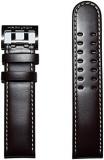
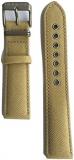
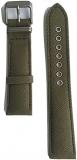
The 20mm lug width is equally pragmatic. It accepts a broad catalog of straps, from the original leather and textile options to aftermarket NATO and rubber bands, which lets owners shift the watch from field to formal without changing timepieces. The stainless steel case carries a brushed finish that resists the visible scuffs that polished surfaces collect, an appropriate choice for a watch intended to be worn hard.
Sapphire Crystal and Dial Legibility
The sapphire crystal is a meaningful inclusion at this price point. It resists scratching far better than mineral glass, and on a watch designed for outdoor use that durability matters over years of wear. Beneath the crystal, the dial follows Hamilton’s established field template: large numerals, cockpit-instrument-style hands, and a clean layout with no unnecessary clutter.
Legibility is the design’s central goal. The hour markers and hands carry luminous treatment for low-light reading, and the contrast between dial and markings is high across all three colorways. The green dial leans toward a muted, tactical aesthetic, the black dial is the most conventional and versatile option, and the blue dial offers a slightly dressier tilt while retaining the field watch proportions. Numerical indices dominate the dial, and the hands are broad enough to read at a glance without a second look.
How Quartz Changes the Ownership Equation
The case for a quartz field watch rests on three practical pillars: accuracy, maintenance, and cost of ownership. A quartz caliber delivers timekeeping precision that mechanical movements at this price cannot match, typically within a few seconds per month. There is no need to reset the watch after a weekend off the wrist, because there is no mainspring to deplete. For the buyer who wears a watch intermittently, that is a real advantage.
Servicing requirements are also lighter. A quartz movement needs a battery replacement at multi-year intervals and a gasket check during that service, but it does not require the periodic cleaning and lubrication that a mechanical caliber does. Hamilton publishes service guidance for its quartz chronographs and three-hand models through its official manual resources, which keeps maintenance documented and predictable.
The trade-off is philosophical rather than functional. Quartz movements lack the sweeping seconds hand and the mechanical craftsmanship that draw many enthusiasts to automatic watches. For the buyer who values that tactile relationship with the movement, the automatic Khaki Field references remain the natural choice. For the buyer who wants a precise, low-maintenance field watch that looks the part, the quartz line is the more rational pick. Both perspectives are legitimate, and the Hamilton collection supports either path.
Where the Khaki Field Quartz Fits Among Alternatives
Positioning the Khaki Field Quartz requires looking at both its own brand siblings and the broader field watch market. Within Hamilton’s range, the automatic Khaki Field models offer mechanical movements and, in some cases, exhibition case backs, but they add thickness and service overhead. The quartz references occupy the value-and-convenience end of the spectrum without sacrificing the sapphire crystal or the stainless steel case.
Against competing field watches, the Khaki Field Quartz competes on proportions and finishing rather than feature count. Its 8.3mm thickness is genuinely thin for the category, and the sapphire crystal is not universal at this tier. The watch does not chase solar charging, connected features, or hybrid smart functionality, and that restraint is part of its appeal. It is a mechanical-object aesthetic paired with electronic timekeeping, and the combination is coherent rather than compromised.
The strap ecosystem deserves a mention as a practical differentiator. A 20mm lug width is one of the most common in the industry, so owners can source leather, canvas, rubber, and metal bracelets from a wide range of makers. A field watch that can move between a NATO strap for hiking and a leather band for the office covers more ground than a fixed-bracelet sports watch, and the Khaki Field Quartz is built around exactly that flexibility.
Buying Guidance and Final Perspective
The decision between dial colors should follow use case rather than trend. The black dial is the safest all-rounder for a first field watch, the green dial suits buyers who want a more overtly utilitarian look, and the blue dial works best for those who plan to wear the watch in business-casual settings. All three share identical specifications, so the choice is purely visual.
Buyers comparing this reference against mechanical alternatives should weigh how they actually wear watches. A daily-worn automatic keeps running and rewards its owner with mechanical character; an intermittently worn quartz keeps accurate time without intervention. Neither is superior, but the quartz is the more forgiving choice for the casual wearer.
The Hamilton Khaki Field Quartz ultimately represents a clear design thesis: a field watch does not need a mechanical heart to be taken seriously. By keeping the case slim, the crystal scratch-resistant, and the dial legible, Hamilton built a watch that respects its heritage while acknowledging how most people actually live with a timepiece. For anyone seeking a precise, understated, and genuinely wearable field watch, this reference earns its place on the wrist.