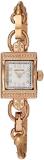
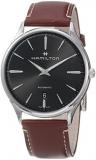
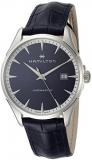
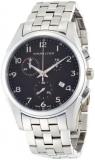
The Hamilton Piping Rock stands as one of the most recognizable silhouettes in the American brand’s extensive catalog, a design language that was born in the late 1920s but remains surprisingly relevant in contemporary watch circles. Named after the famous Long Island horse racing venue, the Piping Rock line emerged during an era when American watchmaking was transitioning from pocket watches to wristwatches, capturing the speed and optimism of the Jazz Age. This article places the Piping Rock within that historical context, but also explores what makes it a compelling choice for modern collectors who value visual distinction over conventional round cases.
Interest in vintage-inspired timepieces has grown steadily, and the Piping Rock offers something that few modern reissues manage to achieve: authentic architectural character. Its tonneau-shaped case curves gently at the top and bottom, a departure from the strict circles and cushions that dominate most collections. This distinctive form serves as inspiration for an exploration of the piece that follows, examining the design philosophy, dial structure, and the technical considerations that allow a nearly century-old design aesthetic to function effectively today.
The Graphic Power of the Art Deco Cushion Case
While many historic models lose their edge through modern reinterpretation, the Hamilton Piping Rock preserves the presence of its original era. The elongated rectangular case maintains a low profile on the wrist, sitting smoothly against the skin while maintaining the art of visual proportions developed in an era when architecture, fashion, and product design were in close conversation. The lugs are short but pronounced, allowing the timepiece’s core body to remain visible without appearing heavy or clamped onto the wrist.
One of the reasons this shape carries such lasting appeal is the visual tension created in its lines. The curved case edges contrast with the crisp vertical grain of the dial, producing a surprising sense of balance between elegance and precision. In terms of practical design, the watch manages to stay present without being commanding on the wrist, with proportions that fit neatly alongside dress shirts or under jacket cuffs. Unlike round watches of the same category, this shape captures attention organically and tends to draw positive comments in any gathering where differing tastes come into play. The geometry of the case forms a quiet connection to the principles of streamlining, carried over from the design idioms that defined industrial design twenty years before the golden era of the 1950s. For prospective buyers who experiment with vintage looks, the Piping Rock becomes an exercise in architecture and modernism – values that have not faded with time.
Dial Architecture and Readability
The dial of the Piping Rock series presents remarkable clarity, even by current standards. Most references in the line utilize slim baton markers or Arabic numerals depending on the variant, preserving legibility without sacrificing the geometric unity of the face. The minute track is clean, with both major and minor markers rendered with sharp precision, further aligning the design with its Art Deco references. For daily wear, this straightforward dial configuration makes setting and reading the time effortless – a subtle but crucial factor for users who have learned to appreciate pure functionality.
Some examples in the series include a small seconds subdial positioned at six o’clock, echoing vintage dashboard clocks of the same period. This adds complexity to the visual format without crowding the primary hour indication. The dial architecture is often enriched by the sunburst finishing on the base, creating subtle light interplay that makes the watch feel alive in direct sunlight while keeping the presentation restrained in formal settings. Collectors interested in dress-oriented details will find these small touches serve as proof of thoughtful execution.
Interpreting Heritage Through Mechanical Performance
The modern generation of the Piping Rock integrates dependable mechanical movements that satisfy expectations set across the wider Hamilton watch collection. Movements employed in this series are prepared to maintain consistent timekeeping and allow manual winding when the watch has stopped. This level of transparency connects users with the tradition of weekly winding that was once considered standard ownership practice, providing a deeper interaction with the watch than what a quartz alternative could offer.
Levels of water resistance are specified for daily life – the watch is not designed for advanced maritime activity, but typical encounters with rain, washing hands, and minor moisture pose no difficulty. The caseback is solid and composed of stainless steel, closing the movement safely while sustaining moderate weight distribution. Those who regularly rotate pieces in a small collection will appreciate the straightforward functionality and low-fuss operation of this watch. Reliability, in the true sense, is not about flashy complications but about constant, safe operation – and that principle guides the modern execution. Because so many of the decorative elements stem from architectural references, every detail from the crown to the case side appears intentionally placed, which speaks to the effort put into recreating the essence of this historic form.
Wearing a watch that emerges from the heritage-rich segment of the catalog offers a conversation opportunity that few other accessories provide. It carries an individualistic expression that cannot be replicated by standard round alternatives. The watch is not a direct copy of any single historical model; rather, it belongs to the broader family of forms that inspired numerous later references across the industry. Compared with round designs, the silhouette feels undisputed in character. Collectors seeking to diversify from familiar German tool-watch decisions or classic pilot styles will find a refreshment of perspective in this alternative shape. Rather than relying on flashy colorways or bold text on the dial, the design itself does all the work – a principle that has allowed the Piping Rock to remain cohesive over the decades.
Iconic Proportions as a Collector’s Entry Point
The Hamilton Piping Rock sits naturally between fully vintage creations and more athletic references often chosen by collectors today. It avoids aggressive additions such as oversized crowns or chunky bezels associated with diving culture, preserving the spirit of a true dress silhouette powered by mechanical confidence and historical precedent. The case turns gracefully from polished to brushed surfaces in different lighting, offering an attractive dynamic that a purely flat finish would fail to deliver. On the wrist, proportions remain polite for ordinary wrist sizes, avoiding excessive overhang while still projecting enough personality to make the watch feel like a considered decision rather than a default purchase.
This scale, perhaps more than any ornament, contributes to the watch’s ability to move from business meetings to cultural events without discomfort. The restrained size also invites occasional glances at the dial – not just for the time, but for the satisfaction one gains from observing the combination of vintage geometry and clean modern finishing. Enthusiasts who favor contrast in their selection will now often define themselves by additions like these – a distinctive silhouette chosen consciously among familiar broad categories. Indeed, some participants in the collecting community use such models precisely to balance a wider assortment of sports-driven references. While the name Piping Rock links back to equestrian excitement and long-afternoon social gatherings, the contemporary iteration translates those associations into modern wearability with honest restraint.
Piping Rock Versus Later Decades of Design Thinking
In broad terms, the mid-20th century witnessed significant shifts across the watch industry, where case shapes turned round as the lead style. Watches belonging to the 1940s and 1950s often lost the ornamental qualities of their predecessors, favoring a cleaner and sharply functional aesthetic. The Piping Rock design, however, emerged earlier and preserves architectural preferences that had yet to be swept aside. Looking at developments within segments later explored by other brands, including distinguished references such as Omega Constellation models, one can trace a chord of similarities: first, an interest in creating a unifying case concept instead of designing the dial as an independent component, and second, a move toward slimmer, more elegant structures that could integrate with changing fashion styles.
At the same time, the Piping Rock’s shape belongs to a philosophical thread that regards the watch not only as a tool but as a miniature work of personal architecture. This connects with broader adventures across physical proportions and proportion harmony, similar to directions explored by the TAG Heuer Carrera line, which also made deliberate functional choices about readability and proportions – although these two design schools emerged from entirely different contexts and priorities. Appreciating the decisions made in the 1920s enables better understanding of the designs that followed, proving that the past remains a consistent reference point in mechanical watchmaking.
Versatility in Styling and Contemporary Application
A significant reason for sustained interest in the Piping Rock lies in its styling flexibility. The design tolerates unexpected pairings, ranging from tailored navy blazers to casual leather jackets. Modern enthusiasts have adopted the watch as a distinctive companion for nearly any setting, highlighting a dramatic departure from the assumption that geometric artistry belongs solely to museum cases. In low-key environments, the restrained tone of the dial preserves discretion, while closer inspection rewards observers with well-considered details linked to an earlier industry age.
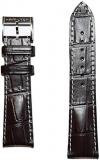
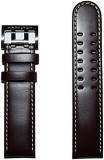
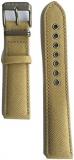
Straps are generally interchangeable thanks to the standard lug width, providing an accessible path for individual customization and refresh after years of wear. The option to move between leather and textile straps makes renewal an affordable and immediate action for enthusiasts. This flexibility strengthens a watch’s position as a constant part of a rotation – functional, easy to dress up, and never requiring extra care beyond ordinary maintenance. For seasonal wear, the case dimensions prove similarly accommodating; one can imagine the Piping Rock inside summer atmospheres with the same comfort as during colder periods.
Since the watch sector generally rewards originality with long-lasting appeal, the Piping Rock serves as an intelligent selection for those who prefer not to follow common fashion instructions. It attends the wrists of wearers who appreciate design history and quietly assert taste without appealing to obvious status signals. The name itself contributes an echo of the opulent cultural era from which it came, and the fact that it continues to be offered after all these years demonstrates the durability of good design under evolving aesthetic tastes.
Ownership Experience and the Appeal of Careful Distinction
Finally, decision-makers considering a timepiece from this category of heritage shapes will find that the Piping Rock also delivers in ownership experience. The watch opens conversations about architectural influences in horology – a topic not every timepiece can introduce so readily. It confronts fast-paced digital life with calm architectural logic, offering a temporal anchor uncomplicated by continuous notifications or battery charge checks. The quartz-driven convenience many rely on elsewhere in their tech-assisted day may be less important here than the direct, analog connection with another period.
The finish on the case and simple construction support an extended lifecycle with proper servicing, as the design confidently moves through seasonal trends without appearing modified to fit a temporary fashion story. Each scrutiny of the piece returns a pleasant confirmation: the minimal, older lines still feel forward-thinking and distinctive. The visual magic of the Piping Rock resides in its confident assumption of perspective, never contorting itself to follow the sphere. Over the years since its introduction, it has traced a dedicated circle of admirers who appreciate its non-conformist appeal and the quiet pleasure of wearing small sculptural achievement on one’s wrist. Evolving perspectives on taste place the model in the position of being regarded both as archival evidence and as a wearable object of genuine personality. For its members, the Piping Rock is less a glance behind and more the perception aimed for a meaningful, more rounded understanding of dressing oneself in the present.