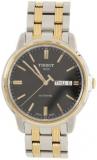
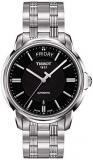
The Tissot story begins in 1853, and for men seeking a timepiece that carries genuine historical weight without shouting for attention, that founding year remains the brand’s most distinctive signature. A Tissot is not a status symbol engineered to impress a boardroom; it is a Swiss instrument built on a simple, enduring proposition: reliable mechanics, honest materials, and design that outlasts passing trends. That philosophy is exactly why the men’s collections deserve a closer look from anyone weighing a first serious watch or adding a versatile daily piece to an existing rotation.
The name carries a quiet confidence. Founded in Le Locle, in the heart of Swiss watchmaking country, Tissot has spent more than 170 years turning out mechanical and quartz pieces for a broad public rather than an exclusive elite. This democratic streak is central to understanding the brand’s identity, and it explains why the current men’s lineup spans casual field-style pieces, dress watches with clean dials, and sport models engineered for activity and adventure.
What the 1853 Mark Really Means
When a Tissot dial carries the 1853 date, it is not decorative nostalgia. It anchors the watch to a continuous manufacturing tradition, one built around the craft of fine mechanics and the goal of making dependable Swiss technology accessible. For collectors, that lineage provides context, and for newcomers it offers reassurance that a single purchase connects to a long, verifiable history rather than a short-lived fashion label.
The modern catalog reflects this balance between legacy and technology. Powermatic 80 movements, which appear across several men’s models, extend the power reserve to roughly 80 hours, meaning a watch can sit unworn for a weekend and still keep running on Monday morning. That is a tangible engineering gain, and it has become a signature of the brand’s contemporary approach.
Design Language Across the Men’s Range
The visual codes are disciplined and legible, favoring clarity over ornament. Case profiles lean toward moderate proportions, and dials generally resist over-elaboration, which is precisely what makes them adaptable. A Tissot can pass for formal wear at a dinner, and the same watch can sit comfortably under a shirt cuff on a weekday.
Three branches of the catalog serve distinctly different men. Those drawn to retro sport profiles find genuine character in the Tissot T-Sport line, which channels racing and dive influences into approachable cases. Buyers who prefer heritage cues, meanwhile, gravitate toward heritage-inspired Tissot references, where historic designs are reinterpreted for modern wrists. And for those intrigued by cross-category crossover, including the Tissot Touch Collection remains one of the more unusual design experiments in the brand’s portfolio.
Case Sizes and Wearability
The 40mm Gentleman provides a balanced reference point. Its 316L stainless steel case pairs with sapphire crystal that resist scratches, and lug-to-lug proportions remain modest enough for most wrists. At the other end of the spectrum, thinner dress references keep the silhouette close to a formal cuff. The practical takeaway is that case dimensions are a genuine consideration, but none of the core men’s lines demands an oversized wrist to look right.
Dial Finishes and Daily Legibility
Surfaces run from matte and grained to polished sunray effects, and the restrained color choices favor blacks, silvers, and subdued blues. Applied indices and luminescent coating allow the dial to be read quickly in low light. These are not aesthetic gimmicks; this reliability is what allows the watch to fit into a routine without demanding attention.
Movement and Mechanical Substance
The Powermatic 80 automatic families represent a strong value case for buyers moving into mechanical ownership. An 80-hour reserve is generous at this price level, and it reduces morning setup routines. Swiss-made construction and basic anti-magnetic and shock resistance reflect the practical engineering concerns of everyday wearers rather than watch-box collectors alone.
- Movement class: Swiss Made automatic with roughly 80-hour reserve
- Crystal: Scratch-resistant sapphire with anti-reflective coating
- Case: 316L stainless steel, typically 40mm
- Water resistance: Suitable for daily encounters with rain and splashes
- Strap options: Steel bracelets, leather bands, and interchangeable formats
Quartz alternatives elsewhere in the catalog bring different trade-offs: lighter servicing demands and greater accuracy out of the box, at the cost of mechanical character. For a man who wants a low-maintenance daily companion, that choice is entirely rational.
Living With a Tissot Day to Day
Comfort is often decided by the bracelet and clasp as much as by the case. Steel bracelets on these models usually offer solid links and a sensible taper, while leather straps lean toward conservative tones that are easy to pair with office attire. Service intervals and parts availability are managed through a broad authorized network, an underrated advantage for a long-term purchase.
Value is the recurring theme. Priced below prestige-tier Swiss brands, a Tissot asks the buyer to pay for mechanics and finish rather than a luxury premium. That relative restraint keeps it a sensible entry into Swiss watch ownership, and it is a large part of why the model retains value in everyday wear.
Sizing, Specs, and the Buying Decision
Sizing deserves a final check. Lug width and case thickness matter far more than marketing copy suggests, since a thin profile slides under a cuff while a chunkier case suits casual weekends. Water resistance ratings on dress models reflect ordinary daily use, while sport references push deeper. Movement choice should match habit: someone who removes a watch each night benefits from a long reserve, while a quartz piece suits a set-and-forget lifestyle.
Consider the rotation before the purchase. A man buying his only watch likely wants the clean, versatile dress profile, while a collector adding variety benefits from a sportier reference. Buyers should treat strap compatibility as part of the package decision, since bracelet and strap changes extend how the same watch can be worn.
Whether the choice lands on a classic dial or a technical sports case, these timepieces serve men who want authentic Swiss watchmaking without unnecessary fanfare. The 1853 mark on the dial is not a hollow badge; it bears the weight of generations of practical engineering. Watches tied to that founding date reflect a philosophy worth considering: precision and honest design matter more than spectacle, and a strong watch is fair price, legible dial, and sensible size. Those standards make a Tissot a thoughtful long-term companion for daily life.