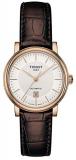
The Tissot 1853 designation traces back to the year the brand was founded in Le Locle, and it now serves as a bridge between that long Swiss lineage and the rose gold PVD finishes seen across modern Tissot catalogues. Rather than a single reference, the rose gold theme runs through several families, from slim dress pieces to the PRX and Classic Dream lines, each sharing a warm-toned coating applied over 316L stainless steel. That combination matters because it pairs the look of precious metal with the durability and everyday practicality of steel.
Understanding what the Tissot 1853 rose gold label actually refers to helps buyers navigate a crowded field. Some shoppers encounter the engraving on a caseback and assume it marks a standalone collection, while others recognize the branding token that has appeared on dials and casebacks across generations. In practice, the phrase describes a design direction more than one fixed reference, and the sections below map out the technical and stylistic threads that tie these warm-toned models together.
What the Tissot 1853 Mark Signifies
The number 1853 is the founding year of the brand, and it has been used as a heritage signature on dials, casebacks, and presentation materials for decades. On rose gold references, the mark often appears alongside a small cross emblem, a Swiss identifier tied to the country’s watchmaking tradition. This is branding rather than a specification, so the presence of Tissot 1853 does not by itself tell a buyer which movement, case size, or water resistance rating a given watch carries.
What it does signal is positioning. The brand has historically placed the 1853 signature on models it frames as connected to its Swiss heritage, which tends to mean classic proportions, conservative dial layouts, and finishes aimed at daily wear rather than sport. When that heritage cue is paired with a rose gold PVD coating, the result is a piece intended to read as dressy without crossing into precious-metal pricing.
Rose Gold PVD: How the Finish Is Applied and What It Means for Owners
The rose gold color on these watches comes from a PVD, or physical vapor deposition, coating. In this process the case is placed in a vacuum chamber where a thin metallic layer is deposited onto the 316L stainless steel surface. The coating bonds at a molecular level, which gives it better adhesion and scratch resistance than older electroplating methods. Tissot specifies 316L stainless steel and PVD coating as the case material on rose gold PRX references, and the same approach appears across the broader gold-tone range.
For owners, the practical implications are worth knowing before purchase:
- Color depth: PVD rose gold tends to hold a consistent warm tone rather than fading unevenly, though the exact hue varies between production batches.
- Wear over time: The coating resists daily scuffs better than plating, but deep scratches can expose the steel beneath.
- Weight: A PVD-coated steel case weighs the same as bare steel, so the rose gold look arrives without the heft of solid gold.
- Care: Abrasive polishes should be avoided, since they can dull or thin the coating.
This is the central trade-off of the Tissot 1853 rose gold proposition. Buyers get a convincing warm-metal aesthetic at a fraction of solid gold cost, and in exchange they accept a surface finish rather than a through-and-through material. For a daily-wear watch, that is a sensible balance.
Design Language Across the Rose Gold Range
The rose gold references sit within a coherent design philosophy: integrated or slimline cases, restrained dials, and bracelet or strap options that emphasize proportion over ornament. The PRX is the clearest expression of this, with its tonneau-shaped case flowing into a flat integrated bracelet. Tissot lists the rose gold PRX 40mm reference T1374073304100 with a 39.50 mm case length, 40.00 mm width, and 316L stainless steel case with PVD coating, which situates it firmly in unisex territory.
The Classic Dream line takes a different route. It favors a round 40 mm polished steel case with a rose gold PVD bezel, pairing the warm tone with a more traditional dress-watch silhouette. According to Tissot, the Classic Dream Powermatic 80 models carry a movement rated to roughly plus or minus seven seconds per day and an 80-hour power reserve. That combination, heritage-styled casework plus a modern long-reserve automatic, is the formula the brand repeats across its entry-luxury offering.
Proportion and Wearability
The 40 mm case width on the PRX and the 40 mm Classic Dream case are not accidental. Both sit in the range that suits a wide span of wrist sizes, and the relatively thin profiles, around 10.93 mm on the PRX, keep the watches from feeling bulky under a shirt cuff. The PRX’s 12 mm lug width and integrated bracelet mean the watch wears closer to the wrist than a traditional strap watch of similar diameter.
Dial Restraint as a Design Choice
Rose gold cases pair best with dials that do not compete. The approach tends toward silver, white, or matching warm-tone dials with applied indices, keeping the gold as the focal accent. This preserves legibility and keeps the watch usable in formal settings, where a busier dial would undercut the elegance the rose gold finish is meant to deliver. Shoppers who want a sportier character within the same brand family can look at Tissot T-Sport models, which lean on steel and rubber rather than precious-metal tones.
Movements and Everyday Performance
The movement inside a rose gold reference depends on the family rather than the finish. The PRX rose gold references pair the coating with quartz calibers or the automatic Powermatic 80, while the Classic Dream Powermatic 80 uses the automatic version. The Powermatic 80 is significant for daily wear because its 80-hour reserve means the watch keeps running through a weekend off the wrist, removing the need to reset time and date every Monday morning.
Water resistance is another differentiator. The PRX rose gold references carry a water resistance rating expressed in pressure terms, typically enough for handwashing and rain but not for swimming. Buyers who prioritize submersion capability should treat the rose gold finish as a dress-watch feature and look elsewhere for a dive-rated piece. Within the broader landscape, it helps to understand where these models sit relative to luxury Swiss alternatives, and seeing how established houses treat classic gold-tone design, Longines dress watches among them, provides useful context for what the segment offers at adjacent price points.
Who Should Consider a Rose Gold Tissot 1853 Reference
The rose gold Tissot 1853 line suits a specific buyer: someone who wants the warmth of gold on the wrist without committing to solid precious metal, values Swiss mechanical or well-built quartz movements, and prefers restrained design over ostentation. It is a strong choice for a first serious dress watch, for wearers who split time between business attire and smart-casual settings, or for anyone building a small collection with one warm-toned piece.
It is less suitable for buyers who need genuine dive capability, who obsess over the long-term permanence of a metal surface, or who prefer matte and utilitarian aesthetics. Recognizing these boundaries is part of choosing well, because a watch that fits its owner’s actual habits gets worn far more than one chosen for its finish alone.
The Heritage Argument for a Rose Gold Cased Watch
Gold-toned cases have a long history in Swiss watchmaking, and the use of the 1853 signature connects modern PVD pieces to that lineage. The brand does not present these watches as luxury objects so much as accessible interpretations of classic design, and the rose gold finish is the element that carries most of that intent.
Comparing across the market reveals how consistent the formula is. Brands rooted in the same Swiss town structure their collections around heritage cues, dress proportions, and finishes that read as elevated without being precious, and the Tissot collection follows that pattern closely. The 1853 mark, the slim cases, and the warm PVD coating together form a coherent offer: a watch that looks considered in a boardroom, feels appropriate at dinner, and does not demand the care a solid gold case would. For buyers seeking that balance, the Tissot 1853 rose gold direction remains one of the more straightforward routes into warm-toned Swiss design.