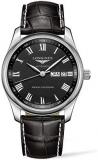
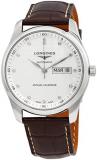
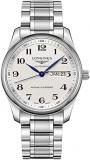
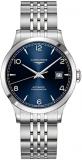
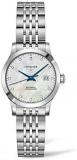
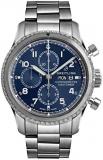
Chronometer certification represents one of the most demanding accuracy benchmarks in Swiss watchmaking, and few brands have integrated it into their catalog as thoroughly as Longines. The brand’s chronometer-rated pieces are put through a series of precision evaluations across multiple positions and temperatures before they ever reach a display case. Those tests result in daily rate deviations measured in fractions of a second, a standard that separates a certified chronometer from an ordinary mechanical watch.
Readers searching for a dependable, certified-accurate Swiss watch will find this breakdown useful as a long-term reference for purchase decisions. It covers how the certification process works, which Longines references carry the distinction, and what separates a chronometer-grade movement from a standard automatic calibre.
What Makes a Watch a Certified Chronometer
Longines explains that chronometer watches are highly accurate timepieces that must pass a series of strict precision tests conducted over an extended period under varying conditions. The evaluation covers multiple positions, temperature variations, and continuous running performance. Any movement that clears these thresholds receives an official chronometer certificate.
The key distinction lies in the testing protocol itself. A standard mechanical watch only needs to function within a broad accuracy window, while a chronometer must stay within a far narrower margin. Longines states that its chronometer-rated calibres undergo testing across a range of environments that simulate real-world wear, including wrist position changes, temperature shifts, and prolonged operation.
In practical terms, a certified chronometer’s daily rate deviation is measured against a benchmark of -4 to +6 seconds per day. This is significantly tighter than the typical -10 to +30 second window for non-certified mechanical movements. For buyers who intend to rely on their watch for precise timekeeping rather than ornamental value alone, that margin matters. The certification also documents a movement’s ability to resume accurate performance after periods of rest and to endure mechanical shock without drifting outside tolerances.
How Longines Approaches Chronometer Certification
Certification is applied selectively across the catalog, reserved for references where accuracy sits at the centre of the design brief. These are not entry-level pieces with a cosmetic accuracy badge; they are movements engineered from the ground up to meet a measurable standard.
The certification process begins long before a finished watch reaches the testing bench. Longines specifies chronometer-grade components, including balance springs manufactured to tight tolerances and escapements tuned for consistent energy delivery. The movement is then assembled, regulated, and submitted for evaluation in a controlled sequence that mirrors the official chronometer protocol. Watches that fail a single stage are returned for regulation and re-tested.
Spirit Pilot Flyback and the Precision Standard
The Spirit Pilot Flyback reference L3.721.4.53.2 demonstrates how Longines integrates chronometric precision into a tool-watch format. This manual-winding piece features a 39.50 mm stainless steel case with a ceramic bezel, a movement running at 28,800 vibrations per hour, and a power reserve of approximately 68 hours. The high-frequency oscillation is a key factor in maintaining accuracy, since a faster beat rate reduces the impact of positional variation on daily rate.
That combination matters for pilots and frequent travellers who need the watch to maintain reference time across changing wrist positions. A movement beating at 28,800 vph also contributes to smoother spring behaviour and more predictable rate stability over extended wearing periods. The flyback function adds another layer of operational convenience, allowing the chronograph to be reset and restarted with a single press rather than three separate actions.
Master Collection and the Chronometer Spectrum
The Master Collection chrono moonphase reference L2.673.4.78.6 offers an automatic chronometer-calibre alternative for buyers who prefer a dress-watch format. It carries a 40.00 mm stainless steel case, runs at 28,800 vibrations per hour, and delivers a power reserve of up to 66 hours. Water resistance is rated at 3 bar, and the crystal is scratch-resistant.
The moonphase complication paired with chronograph functionality illustrates that chronometer-level accuracy does not require sacrificing performance features. In this reference, the certified movement powers both the timing functions and the astronomical complication, maintaining rate stability even when the chronograph is engaged. Buyers comparing this to chronometer pieces from other brands will notice that Longines positions accuracy and complication count as complementary traits rather than competing priorities.
Chronometer Versus Standard Automatic: What Buyers Should Compare
Not every enthusiast needs a chronometer, but understanding the gap helps clarify the premium attached to certified references. A conventional automatic movement from a reputable Swiss manufacturer might deviate by 10 to 20 seconds per day in normal use. A chronometer-certified movement is expected to stay within -4 to +6 seconds per day across various positions and temperatures.
Over a week, that difference compounds. A watch running 20 seconds fast per day accumulates more than two minutes of drift in seven days. A certified chronometer running 4 seconds fast per day accumulates under 30 seconds over the same period. For professionals who synchronise their watch with reference clocks, the certified movement requires far fewer manual corrections.
Two additional factors separate certified chronometers from standard automatic watches in practice. The first is position independence: a chronometer is regulated to perform consistently whether the watch rests dial-up, dial-down, or on its side overnight. The second is temperature resilience, where chronometer-rated balance springs maintain their elastic properties across a wider thermal range. These are the tangible engineering differences that drive the certification outcome.
Why the Beat Rate Matters for Long-Term Accuracy
The 28,800 vph beat rate shared by the Spirit Pilot Flyback and Master Collection references is not an arbitrary specification. It corresponds to 4 Hz, meaning the balance wheel oscillates eight times per second in each direction. At this frequency, small disturbances from wrist movement or temperature have less time to accumulate between beats, which translates into a more stable average rate.
Higher beat rates also improve the chronograph’s resolution. A 4 Hz movement can time events in quarter-second increments rather than half-second increments typical of slower 3 Hz movements. For pilot or racing chronographs, that additional timing resolution provides a practical advantage at the track or in the air.
Longines balances the beat rate against power reserve. The Spirit Pilot Flyback delivers approximately 68 hours of autonomy, while the Master Collection chrono moonphase reaches up to 66 hours. Both figures allow a full weekend without winding, and both are achieved without resorting to a lower-frequency escapement, which would compromise stability.
Ownership Considerations for Certified Chronometers
A chronometer is not a one-time certification tied to the factory. Over years of wear, magnetic exposure, and normal mechanical settling, a movement’s rate performance can drift. Periodic servicing by a qualified watchmaker restores the watch to its original specification and re-confirms accuracy. Longines produces its chronometer references with serviceability in mind, using modular movement architecture that simplifies regulation during routine maintenance.
Buyers should also consider how wearing habits affect certified accuracy. A watch that spends most of its time resting on a nightstand will not demonstrate the full benefit of a chronometer rating. The certification assumes regular motion that keeps the mainspring partially wound and the escapement running within its optimal torque range. Active wearers on days when the chronograph is not continuously engaged see the most consistent rate performance.
Magnetic protection is another ownership concern. Although chronometer-certified balance springs resist moderate magnetic fields better than non-certified equivalents, heavy exposure to strong magnets can still shift daily rate beyond the specification window. Demagnetisation is a routine, non-invasive service that restores performance without dismantling the movement.
Comparing Chronometer Standards Across Swiss Brands
Longines is not alone in pursuing certified accuracy, but its approach differs from competitors in emphasis. Beyond the core tool-watch references, chronometer-level precision also appears in aviation-inspired designs, and rate stability matters equally in dive timing and elapsed-time tracking. Buyers who compare chronometer references across brands typically discover that the certification protocol itself is standardised, while the price point, case architecture, and complication set vary considerably.
Among independent alternatives, the Oris collection emphasises robustness across broad product lines rather than certifying every reference as a chronometer. This creates a meaningful distinction for buyers who prioritise a formal accuracy certificate over general wearing resilience. Longines sits closer to the certification-first side of this spectrum, offering chronometer-rated references at multiple case sizes and movement types.
At higher price points, complexity-heavy designs occupy the intersection of certified accuracy and elaborate function. For collectors, the choice between these tiers often comes down to whether the chronometer rating itself is a primary purchasing trigger or a supporting attribute of a broader feature package.
Practical Buying Criteria for a Longines Chronometer
Buyers evaluating a Longines chronometer reference should filter their shortlist by three practical criteria before considering aesthetics.
- Movement type: Manual-winding (such as the Spirit Pilot Flyback) suits users who interact with the watch daily and prefer a thin case profile; automatic movements (such as the Master Collection model) suit wearers who want set-and-go convenience.
- Case size: 39.50 mm works well on wrists from 16.5 cm to 19 cm; 40.00 mm reads a touch larger in dress-watch format but remains versatile on most medium-sized wrists.
- Power reserve: 66 to 68 hours supports a full weekend off-wrist without losing rate accuracy on restart. Anything under 48 hours demands more regular winding or wear.
- Complication relevance: Flyback and moonphase are genuine performance features, but only one of the two will fit most buyers’ use patterns.
- Water resistance: 3 bar suits daily wear but is not suitable for swimming or diving; buyers needing aquatic capability should look to higher-rated cases.
Verifying the certificate accompanying a specific reference confirms the movement passed the formal test series. The certificate also provides a documented accuracy range for that individual serial number rather than the general specification, which is worth retaining for future resale or servicing reference.
Where Certified Accuracy Fits in Modern Horology
Chronometer certification has moved from an early twentieth-century competitive exercise to a modern quality marker that buyers use to separate engineering-first watches from cosmetic variants. Longines’s decision to spread certification across pilot-style chronographs and moonphase dress watches suggests a strategic direction: accuracy as a baseline capability rather than a rare premium feature.
That direction matters as consumers increasingly rely on mechanical watches for reference-grade timekeeping in settings where a phone is not always at hand. Spreading a certified standard of -4 to +6 seconds per day across multiple case styles means buyers no longer have to choose between design preference and specification superiority. The chronometer becomes the standard, not the exception.
For shoppers weighing a certified chronometer against a standard automatic, the deciding factor is often how they intend to use the watch long term. Buyers who set and forget will benefit most from a certified movement, since the reduced rate drift means fewer resets and more confidence. Buyers who treat their watch as a rotation piece, worn intermittently, will still find value in the specification but may not experience the difference on a day-to-day basis.
Longines has positioned chronometer certification as an entry ticket to the brand’s engineering story rather than a specialist niche feature. That positioning means newcomers to the brand can access certified accuracy in the same reference lines where complications like moonphase and flyback already live. Over time, this direction suggests a product line where every purchase decision involving a chronometer option rewards the buyer with a more predictable experience measured in seconds accumulated, not marketing claims repeated.
This overview is intended as a long-term buying reference for anyone researching without time constraints. Keeping the technical benchmarks in mind, including beat rate, power reserve, position independence, and certification documentation, allows a comparison grounded in measurable outcomes rather than brand narrative, and it lets each buyer decide whether certified precision belongs in their collection as an engineering asset or simply as a reassuring specification.