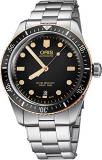
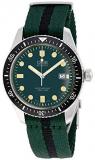
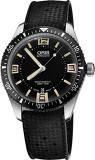
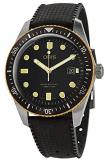
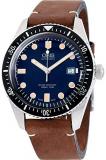
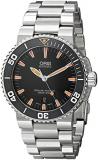
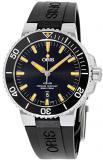
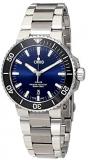
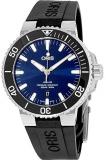
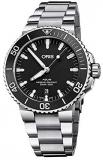
The Oris dive watch represents a lineage of Swiss tool watches engineered for underwater reliability, with the Divers collection tracing its design language back to the mid-twentieth century. The Divers Date reference 01 733 7795 4055-Set carries a 39.00 mm multi-piece stainless steel case and a ceramic minutes-scale top ring, positioning it as a compact yet capable instrument for daily wear and recreational diving alike.
Oris has built its reputation on producing mechanical timepieces with genuine utility, and the modern Divers line reflects that philosophy through unidirectional rotating bezels, luminous indices, and screw-down crowns. The brand’s independence allows it to pursue engineering choices that prioritize function over fleeting trends, a trait that has kept the Divers family relevant across generations of wearers.
A Legacy Rooted In Purposeful Design
The Oris brand’s diving heritage stretches back to the 1960s, when the original Divers Sixty-Five established the template that continues to inform today’s releases. That watch featured a monocoque-style aesthetic, domed crystal, and slim profile that made it equally at home on a wetsuit or a shirt cuff. Modern iterations retain that silhouette while upgrading materials and manufacturing tolerances.
What distinguishes Oris in the crowded dive watch segment is its commitment to mechanical movements at accessible price points. The Divers Date runs the Calibre 733, a 26-jewel automatic based on the Sellita SW200-1 architecture. It beats at 28,800 vibrations per hour and delivers approximately 41 hours of power reserve when fully wound. That specification places it firmly in the daily-wear category, where winding discipline is minimal and reliability is paramount.
Construction And Water Resistance
The stainless steel case of the Divers Date measures 39.00 mm in diameter, a size that accommodates a broad range of wrist dimensions without sacrificing wrist presence. Oris constructs the case from multiple components, allowing precise alignment between the bezel, mid-case, and case back. The ceramic minutes-scale top ring resists scratches and UV fading far better than anodized aluminum, which is why many professional dive watches have adopted ceramic bezel inserts over the past two decades.
Water resistance is rated for diving conditions, and the screw-down crown and case back gaskets provide the sealing necessary for submersion. The unidirectional rotation of the bezel ensures that any accidental knock shortens the dive timer rather than extending it, a safety convention established by professional diving standards. Legibility underwater is handled through applied indices and hands coated with luminescent material, which charge under ambient light and glow with sufficient intensity for low-visibility environments.
The Dial, Crystal, And Everyday Wearability
A dive watch must function as a tool, but it also has to look appropriate in the office and on weekend outings. The Divers Date strikes that balance through restrained dial design: clean indices, a date window at six o’clock for this reference, and a minimal amount of text. A sapphire crystal with anti-reflective coating protects the dial while maintaining clarity from multiple viewing angles, an important detail for reading the time in bright sunlight or beneath the surface.
The choice between bracelet and strap transforms the wearing experience considerably. A stainless steel bracelet with a folding clasp gives the watch a more substantial, dressier character and is often preferred by those who wear the watch daily. A rubber or leather strap, by contrast, reduces weight and suits warm climates or active water sports where a metal bracelet might trap sand.
- Case size: 39.00 mm stainless steel, multi-piece construction
- Bezel: Unidirectional rotating with ceramic minutes scale
- Movement: Calibre 733 automatic, 26 jewels, 28,800 vph
- Power reserve: Approximately 41 hours
- Crystal: Sapphire with anti-reflective treatment
These specifications represent the practical foundation of the watch, but they also explain why the Divers line appeals to buyers who want mechanical authenticity rather than quartz convenience. Anyone comparing this reference to other Swiss automatics might also consider what a Frederique Constant timepiece offers in terms of dress-watch finishing, although the design intent differs significantly from a purpose-built diver.
Movement Reliability And Serviceability
The Calibre 733 is a workhorse automatic with a well-documented service history. Its 28,800 vph frequency indicates a balance wheel oscillating four times per second, a standard that has proven dependable across countless Swiss movements. The 26-jewel count reduces friction at pivot points and extends the interval between services under normal wear conditions. Oris regulates each movement before it leaves the factory, although daily-rate variation can still occur depending on position, temperature, and activity level.
Mechanical diving watches require periodic maintenance to preserve water resistance. Gaskets age, crowns wear, and seals compress over time, which is why manufacturers recommend pressure testing at regular intervals. Owners who dive frequently typically have their watches checked annually, while casual wearers may extend that interval. This maintenance culture is part of what separates mechanical dive watches from disposable quartz alternatives and is central to the enduring appeal of automatics.
Context Within The Broader Dive Watch Market
The diver segment has expanded enormously over the past fifteen years, with heritage-inspired models now competing alongside high-tech tool watches. Oris occupies a distinctive middle ground: more affordable than luxury Swiss divers from prestige houses, yet more mechanically ambitious than mass-market quartz options. That positioning explains why the Divers series has become a frequent recommendation for first-time automatic buyers.
Shoppers looking at alternative heritage divers sometimes explore a Tissot Heritage model or a reference from the TAG Heuer Formula 1 lineup, each bringing a different blend of motorsport or vintage influences to the category. None of these are direct substitutes, but they illustrate how varied the modern diving-watch landscape has become.
Strap Options And Customization
Oris offers the Divers Date on several strap configurations, and aftermarket options multiply the possibilities further. Quick-release spring bars, common on many modern references, allow owners to swap between a bracelet, rubber, and leather without tools. Tropic-style rubber straps have returned to popularity because they echo the vintage dive-watch aesthetic while remaining comfortable in water.
Color coordination matters here as much as with any accessory. A black ceramic bezel pairs cleanly with a steel bracelet or a matching black rubber strap, while a blue dial variant opens up navy and grey pairings. Buyers who consider Gucci fashion watches a benchmark for styling may find the Oris approach more restrained, prioritizing functional finishes over decorative embellishment.
Who The Oris Dive Watch Is For
The Divers Date suits three broad groups. First, recreational divers who want a mechanical instrument they can trust in the water without venturing into luxury price brackets. Second, enthusiasts who appreciate Swiss automatic movements and want a versatile daily wearer that transitions from office to ocean. Third, collectors building a rotation around heritage dive watches and seeking a reference that honors mid-century design without sacrificing modern build quality.
Ownership of a mechanical diver is a relationship rather than a transaction. The watch requires winding, occasional service, and a degree of attentiveness that quartz or smartwatches do not. In return, it offers a tactile connection to traditional watchmaking, a long service life, and a design language that ages gracefully. Those qualities explain why the Oris Divers family has remained in continuous production and why each new reference continues to find an audience among people who value mechanical integrity over digital convenience.