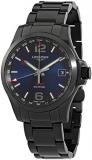
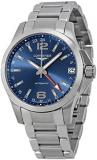
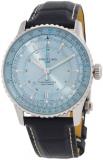
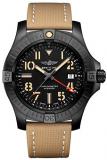
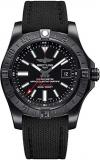
The Longines Spirit Zulu Time carries a bidirectional rotating bezel fitted with a ceramic insert, a detail that anchors the watch to the brand’s long-running relationship with early aviators. Sized at 42 mm in stainless steel, the reference L3.812.4.63.6 pairs that ceramic ring with a screw-down crown and a water resistance rating stated by Longines as 10 bar, a configuration built for people who cross time zones rather than simply admire them from a desk.
The name itself reaches back to an interwar Longines model whose rotating bezel allowed pilots to track a second time zone in flight. That historical thread is worth understanding before looking at specifications, because it explains why the modern piece prioritizes legibility and rapid adjustment over decorative flourish.
A GMT Movement With a Silicon Heart
Inside the case runs a self-winding mechanical movement beating at 25,200 vibrations per hour, and Longines states that it delivers a power reserve of up to 72 hours. The detail that separates this caliber from many rivals at the same level is the monocrystalline silicon balance-spring. Silicon is immune to magnetic fields, which matters more than ever in an era when laptops, phones, and airport scanners surround the wearer. A conventional hairspring can become magnetized and start running fast; a silicon component resists that entirely and also holds its rate more consistently across temperature swings.
Three separate time indications define the GMT function. A local hour hand jumps independently for quick adjustment on landing, the minute hand stays synchronized, and a slim arrow-tipped GMT hand reads against a 24-hour scale on the dial and bezel. The date window sits at the three o’clock position, driven by the same movement and leaving the dial largely uncluttered.
Two Case Sizes and How to Choose Between Them
Longines offers this collection across two diameters, and the difference is not cosmetic. The 39 mm references, such as L3.802.4.53.6, sit close to the wrist and slip under a shirt cuff with barely a trace. The 42 mm version gives the dial more breathing room, which suits the large Arabic numerals and the 24-hour track that wraps the chapter ring. Neither is objectively correct; wrist circumference, wrist shape, and whether the watch will be worn with tailoring or a flight jacket all factor in.
- Case sizes: 39.00 mm and 42.00 mm in stainless steel
- Bezel: Bidirectional rotating with ceramic insert
- Movement: Automatic, 25,200 vph, silicon balance-spring
- Power reserve: Up to 72 hours per Longines
- Functions: Hours, minutes, seconds, date, GMT
- Water resistance: 10 bar on the 42 mm reference
For those assembling a travel-focused collection, browsing the Longines collection of pilot and heritage pieces clarifies how the Spirit line sits apart from dressier families. A pilot’s watch and a formal piece serve different wardrobes, and Longines keeps those identities distinct rather than blurring them.
Dial Architecture and Legibility at a Glance
The matte black dial version keeps reflections to a minimum, and the applied numerals carry ample lume for low-light reading. Longines arranges the 24-hour scale so the wearer can read home time without squinting: the GMT hand sweeps above the standard hour hand, and the bezel provides a second track for a third zone if needed. Travelers who frequently call two continents benefit from having both scales visible rather than relying on a single rotating ring.
Hand-finishing on the case alternates brushed and polished surfaces, a combination that hides daily scratches while catching light at the lugs. The crown guards are subtle, and the screw-down crown threads cleanly, an area where cheaper GMT watches often show play after months of use.
Where the Zulu Time Fits Among Heritage GMTs
Comparisons inevitably arise with the most established traveler’s watches. The Rolex GMT-Master II remains the reference point for the category, and understanding its ceramic bezel and bracelet engineering helps place the Longines in context rather than diminish it. The Longines approaches the same functional brief through a silicon-regulated movement and a case that sits on the more approachable side of the market, and the two can be evaluated on specs rather than reputation.
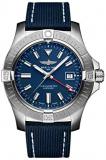
A different comparison runs toward dive-influenced travel watches. The Breitling Superocean leans on dive heritage with higher water resistance figures on many references, while the Longines prioritizes aviation legibility and a slim GMT complication. Neither brief is superior; the question is whether the wearer spends more weekends in the water or in departure lounges.
Ownership, Servicing, and Everyday Wear
A 72-hour reserve means the watch can come off on Friday evening and still be running on Monday morning, which removes the ritual of resetting a date and time before each work week. Automatic movements of this specification typically require servicing at multi-year intervals, and the silicon escapement components reduce wear inside the movement over time.
On the wrist, the 39 mm variant weighs little enough to forget about during a long flight, while the 42 mm reads more assertively under a cuff. Bracelet and strap options let owners shift the character of the watch: steel for the office, leather for travel, a fabric strap for weekends. Water resistance of 10 bar covers swimming and heavy rain without turning the piece into a dedicated diver.
The Broader Spirit Line in Context
The Zulu Time does not exist in isolation. Longines positions it within the Spirit family, which includes time-and-date models and chronographs sharing the same vintage-informed design language. Anyone weighing this GMT against a simpler three-hander should decide first whether a second time zone will genuinely be used. If the answer is yes, the dedicated GMT hand and 24-hour bezel earn their place on the dial; if not, the cleaner Spirit models offer the same case finishing without the extra hardware.
The collection rewards close inspection of its proportions rather than its marketing copy. Longines publishes case diameter, movement frequency, power reserve, and water resistance plainly, and those figures tell most of the story a buyer needs. The rest comes down to how the watch feels on the wrist and whether the ceramic bezel’s deep tone matches the wardrobe it will accompany.
Aviation watches were originally instruments first and accessories second, and the Spirit Zulu Time keeps that hierarchy intact while adapting it to an age of commercial flight and remote work across borders. It reads as a tool that happens to look refined, which is arguably the most durable kind of travel watch a person can own.