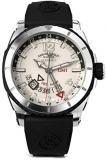
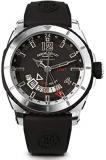
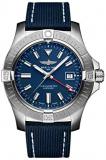
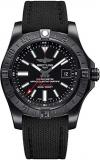
The Oris Whale Shark GMT carries a blue dial framed by a ceramic bezel and a 24-hour scale, a configuration that joins a working dive instrument to a conservation-driven release capped at 2016 pieces. Few dive watches bind their identity so tightly to a single marine species, and fewer still deliver a genuine second time zone alongside a serious depth rating. It is a diver first and a GMT second, and that order of priorities shapes everything about how it wears.
Two Time Zones, One Purpose
Central to the watch is its GMT complication, a function long associated with pilots crossing meridians, here placed in service of a different kind of traveller. The 24-hour bezel insert works with an additional hour hand, so a second zone can be read at a glance. For frequent flyers tracking home while abroad, or for collectors who simply value a fourth hand sweeping the dial, the arrangement follows the layout of established dual-time pieces. Those curious about the brand’s broader dual-time lineage can explore the Oris brand’s catalogue, where the house’s tool-watch heritage sits alongside its aviation and dive lines.
Calibre 798 At Work
Inside sits the Oris 798 automatic calibre, operating at 28,800 vibrations per hour with 25 jewels. The movement returns a power reserve of roughly 42 hours, enough to sit out a quiet weekend on the desk. It is a modified, widely serviced base rather than an in-house showcase piece, a practical choice that keeps running costs reasonable. A sapphire crystal protects the front, the case back remains solid, and a date aperture sits at the three o’clock position.
How The 24-Hour Scale Functions
The bezel rotates, and its graduated 24-hour markings let wearers track a secondary zone against the GMT hand independently of the main time display. Because it is a four-hands rather than a caller-GMT layout, the wearer reads the additional hand against the bezel scale instead of relying on crown increments. This keeps the dial clean and moves the complexity onto the bezel, a design that reduces visual noise on a blue surface already carrying applied indices and luminous markers.
Case Geometry And Wrist Presence
The stainless steel case measures 43.5mm across, with water resistance rated to 300 metres. That depth rating places the watch in genuine diver territory rather than merely borrowing the language of the ocean. On the wrist, the angular lugs and broad bezel give it a substantial but not exaggerated footprint; users with narrower wrists should be prepared for a full-size presence. The lug line remains characteristic of the modern interpretation of this reference.
- Case: Stainless steel, 43.5mm diameter
- Bezel: Blue ceramic with 24-hour scale
- Water resistance: 300 metres
- Dial: Blue with applied indices and luminous markers
- Calibre: Oris 798 automatic, 28,800vph, 25 jewels
The Whale Shark Mission
The final context of this reference should and must be about the cause. A portion of proceeds from the Whale Shark Edition supports whale shark research and conservation work. The watch is therefore not simply printed with a rare marine animal; it exists because the brand chose a specific species and attached a limited production run of 2016 pieces to a measurable initiative. Owners gain a story worth telling, and the limited number means the reference does not become a mass-produced shelf item. But the cause is not incidental to the object. Without the shark, this reference becomes just another blue GMT diving watch in the catalogue. In any case, this is a diver first and a GMT second; do not treat it as a pilot tool that happens to be waterproof.
Wearing It: Readability, Straps And Real Use
The blue dial reads cleanly in daylight, with the GMT hand distinguishable from the hour hand without ambiguity. Sapphire crystal provides dependable scratch resistance, an important detail for a watch likely to accompany the wearer into salt water. On steel it feels planted; on a rubber strap the same case slims down visually and suits warmer climates and swim use. Replacing the bracelet is straightforward thanks to the standard lug widths, so it can be worn with confidence on a rubber strap without losing its character.
Legibility at depth is less optimal because the blue dial matches the bezel, though on the surface or under a shirt cuff it disappears. Luminescence covers hours and indices adequately for the watch’s intended diving role. Keep in mind that 43.5mm is a large watch for a speedometer-style dial. Ultimately, buyers should understand it as a tool watch with a distinctive colourway first and a GMT second, making the added time-zone feature a useful extra rather than the main event.
Comparing Against Sibling And Rival Divers
Within diving tool design, distinct conventions separate the major studios. Some houses favour maximal reinforcement and bold proportions, an approach visible across several Swiss tool lines. The other camp leans on restraint and archive-derived proportions. Buyers weighing a limited edition against a long-running staple may find similar considerations apply across the Oris brand’s catalogue. The right choice depends less on brand reputation than on whether the buyer wants a daily-wear problem-solver with a story or a safer mainstream diver.
Limited Availability And Ownership Considerations
With only 2016 examples produced, availability arrives primarily through the secondary market and specialist dealers rather than at all times on a standard catalogue rota. That scarcity matters to collectors who value a closed production run, though it also means cosmetic condition and bracelet completeness drive value. Service and parts accessibility remain generally reasonable given the base calibre.
Resale follows limited-edition volatility rather than guaranteed appreciation, and owners emphasizing provenance will pay a premium. In other words, a blue ceramic bezel diver with a second time zone and conservation branding holds its niche better than a plain reference; the shark motif adds a narrative that keeps it collectable rather than generic. Potential owners should inspect bezel action, alignment of the GMT hand at reference positions, and bracelet links. Service history should be verified, since the base movement is well supported but prior water exposure can leave traces if the gaskets were not maintained.
The deeper point presented by this limited edition is that the wristwatch has a small, measurable role to play in a marine conservation mission. The blue dial evokes the open ocean, the shark-scale narrative matches the species it supports, and the 300-metre rating backs up a claim to be a true dive watch. Fewer than 1\% of the pieces built for the program will ever cross a collector’s wrist, marking the shark on the dial as a symbol of both a rare collector’s item and a cause bigger than itself.